Hydrogen-Ready Boilers Explained: Should You Buy One Now?
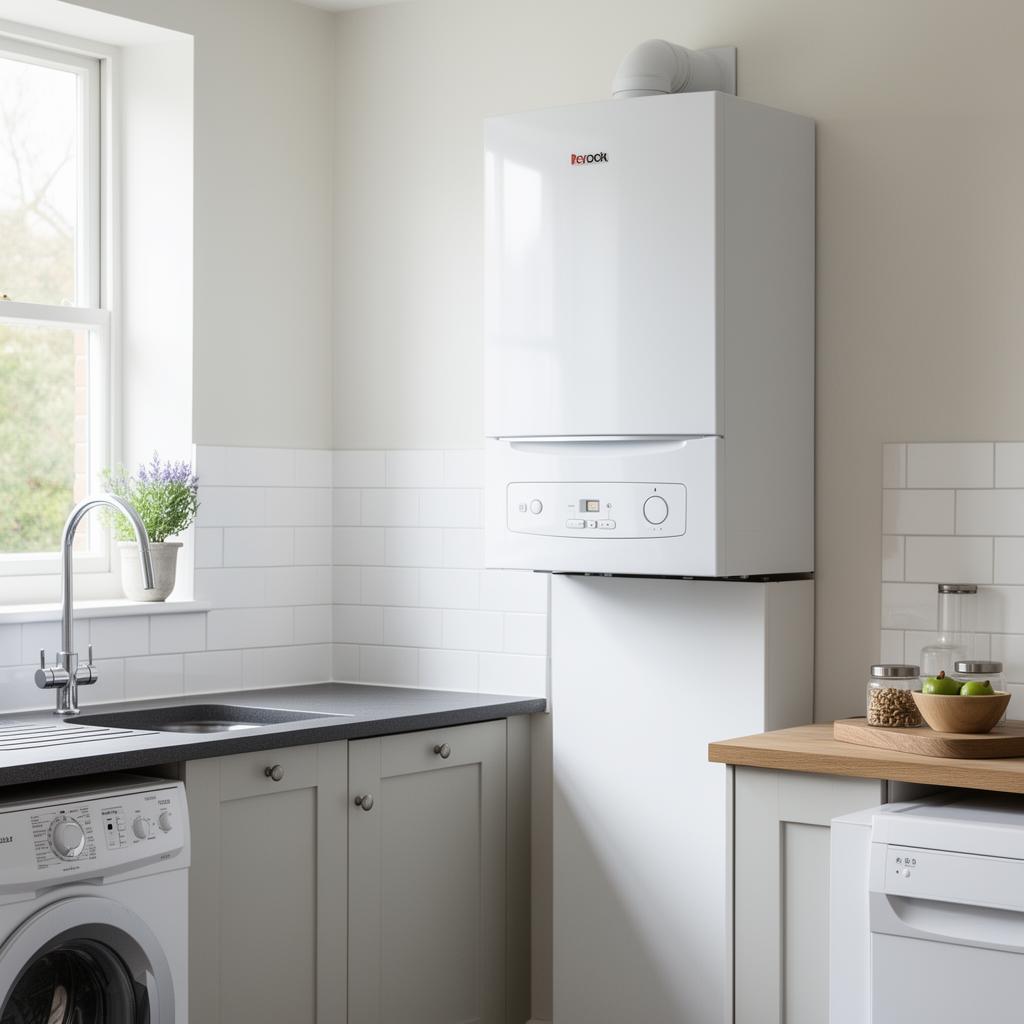
The term “hydrogen ready boiler” has been appearing on product pages and in marketing material from every major boiler manufacturer. But what does it actually mean, and should UK homeowners pay extra for this feature? With the government’s hydrogen heating strategy still evolving and the 2035 gas boiler ban effectively scrapped, understanding what a hydrogen ready boiler in the UK can and cannot do is essential before you commit to a purchase.
What Is a Hydrogen-Ready Boiler?
A hydrogen-ready boiler is a standard natural gas boiler built so it can be converted to run on 100 percent hydrogen fuel by swapping components such as the burner, gas valve and injectors. These boilers run on natural gas today and are offered by manufacturers including Worcester Bosch, Baxi and Vaillant, often at no additional cost over a standard model.
The conversion itself is designed to be completed by a Gas Safe engineer in a single visit once a hydrogen supply becomes available. However, as of 2026, no UK area has a confirmed date for 100 percent hydrogen gas supply to homes, and the government has shifted its primary decarbonisation strategy toward electrification via heat pumps.
What Does Hydrogen Ready Actually Mean?
A hydrogen-ready boiler is a natural gas boiler that has been designed so it can be converted to run on 100% hydrogen fuel with minimal modification — typically by swapping a small number of internal components such as the burner, gas valve, and injectors. The conversion is intended to be carried out by a qualified engineer in a visit lasting around two hours.
Crucially, a hydrogen-ready boiler runs on natural gas today. It is not a hydrogen boiler. It is a standard condensing boiler with the potential to be converted in the future if and when a hydrogen gas supply becomes available.
Most major UK manufacturers — including Worcester Bosch, Baxi, Vaillant, and Viessmann — now offer hydrogen-ready models. In many cases, the hydrogen-ready version is simply the standard model with the conversion capability built in at no extra cost, as manufacturers have voluntarily adopted the specification.
The UK Hydrogen Heating Strategy: Where Things Stand in 2026
The idea of using hydrogen for home heating has been debated in the UK for several years. Here is a brief timeline of the key developments:
- 2018-2020: The H21 Leeds City Gate project proposed converting Leeds to 100% hydrogen as a pilot. The government funded feasibility studies and supported the concept as part of its Net Zero strategy.
- 2021: The UK Hydrogen Strategy was published, setting out a twin-track approach of blue hydrogen (from natural gas with carbon capture) and green hydrogen (from electrolysis using renewable electricity).
- 2022: Neighbourhood hydrogen trials were announced, with plans to heat up to 2,000 homes in Redcar and Ellesmere Port using 100% hydrogen.
- 2023: The government scrapped the planned 2035 ban on new gas boiler installations, citing affordability concerns. This removed one of the main drivers for the transition to hydrogen heating.
- 2023-2024: The Redcar and Ellesmere Port trials faced significant public opposition and practical challenges. The 100% hydrogen heating trials were scaled back considerably.
- 2025-2026: The government’s position has shifted towards electrification (heat pumps) as the primary route for decarbonising home heating, with hydrogen reserved for industrial applications and hard-to-decarbonise sectors.
As of 2026, there is no confirmed date for any UK area to receive a 100% hydrogen gas supply for domestic heating. The neighbourhood trials that were meant to provide evidence for a wider rollout have been significantly reduced in scope.
The 20% Hydrogen Blend: What Is Already Happening
While 100% hydrogen heating remains uncertain, there has been progress on blending hydrogen into the existing natural gas network. The HyDeploy project at Keele University successfully demonstrated a 20% hydrogen blend (by volume) in a real gas network, finding that existing gas appliances could operate safely without any modification.
A 20% blend reduces the carbon intensity of the gas supply by approximately 7% — a meaningful but modest reduction. The government is considering whether to mandate blending across the national gas grid. If approved, this would happen without homeowners needing to take any action, as their existing boilers would handle the blend without conversion.
This is an important distinction. You do not need a hydrogen-ready boiler for a 20% blend. Your existing boiler will work fine. Hydrogen-ready boilers are designed for a future 100% hydrogen supply, which is a very different proposition.
Should You Pay Extra for a Hydrogen Ready Boiler in the UK?
The good news is that in most cases, you do not have to pay extra. Several manufacturers have made hydrogen-ready the standard specification for their new models, meaning the price is the same whether the boiler has the conversion capability or not.
Where there is a premium — typically GBP 50-200 — the question becomes whether that extra cost is justified. Based on the current evidence, here are the arguments for and against:
Arguments for buying hydrogen-ready
- If the price is the same or very close, there is no downside — you get a standard boiler with additional future flexibility
- If hydrogen does arrive in your area within the boiler’s lifetime (12-15 years), the conversion cost would be much lower than replacing the entire boiler
- It keeps your options open at minimal cost
Arguments against paying a premium
- There is no confirmed timeline for 100% hydrogen reaching any UK homes
- The government’s decarbonisation strategy has shifted towards heat pumps and electrification
- A boiler installed today will likely reach end of life before hydrogen heating becomes available
- The conversion has never been tested at scale in real homes — the promised “quick swap” may prove more complex in practice
- Hydrogen production is currently expensive and energy-intensive, with significant questions about whether it is the best use of renewable energy
Hydrogen Boiler vs Heat Pump: The Real Comparison
The more important decision for most homeowners is not whether to buy a hydrogen-ready boiler, but whether to buy a boiler at all. Air source heat pumps are available now, proven technology, and deliver significantly lower carbon emissions than any gas boiler — including a hypothetical hydrogen one.
| Factor | Hydrogen-Ready Boiler | Air Source Heat Pump |
|---|---|---|
| Available now | Yes (runs on gas) | Yes |
| Carbon reduction (vs old gas boiler) | 6-10% (from efficiency only) | 50-70% |
| Running cost (3-bed semi) | GBP 800-1,000/year | GBP 600-900/year |
| Installation cost | GBP 2,000-3,500 | GBP 7,000-14,000 (before grant) |
| BUS grant available | No | Yes (GBP 7,500) |
| Requires good insulation | No | Recommended |
| Future-proof | Only if hydrogen arrives | Yes (electricity is decarbonising) |
For well-insulated homes, a heat pump is arguably the better investment. The Boiler Upgrade Scheme grant of GBP 7,500 brings the installed cost of many air source heat pumps to GBP 4,000-7,000, which is within striking distance of a premium boiler installation. The running costs are comparable or lower, and the carbon savings are immediate and substantial.
For homes where a heat pump is not yet practical — perhaps due to poor insulation, limited outdoor space, or budget constraints — a standard condensing boiler (hydrogen-ready or otherwise) remains a sensible choice. Just do not let the hydrogen-ready label be the deciding factor in your purchase.
What About Hydrogen Boiler Prototypes?
Several manufacturers have developed prototype boilers that run on 100% hydrogen from the outset, rather than being conversions of gas boilers. Worcester Bosch demonstrated a prototype hydrogen boiler in 2019, and Baxi has shown its own 100% hydrogen model. These run cleanly on pure hydrogen with water vapour as the only combustion byproduct.
However, these prototypes are not commercially available and cannot be installed in homes today. They exist to prove the technology works in controlled environments. Until there is a hydrogen gas supply to connect them to, they remain laboratory products rather than real options for homeowners.
Practical Advice for Homeowners Buying a Boiler in 2026
Given the current state of play, here is our straightforward advice:
- If hydrogen-ready is the standard specification at no extra cost — buy it. There is no reason not to.
- If there is a significant premium — do not pay it solely for the hydrogen-ready feature. Spend the money on better controls, a magnetic filter, or improved insulation instead. These will save you money now, not in a hypothetical future.
- If you can afford a heat pump — seriously consider one. The BUS grant, falling installation costs, and the trajectory of UK energy policy all favour heat pumps over gas boilers for the medium to long term.
- Whatever you buy — ensure it is installed by a competent Gas Safe engineer, serviced annually, and paired with decent controls. A well-installed, well-maintained boiler will serve you for 12-15 years regardless of what happens with hydrogen.
If you want to compare boiler and heat pump options for your specific property, you can get a free quote from our network of approved installers.
Frequently Asked Questions
Will the government force me to convert to hydrogen?
There is no current legislation requiring homeowners to convert to hydrogen. Even if hydrogen is introduced to certain areas of the gas grid, the government would need to provide funding, support, and a long lead-in period for any mandatory conversion. Based on the current policy direction, widespread forced conversion is extremely unlikely.
Is hydrogen heating safe?
Hydrogen is flammable and has different properties to natural gas, but engineering studies have concluded that it can be used safely in domestic settings with appropriate appliances and safety measures. The 20% blend trial at Keele University operated safely for several years. However, 100% hydrogen requires specifically designed or converted appliances, and the wider safety implications of a national rollout have not yet been fully tested.
How much would it cost to convert a hydrogen-ready boiler?
Manufacturers estimate the conversion would take around two hours and cost in the region of GBP 100-300 for parts and labour. However, this has not been tested at scale in real-world conditions, so the actual cost could differ. If hydrogen is introduced nationally, the government would likely subsidise or fully fund the conversion for domestic customers.
Are all new boilers hydrogen-ready?
Not all, but most new boilers from major manufacturers are either hydrogen-ready or hydrogen-compatible as standard. Check the product specification or ask your installer. If a manufacturer describes a boiler as “hydrogen blend ready,” this means it is designed for a 20% blend — which all existing boilers can handle anyway — not for 100% hydrogen conversion.
See what these numbers mean for your home
Free instant estimate — costs, savings, payback and grants for your region.

Related Articles
7 Quick Wins to Cut Your Energy Bills This Summer
Summer might seem like the wrong time to think about energy bills, but it is actually when the smartest homeowners make changes. Lower heating demand means more of your spending…
22 May 2026
The Best Time of Year to Replace Your Boiler (and How to Get the Best Price)
Find out why summer is the best time to replace your boiler in the UK, how to negotiate better prices and what to check before committing to an installation.
9 May 2026
Electric Heating Options Explained: Panel Heaters, Storage Heaters and Infrared
Compare electric heating options for UK homes including modern storage heaters, ceramic panel heaters and infrared panels with running cost breakdowns.
7 May 2026