Which Home Improvements Add the Most EPC Points?
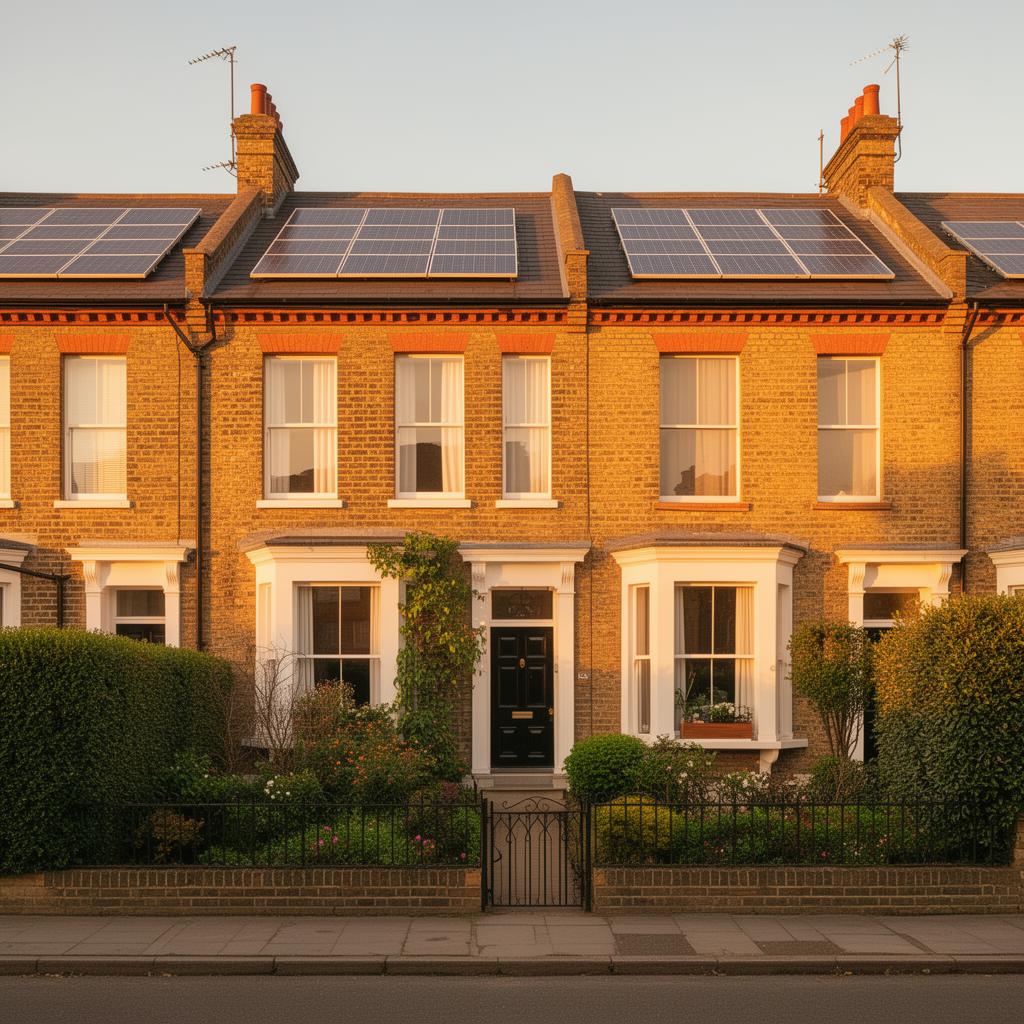
If you want to improve your EPC rating, knowing which home improvements deliver the most points per pound spent is essential. Not all upgrades are equal: cavity wall insulation can add up to 10 EPC points for as little as 1,500, while other measures costing far more may add just 2-3 points. This guide ranks the most effective improvements by their typical EPC point impact, real-world costs, and payback periods, helping you prioritise your investment for maximum effect.
Which Home Improvements Add the Most EPC Points?
The following home improvements typically deliver the biggest EPC rating increases, ranked by average points gained:
- External wall insulation — can add 30–40 EPC points for uninsulated solid-wall homes, often jumping two EPC bands
- Loft insulation (0mm to 270mm) — typically adds 15–20 points and costs as little as £300–£500 if grant-funded
- Cavity wall insulation — adds 10–20 points for homes with unfilled cavities, usually installed in under a day
- Heat pump or modern condensing boiler — a new A-rated boiler adds 10–15 points; a heat pump can add 15–25 points
- Solar panels (4kW system) — typically adds 10–15 EPC points and generates around £400–£600 per year in savings
- Double or triple glazing — adds 5–15 points depending on how many windows are replaced
- Hot water cylinder insulation and heating controls — adds 5–10 points with minimal cost
The exact number of points varies depending on your property type, size and current rating. A terraced house upgrading from an E to a C might need loft insulation, cavity wall insulation and a boiler upgrade — costing £3,000–£6,000 before grants. Commission a new EPC assessment after completing improvements to ensure your updated rating is recorded officially.
How EPC Points Work
The EPC rating is calculated on a scale of 1-100, with each band covering a range of points.
| EPC Band | Score Range |
|---|---|
| A | 92-100 |
| B | 81-91 |
| C | 69-80 |
| D | 55-68 |
| E | 39-54 |
| F | 21-38 |
| G | 1-20 |
The practical significance is that moving from one band to the next can require as few as 1-2 points if you are near the top of a band, or as many as 13+ points if you are at the bottom. Understanding exactly where your current score sits within its band helps you determine how many points you need to gain.
You can find your current EPC score on the government’s EPC register. The certificate shows not just the band but the exact numerical score, which is crucial for planning improvements.
Home Improvements Ranked by EPC Impact
Here are the most common home improvements ranked by their typical EPC point gain, from highest impact to lowest.
| Improvement | Typical EPC Points | Typical Cost | Annual Saving | Payback (Years) |
|---|---|---|---|---|
| Cavity wall insulation | 6-10 | 1,000 – 2,500 | 200 – 400 | 3-8 |
| External wall insulation | 6-10 | 8,000 – 22,000 | 300 – 700 | 15-30+ |
| New condensing boiler | 5-10 | 2,500 – 4,000 | 200 – 400 | 7-15 |
| Loft insulation (0 to 270mm) | 3-4 | 400 – 1,500 | 200 – 350 | 1-5 |
| Solar PV panels (4kW) | 3-6 | 5,000 – 8,000 | 300 – 500 | 10-18 |
| Floor insulation | 2-4 | 1,000 – 3,000 | 50 – 100 | 15-30 |
| Double glazing | 2-4 | 5,000 – 10,000 | 100 – 200 | 30+ |
| Heating controls (TRVs + programmer) | 2-4 | 200 – 500 | 75 – 150 | 2-5 |
| Hot water cylinder insulation | 1-2 | 20 – 50 | 30 – 60 | Under 1 |
| LED lighting | 1-2 | 50 – 200 | 30 – 80 | Under 2 |
Cavity Wall Insulation: The Best Value EPC Improvement
Cavity wall insulation consistently delivers the best return per pound spent in terms of EPC points. For a typical three-bedroom semi-detached house, it can add 6-10 EPC points at a cost of just 1,000 to 2,500.
The process involves injecting insulating material (usually mineral wool or polystyrene beads) into the gap between the inner and outer walls through small holes drilled in the external brickwork. The work typically takes two to three hours and causes minimal disruption.
Not all properties have cavity walls. Homes built before the 1920s typically have solid walls, while those built from the 1930s onwards are more likely to have cavities. If your property has solid walls, external or internal wall insulation is the alternative, offering similar EPC gains but at significantly higher cost.
Loft Insulation: Cheap and Effective
Topping up loft insulation to the recommended 270mm is one of the simplest and most cost-effective improvements you can make. If your loft currently has no insulation, installing 270mm of mineral wool can add 3-4 EPC points for as little as 400 to 1,500 including installation.
Even if you already have some loft insulation, topping up from 100mm to 270mm can still add 1-2 points and deliver meaningful energy savings of 50 to 150 per year.
The payback period for loft insulation is exceptionally short, typically 1-5 years, making it one of the best investments in home energy efficiency.
Boiler Replacement and Heating System Upgrades
Replacing an old, inefficient boiler with a modern condensing model can add 5-10 EPC points, depending on the age and efficiency of the existing system. The biggest gains come from replacing boilers that are 15+ years old, as these typically operate at 60-75% efficiency compared to 90%+ for modern condensing boilers.
If you are considering a heating system upgrade, a heat pump delivers even greater EPC benefits than a new gas boiler. Air source heat pumps operate at 250-400% efficiency (COP 2.5-4.0), which the EPC calculation rewards significantly.
Do not overlook heating controls. Adding thermostatic radiator valves (TRVs) and a programmer to a system that currently has basic controls can add 2-4 EPC points for just 200 to 500. This is one of the most cost-effective improvements available.
Solar Panels and Renewable Energy
Solar PV panels add 3-6 EPC points depending on the system size and the property’s existing efficiency. A typical 4kW system on a south-facing roof delivers the maximum benefit.
Solar panels also provide ongoing financial benefits through reduced electricity bills and Smart Export Guarantee (SEG) payments for surplus energy exported to the grid. The combined effect of EPC improvement and energy savings makes solar a strong investment for homeowners who plan to stay in their property long-term.
Adding battery storage alongside solar panels does not directly add EPC points under the current methodology, but it maximises the financial benefit of the solar installation by storing excess generation for evening use.
Double Glazing: Important but Expensive per EPC Point
Double glazing typically adds 2-4 EPC points, which is relatively modest given the cost of 5,000 to 10,000 for a full house replacement. On a pure cost-per-EPC-point basis, double glazing is one of the least efficient investments.
However, double glazing provides benefits beyond the EPC score, including improved comfort, noise reduction, security, and reduced condensation. If your property already has double glazing, upgrading to triple glazing adds minimal EPC benefit and is rarely justified on energy grounds alone.
If you are on a budget and need to maximise EPC points, prioritise insulation and heating improvements before considering window upgrades.
Creating a Cost-Effective EPC Improvement Plan
The smartest approach is to combine low-cost, high-impact measures to achieve your target rating without overspending. Here are three example scenarios.
Scenario 1: EPC D to C (need 5-10 points)
- Loft insulation top-up: 500 (2-3 points)
- Heating controls upgrade: 350 (2-3 points)
- LED lighting: 150 (1-2 points)
- Total: 1,000 | Points gained: 5-8
Scenario 2: EPC E to C (need 15-25 points)
- Cavity wall insulation: 1,500 (6-10 points)
- New condensing boiler: 3,000 (5-8 points)
- Loft insulation: 500 (3-4 points)
- Heating controls: 350 (2-3 points)
- Total: 5,350 | Points gained: 16-25
Scenario 3: EPC F to C (need 30+ points)
- External wall insulation: 12,000 (6-10 points)
- New boiler or heat pump: 3,000-12,000 (5-10 points)
- Loft insulation: 500 (3-4 points)
- Double glazing: 7,000 (2-4 points)
- Floor insulation: 2,000 (2-4 points)
- Heating controls: 350 (2-3 points)
- Solar panels: 6,000 (3-6 points)
- Total: 30,850-39,850 | Points gained: 23-41
Properties starting from EPC F or G require significant investment, but grant schemes like ECO4 and the Warm Homes Local Grant can fund much of the work for qualifying households. Get a free quote to understand which improvements offer the best value for your specific property.
Frequently Asked Questions
Do I need a new EPC after making improvements?
You are not legally required to get a new EPC after making improvements unless you are selling or letting the property. However, if you want the improvements to be reflected in your official rating (for grant applications, mortgage products, or MEES compliance), you will need to commission a new EPC assessment at a cost of 60 to 120.
Which improvement should I do first for the best return?
Start with the lowest-cost, highest-impact measures. For most properties, this means loft insulation, heating controls, and hot water cylinder insulation first, followed by cavity wall insulation if applicable. These measures deliver the best EPC points per pound and have the shortest payback periods.
Can smart home devices improve my EPC rating?
Under the current SAP methodology, smart thermostats can contribute 1-2 EPC points if they replace basic heating controls. Other smart devices (smart plugs, smart lighting) do not directly affect the EPC calculation. Under the upcoming Home Energy Model and new four-metric system, smart readiness will carry more weight and may provide greater EPC benefits.
Does a conservatory roof upgrade improve my EPC?
If a conservatory is thermally separated from the main house (with external-grade doors and walls between them), it is excluded from the EPC calculation. If it is open to the main house, replacing a polycarbonate roof with an insulated solid roof can improve the overall EPC by reducing heat loss through that section of the building. The impact varies depending on the conservatory’s size relative to the whole property.
See what these numbers mean for your home
Free instant estimate — costs, savings, payback and grants for your region.

Related Articles
7 Quick Wins to Cut Your Energy Bills This Summer
Summer might seem like the wrong time to think about energy bills, but it is actually when the smartest homeowners make changes. Lower heating demand means more of your spending…
22 May 2026
The Best Time of Year to Replace Your Boiler (and How to Get the Best Price)
Find out why summer is the best time to replace your boiler in the UK, how to negotiate better prices and what to check before committing to an installation.
9 May 2026
Electric Heating Options Explained: Panel Heaters, Storage Heaters and Infrared
Compare electric heating options for UK homes including modern storage heaters, ceramic panel heaters and infrared panels with running cost breakdowns.
7 May 2026