Ground-Mounted Solar Panels: UK Costs, Planning Rules and Space Needed
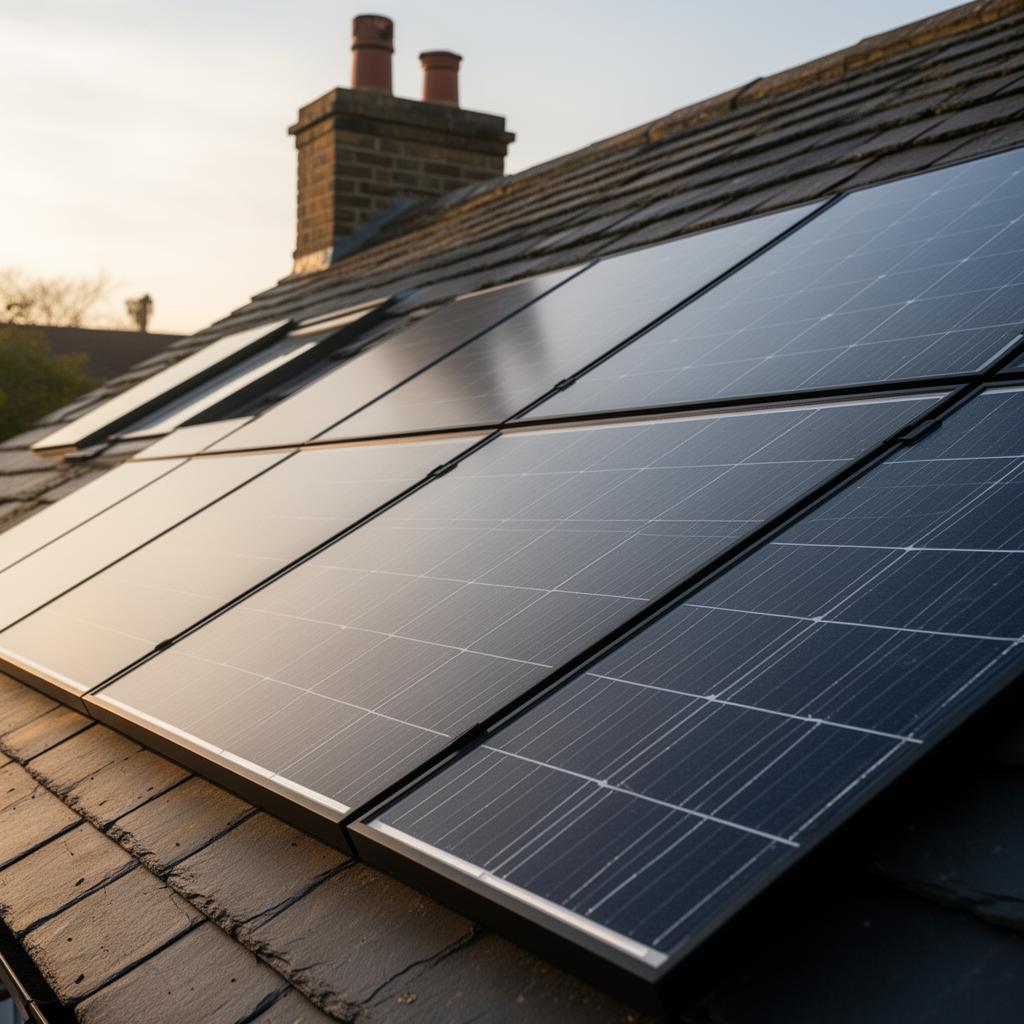
Ground mounted solar panels UK homeowners are considering offer a practical alternative when your roof is unsuitable for a traditional installation. Whether your roof faces the wrong direction, is heavily shaded, made from fragile materials or simply does not have enough space, mounting panels in your garden can deliver the same energy savings without touching your roof at all.
How Much Do Ground-Mounted Solar Panels Cost in the UK?
Ground-mounted solar panels cost between £6,000 and £14,000 for a typical 4 kW to 8 kW system in the UK in 2026, which is roughly 10 to 20 percent more than an equivalent roof-mounted installation. The additional cost covers ground frames, concrete foundations and longer cable runs. A 4 kW ground array needs approximately 25 to 30 square metres of unshaded south-facing garden space.
Planning permission is required for most ground-mounted systems over 9 square metres in domestic gardens, as they fall outside permitted development rights that cover roof-mounted panels. You should check with your local planning authority before ordering, as factors such as proximity to boundaries, conservation areas and height restrictions can affect approval. Installation typically takes two to three days once planning consent is secured.
This guide covers everything you need to know about garden-based solar installations in the UK, from costs and planning rules to the space you will need and whether ground-mounted systems make financial sense compared to roof-mounted alternatives.
Ground-Mounted Solar Panels UK: Costs Breakdown
Ground-mounted solar panels cost more than roof-mounted systems, primarily because of the additional framework, foundations and cabling required. Here is how the costs typically break down for a standard 4 kWp system.
| Component | Roof-Mounted 4 kWp | Ground-Mounted 4 kWp |
|---|---|---|
| Solar panels | 2,500 – 3,500 | 2,500 – 3,500 |
| Inverter | 800 – 1,200 | 800 – 1,200 |
| Mounting system | 500 – 800 | 1,500 – 2,500 |
| Foundations/groundwork | N/A | 800 – 1,500 |
| Cabling (longer runs) | 200 – 400 | 500 – 1,000 |
| Installation labour | 1,500 – 2,000 | 2,000 – 3,000 |
| Total installed | 5,500 – 8,000 | 8,100 – 12,700 |
The 25 to 35% cost premium for ground-mounted systems comes from three main areas: the heavy-duty aluminium or steel mounting frame, the concrete foundations or ground screws needed to secure it, and the longer cable runs from your garden back to your consumer unit.
Despite the higher upfront cost, ground-mounted panels can actually generate more electricity than roof-mounted systems in some cases. You can choose the perfect angle and orientation, avoid any shading from chimneys or dormers, and keep panels cleaner because they are easily accessible.
Planning Permission for Ground-Mounted Solar Panels
This is where ground-mounted solar gets more complicated than roof-mounted. Under permitted development rights in England, you can install ground-mounted solar panels without planning permission provided you meet all of the following conditions:
- The installation must not exceed 9 square metres in total area
- No part of the installation can be more than 4 metres high
- The installation must be at least 5 metres from any boundary of the property
- The panels must not be installed in a conservation area, World Heritage Site, Area of Outstanding Natural Beauty or the Broads
- The panels must not be installed on a listed building’s curtilage without consent
- No more than one standalone solar installation per property
The 9 square metre limit is the biggest constraint. This equates to roughly 4-5 standard solar panels, which at current panel ratings gives you approximately 1.8 to 2.2 kWp of capacity. That is enough to make a meaningful contribution to your electricity bills but falls well short of a full 4 kWp system.
If you need a larger ground-mounted system, you will need to apply for full planning permission from your local authority. Planning applications typically cost 206 pounds in England and take 8 weeks to determine. Approval rates for garden solar are generally high unless the property is in a sensitive area.
Planning Rules in Scotland and Wales
Scotland and Wales have slightly different permitted development rules. In Scotland, the area limit is 12 square metres and the height limit is 4 metres, giving more flexibility. In Wales, the rules broadly mirror England but with some differences for agricultural land. Always check with your local planning authority before proceeding.
How Much Garden Space Do You Need?
The space required for ground-mounted solar panels is larger than many homeowners expect. You need to account for the panels themselves plus spacing between rows to prevent self-shading.
For a typical 4 kWp system using 10 panels, you will need approximately 50 square metres of clear, unshaded garden space. This breaks down as follows:
- Panel area: approximately 20 square metres for 10 standard panels
- Row spacing: panels mounted at a 30-35 degree tilt need gaps between rows equal to roughly 1.5 times the panel height to avoid self-shading, adding approximately 20-25 square metres
- Access paths: you need space around the array for maintenance and cleaning, adding 5-10 square metres
An area of roughly 8 metres by 6 metres is sufficient for a typical three-bed home’s solar needs. The area must receive direct sunlight for most of the day, so check for shading from trees, fences, sheds and neighbouring buildings before committing.
Foundation Options for Ground-Mounted Solar
Ground-mounted solar panels need secure foundations to withstand UK wind loads. There are three main approaches:
Ground Screws
Ground screws are large helical steel screws driven into the earth using specialist machinery. They are the quickest and least disruptive foundation method, typically installed in a few hours with minimal mess. Ground screws work well in most soil types but may not be suitable for very rocky or waterlogged ground. Cost: approximately 100 to 150 pounds per screw, with 6-8 screws needed for a typical system.
Concrete Footings
Traditional concrete footings involve digging holes, pouring concrete and setting steel post anchors. This is the most robust option and works on virtually any ground type, but it requires excavation and several days for the concrete to cure before mounting can begin. Cost: approximately 150 to 250 pounds per footing.
Ballasted Systems
Ballasted systems use heavy concrete blocks to anchor the frame without any ground penetration. They are popular on paved areas or where you do not want to disturb the ground. The downside is the significant weight required, typically 40-60 kg per square metre of panel area, and the risk of movement on soft ground.
Advantages of Ground-Mounted Over Roof-Mounted Solar Panels
While ground-mounted systems cost more, they offer several genuine advantages that can make them the better choice in specific situations.
- Optimal orientation: you can face panels due south at the perfect 30-35 degree tilt angle regardless of your roof direction, potentially generating 10-20% more electricity than a sub-optimal roof
- No roof modifications: no drilling into roof tiles, no risk of leaks, no scaffolding costs
- Easy maintenance: cleaning, inspection and any repairs can be done from ground level without specialist equipment
- Avoid roof issues: if your roof needs replacing within the next 10 years, it is better to mount panels on the ground than to remove and reinstall them later
- Scalability: it is easier to add more panels to a ground-mounted system than to find additional roof space
Disadvantages to Consider
- Higher cost: the 25-35% premium is the biggest drawback for most homeowners
- Garden space: 50 square metres is a significant chunk of garden for smaller properties
- Planning limitations: the 9 square metre permitted development limit may require a planning application
- Security: panels at ground level are more vulnerable to theft or vandalism than roof-mounted panels
- Aesthetics: not everyone wants a solar array visible in their garden
- Longer cable runs: increased distance from panels to inverter causes minor efficiency losses
Is Ground-Mounted Solar Worth It in the UK?
Ground-mounted solar panels are worth it when your roof is genuinely unsuitable. If your roof faces north, is heavily shaded, or is made from materials that complicate mounting (such as thatch or certain slate types), ground-mounted panels let you benefit from solar energy without compromise.
For a typical 4 kWp ground-mounted system costing 8,100 to 12,700 pounds, you can expect annual generation of 3,800 to 4,200 kWh and electricity bill savings of 700 to 1,000 pounds per year. This gives a payback period of approximately 9 to 14 years, which is longer than roof-mounted but still delivers decades of free electricity after payback.
If your roof is suitable for solar, a roof-mounted system will almost always offer better value. But if your roof is not an option, ground-mounted panels are a proven and effective alternative. To find out which approach suits your property, request a free quote from local installers who can assess your site.
Frequently Asked Questions
Do ground-mounted solar panels need planning permission?
Not always. In England, installations under 9 square metres that are less than 4 metres high and at least 5 metres from any boundary fall under permitted development. Larger systems or those in conservation areas require a planning application costing 206 pounds.
Can I install ground-mounted solar panels myself?
You can assemble the mounting frame yourself, but the electrical connection to your home must be completed by a qualified electrician. For MCS certification, which is required for Smart Export Guarantee payments, the entire installation must be carried out by an MCS-certified installer.
How far from my house can ground-mounted panels be?
There is no strict maximum distance, but longer cable runs increase costs and cause minor power losses. Most installers recommend keeping ground-mounted panels within 30 metres of the inverter location. Beyond this, heavier gauge cabling is needed, adding approximately 10 to 20 pounds per extra metre.
Do ground-mounted solar panels qualify for the Smart Export Guarantee?
Yes, provided the system is installed by an MCS-certified installer using MCS-approved solar panels and inverter. Ground-mounted systems qualify for all the same incentives as roof-mounted systems, including 0% VAT and SEG export payments.
Can I combine ground-mounted and roof-mounted panels?
Yes. Some homeowners install panels on their roof and add additional ground-mounted panels to increase total capacity. Both arrays can connect to the same inverter if it has sufficient input capacity, or you can use separate inverters. This hybrid approach is useful when roof space is limited but you want more than the roof alone can provide.
See what these numbers mean for your home
Free instant estimate — costs, savings, payback and grants for your region.

Related Articles
Is Solar Battery Storage Worth It in 2026?
Solar panels are now a common sight on UK rooftops, but the real game-changer in 2026 is battery storage. A home battery lets you store the electricity your panels generate…
2 June 2026
Why Spring Is the Perfect Time to Install Solar Panels
If you have been thinking about solar panels for a while but never quite pulled the trigger, spring is the moment to act. The combination of lengthening days, mild installation…
23 April 2026
How the Energy Price Cap Affects Heat Pump and Solar Panel Payback
See how the energy price cap affects heat pump and solar panel payback periods. Real calculations using current UK unit rates show why investing now locks in stronger returns.
15 April 2026