Condensing vs Non-Condensing Boilers: What Every Homeowner Should Know
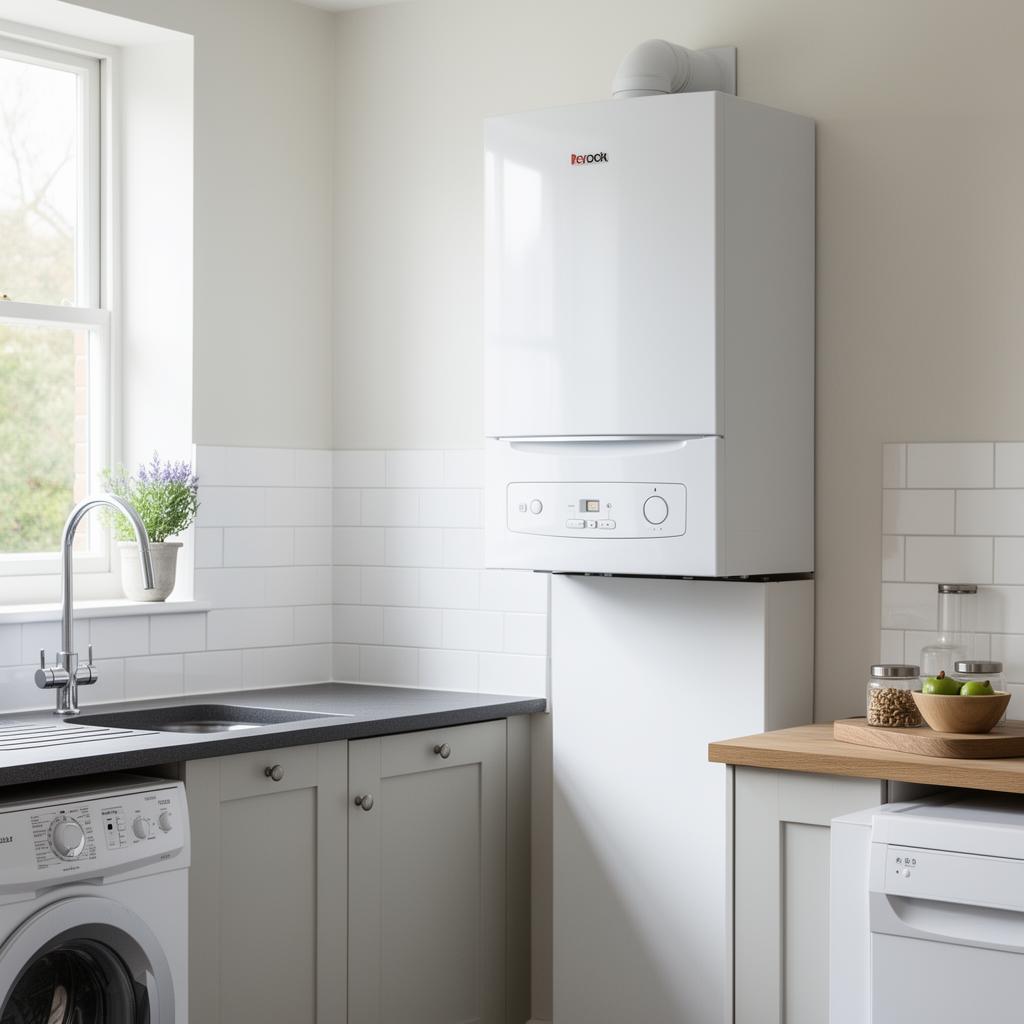
If you have ever wondered what a condensing boiler actually does differently, you are not alone. The term “condensing boiler explained” is one of the most searched heating queries in the UK, and for good reason. Since 2005, every new gas boiler installed in England and Wales must be a condensing model, yet millions of older non-condensing units remain in service. Understanding the difference can help you make smarter decisions about your heating, cut your gas bills, and reduce your carbon footprint.
What is the difference between condensing and non-condensing boilers?
| Feature | Condensing Boiler | Non-Condensing Boiler |
|---|---|---|
| Efficiency | 90–94% | 70–80% |
| How it works | Recovers heat from exhaust flue gases via a secondary heat exchanger | Wastes heat through the flue |
| Annual gas cost (3-bed) | £800–£1,100 | £1,100–£1,500 |
| Legal status (UK) | Required for all new installations since 2005 | No longer sold; only maintained |
| Condensate drain | Yes – produces acidic water that needs a drain | No |
All new boilers fitted in UK homes must be condensing models by law, as they are typically 15–25% more efficient than older non-condensing units. If your home still has a non-condensing boiler, replacing it with a modern condensing model can save £200–£400 per year on gas bills. The main practical difference is the condensate pipe, which must drain to an internal or external waste pipe and can freeze in winter if not properly insulated.
What Is a Condensing Boiler?
A condensing boiler is a high-efficiency unit that captures heat from exhaust gases that would otherwise escape through the flue. Inside the boiler, a secondary heat exchanger cools the flue gases until the water vapour within them condenses back into liquid form. This phase change releases latent heat, which is then recycled to pre-heat the return water entering the boiler.
The result is that a condensing boiler can achieve efficiency ratings of 90% to 94% under typical operating conditions, compared with just 70% to 80% for older non-condensing models. That missing 10-20% was literally going up the flue as wasted heat.
The science in simple terms
When natural gas burns, it produces carbon dioxide and water vapour. In a non-condensing boiler, those hot exhaust gases (around 180 degrees Celsius) leave through the flue. In a condensing boiler, the gases pass over a second heat exchanger that cools them to roughly 55 degrees Celsius. At this temperature, the water vapour condenses and releases energy — approximately 8% extra efficiency from this process alone.
The condensed water (condensate) is mildly acidic and drains away through a small plastic pipe, typically to an external drain. This condensate pipe is the most visible external difference between condensing and non-condensing installations.
How Non-Condensing Boilers Work
A non-condensing boiler has a single heat exchanger. Gas burns, heats the water, and the exhaust gases exit through a metal flue at high temperatures. Because these boilers are designed to keep flue gas temperatures above the dew point (around 54 degrees Celsius for natural gas), they deliberately avoid condensation to prevent corrosion of the heat exchanger, which in older models was typically made from cast iron or mild steel.
These boilers were the standard in UK homes for decades. Many properties built before 2005 still have them, and while they continue to function, they are significantly less efficient than modern condensing alternatives.
Condensing Boiler Explained: Key Differences at a Glance
| Feature | Condensing Boiler | Non-Condensing Boiler |
|---|---|---|
| Efficiency (ErP) | 90-94% | 70-80% |
| Heat exchangers | Two (primary + secondary) | One |
| Flue gas temperature | 50-60 degrees C | 150-180 degrees C |
| Condensate drain | Yes (plastic pipe required) | No |
| Legal for new installs | Yes | No (since 2005) |
| Typical annual gas bill (3-bed semi) | Around GBP 850 | Around GBP 1,050-1,150 |
| Heat exchanger material | Stainless steel or aluminium | Cast iron or steel |
| Lifespan | 12-15 years | 15-20 years (if maintained) |
Why All New UK Boiler Installations Must Be Condensing
In 2005, Part L of the Building Regulations in England and Wales was updated to require a minimum boiler efficiency of 86% for new installations. This effectively mandated condensing technology, because no non-condensing boiler could meet that threshold. Scotland followed with its own equivalent regulations shortly after.
The driver was carbon reduction. Domestic heating accounts for around 14% of the UK’s total carbon emissions, and upgrading the national boiler stock was one of the most practical steps available. The regulation has been remarkably effective: by 2026, the vast majority of boilers sold in the UK are rated A on the ErP energy label, meaning at least 90% efficiency.
The 2018 Boiler Plus legislation went further, requiring all new combi boiler installations in England to include at least one energy-saving feature: a smart thermostat with automation and optimisation, load or weather compensation, flue gas heat recovery, or a smart control with automation and optimisation capabilities.
How Much Can You Save by Switching to a Condensing Boiler?
The savings depend on the age and efficiency of your current boiler, your property size, and your heating habits. However, the Energy Saving Trust provides useful benchmarks for a typical three-bedroom semi-detached house.
- Replacing a G-rated boiler (below 70% efficiency) with an A-rated condensing model: savings of up to GBP 315 per year
- Replacing a D-rated boiler (around 80% efficiency): savings of up to GBP 135 per year
- Replacing a boiler that is 10-15 years old and still condensing but less efficient than current models: savings of GBP 50-80 per year
With a new condensing combi boiler costing between GBP 1,800 and GBP 3,500 installed, and system boilers ranging from GBP 2,200 to GBP 4,000, the payback period typically falls between 5 and 12 years depending on the age of the unit being replaced. If your current boiler is a non-condensing model from the 1990s, the payback is fastest. For a personalised estimate, you can request a free quote and compare your options.
Common Concerns About Condensing Boilers
The condensate pipe freezing
This is the single most common complaint. The condensate pipe carries slightly acidic water from the boiler to an external drain. If the pipe runs outside and temperatures drop below freezing, the condensate can freeze, blocking the pipe and causing the boiler to lock out.
The fix is straightforward. A competent installer will run the condensate pipe internally wherever possible, or use a larger-diameter pipe (32mm rather than 22mm) and insulate external sections with waterproof lagging. Modern installations following best practice rarely suffer from this issue. If you already have a condensate pipe that freezes regularly, an engineer can reroute it or fit trace heating for around GBP 100-200.
The visible plume from the flue
Because the flue gases are cooled to a lower temperature, condensing boilers produce a visible white plume of water vapour from the flue, particularly in cold weather. This is completely harmless — it is simply steam — but some homeowners find it unsightly. Plume management kits are available for most boiler models, costing around GBP 80-150 plus fitting.
Shorter lifespan claims
Some critics argue that condensing boilers do not last as long as older cast-iron models. There is a grain of truth here: the stainless steel or aluminium heat exchangers in condensing boilers are lighter and can be more sensitive to poor water quality. However, with proper installation, annual servicing, and a magnetic filter to trap sludge, a modern condensing boiler should comfortably last 12-15 years. Many manufacturers now offer 10-year warranties, which would be unthinkable if reliability were a genuine concern.
Maximising Efficiency from Your Condensing Boiler
A condensing boiler only achieves peak efficiency when the return water temperature is low enough to trigger condensation. In practice, this means:
- Lower your flow temperature. Setting the boiler flow temperature to 55-60 degrees Celsius (rather than the default 70-80) allows the return water to drop below the 54-degree dew point, enabling condensation. Many heating engineers now recommend this as standard.
- Use weather compensation. A weather compensation sensor adjusts the flow temperature automatically based on outdoor conditions, ensuring the boiler condenses as often as possible.
- Ensure good insulation. Well-insulated homes need less heat, which means lower flow temperatures work effectively. If your property is poorly insulated, consider upgrading your insulation before or alongside a boiler replacement.
- Fit thermostatic radiator valves (TRVs). These prevent overheating in individual rooms and help keep return temperatures low.
- Service annually. A dirty or poorly maintained boiler loses efficiency. Annual servicing by a Gas Safe registered engineer keeps everything running at its best.
When your flow temperature is set correctly and the system is balanced, a condensing boiler can operate in condensing mode for 70-80% of the heating season, delivering real-world efficiencies close to the manufacturer’s rated figures.
Should You Replace Your Non-Condensing Boiler Now?
If your current boiler is working reliably and was installed after 2005, it is already a condensing model. Replacing it may not be cost-effective unless it is approaching the 15-year mark or developing faults.
However, if you still have a non-condensing boiler — typically installed before 2005 — the economics strongly favour replacement. A 20-year-old boiler running at 70% efficiency is wasting roughly 30p of every pound you spend on gas. Over a year, that adds up to GBP 200-350 in unnecessary costs for an average household.
You might also consider whether a heat pump could be a better long-term investment, particularly if your home is well insulated. Heat pumps deliver efficiencies of 300-400%, dwarfing even the best condensing boilers. The Boiler Upgrade Scheme currently offers GBP 7,500 towards an air source heat pump, making the upfront cost comparable to a premium boiler installation.
For homes where a heat pump is not yet practical — perhaps due to limited outdoor space, poor insulation, or budget constraints — a modern condensing boiler remains an excellent choice. You can get a free quote to compare both options.
Frequently Asked Questions
Can I repair my non-condensing boiler instead of replacing it?
You can repair a non-condensing boiler, and a Gas Safe engineer can legally work on one. However, if the boiler is replaced — even with a like-for-like swap — the new unit must be a condensing model under Building Regulations. If repair costs exceed GBP 500 on a boiler over 15 years old, replacement is usually more cost-effective in the long run.
Do condensing boilers work with my existing radiators?
Yes. Condensing boilers are fully compatible with standard radiator systems. You do not need to replace your radiators unless they are undersized. That said, if you plan to run the boiler at lower flow temperatures for maximum efficiency, you may benefit from slightly larger radiators in some rooms. A heating engineer can advise on this during a survey.
Is the condensate from a condensing boiler harmful?
The condensate is mildly acidic (pH 3-4, similar to orange juice) and is produced in small quantities — typically 2-3 litres per hour during operation. It is safe to drain into the household wastewater system. It should not be discharged onto soil, plants, or directly onto metal surfaces, as the acidity can cause corrosion over time.
What is the difference between a combi and a system condensing boiler?
Both combi and system boilers can be (and in new installations, must be) condensing. The difference lies in how they supply hot water. A combi heats water on demand with no storage cylinder, while a system boiler works with a hot water cylinder. Both use the same condensing technology to recover latent heat from flue gases. The choice depends on your hot water demand and available space, not on efficiency.
Will the UK ban gas boilers?
The original plan to ban new gas boiler installations in new-build homes from 2025 has been pushed back, and the broader 2035 phase-out target for existing homes was dropped in 2023. As of 2026, there is no confirmed ban date. However, the direction of travel is clear: the government is incentivising heat pumps and low-carbon alternatives. A condensing gas boiler installed today will serve you well for its 12-15 year lifespan, by which time alternatives are likely to be more affordable and widely available.
See what these numbers mean for your home
Free instant estimate — costs, savings, payback and grants for your region.

Related Articles
7 Quick Wins to Cut Your Energy Bills This Summer
Summer might seem like the wrong time to think about energy bills, but it is actually when the smartest homeowners make changes. Lower heating demand means more of your spending…
22 May 2026
The Best Time of Year to Replace Your Boiler (and How to Get the Best Price)
Find out why summer is the best time to replace your boiler in the UK, how to negotiate better prices and what to check before committing to an installation.
9 May 2026
Electric Heating Options Explained: Panel Heaters, Storage Heaters and Infrared
Compare electric heating options for UK homes including modern storage heaters, ceramic panel heaters and infrared panels with running cost breakdowns.
7 May 2026