Boiler Efficiency Ratings Explained: ErP, SEDBUK and What the Letters Mean
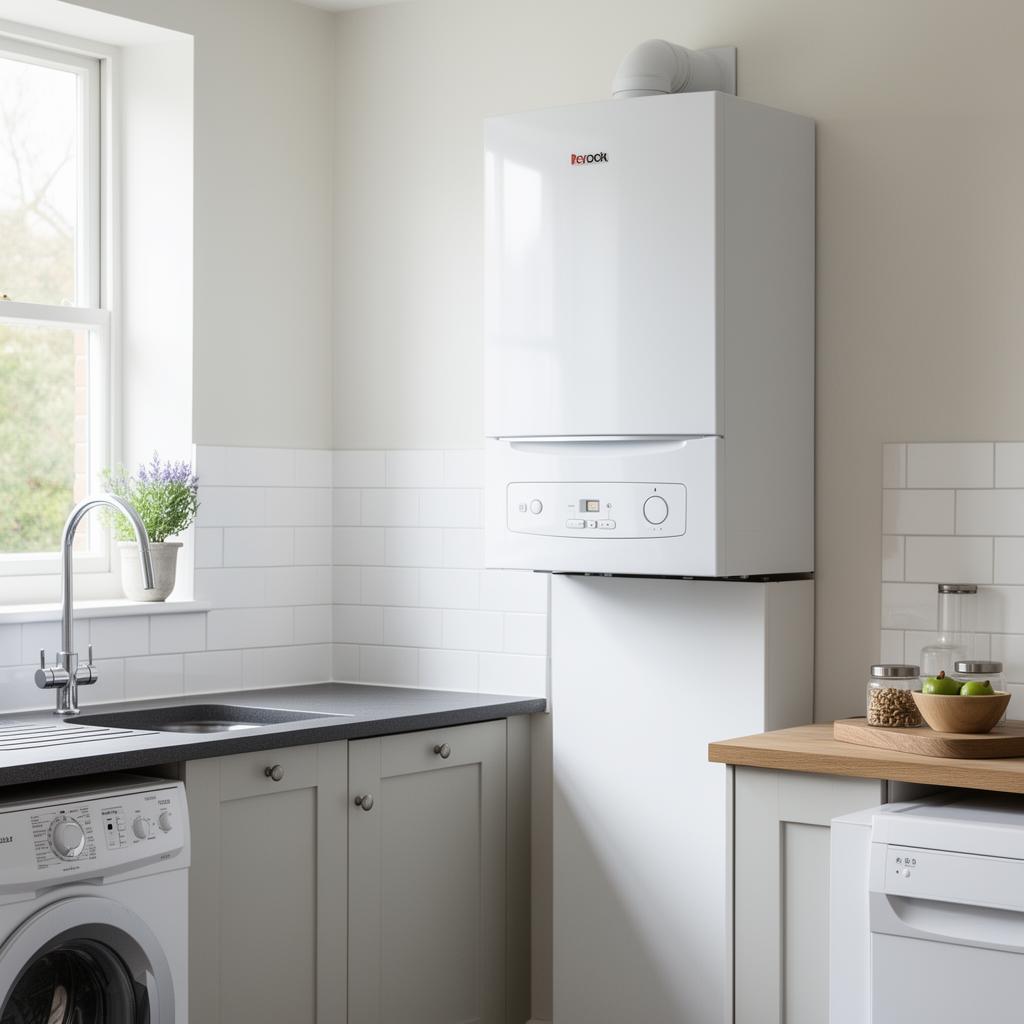
Shopping for a new boiler means encountering a wall of letters, percentages, and efficiency labels. Having your boiler efficiency rating explained clearly can save you hundreds of pounds over the life of your heating system. In this guide, we break down the two main rating systems used in the UK — ErP and SEDBUK — explain what each letter grade really means, and show you how to use these ratings to make a smarter purchasing decision.
What do boiler efficiency ratings like ErP and SEDBUK mean?
Boiler efficiency ratings tell you how much of the fuel your boiler burns is converted into useful heat. SEDBUK (Seasonal Efficiency of Domestic Boilers in the UK) is a percentage rating where a modern A-rated boiler scores 90% or above. ErP (Energy-related Products) uses an EU-style letter scale from A+++ to G, with most modern gas boilers rated A. Both systems measure broadly the same thing, but SEDBUK gives a more precise percentage that is useful for comparing similar models. A boiler rated 92% SEDBUK wastes just 8p for every pound of gas burned.
When comparing boilers, focus on the SEDBUK percentage rather than the ErP letter, as all modern condensing boilers fall within the A band. The difference between a 90% and a 94% efficient boiler might seem small, but over a year it can mean £40–£60 in gas savings. Also check the modulation ratio — a boiler that can turn down to 20% of its maximum output will run more efficiently in mild weather than one that can only modulate to 30%.
What Is a Boiler Efficiency Rating?
A boiler efficiency rating tells you how much of the energy in the fuel (gas, oil, or LPG) is converted into useful heat for your home. A boiler rated at 92% efficiency converts 92p of every pound’s worth of gas into heat, with the remaining 8p lost as waste — primarily through the flue gases.
Higher efficiency means lower fuel consumption for the same amount of warmth, which translates directly into lower energy bills and reduced carbon emissions. For a typical UK household spending GBP 900-1,200 per year on gas heating, even a few percentage points of efficiency improvement can be worth GBP 50-150 annually.
The ErP Energy Label: The Current Standard
Since September 2015, all new boilers sold in the UK must carry an ErP (Energy-related Products) label. This is the same style of coloured energy label you see on washing machines, fridges, and other appliances — a scale from A+++ (most efficient) down to G (least efficient).
What each ErP grade means for boilers
| ErP Rating | Seasonal Efficiency | Typical Technology |
|---|---|---|
| A+++ | 150% or above | Heat pump + solar thermal |
| A++ | 125-149% | Heat pump systems |
| A+ | 98-124% | Heat pump or solar hybrid |
| A | 90-97% | Modern condensing boiler |
| B | 86-89% | Older condensing boiler |
| C | 82-85% | Early condensing / best non-condensing |
| D | 75-81% | Non-condensing boiler |
| E | 68-74% | Old non-condensing boiler |
| F | 62-67% | Very old boiler |
| G | Below 62% | Antique / failing boiler |
Nearly all new gas boilers sold in 2026 carry an A rating. The differences within the A band are meaningful though — a boiler rated at 94% will cost noticeably less to run over 15 years than one at 90%. Always check the actual percentage, not just the letter.
Seasonal space heating efficiency vs gross efficiency
The ErP label uses seasonal space heating energy efficiency, which accounts for how the boiler performs across the full heating season — not just at peak load. This is a more realistic measure than the older gross/net efficiency figures because it factors in standby losses, part-load performance, and electricity consumption by the boiler’s controls and pump.
SEDBUK: The Older Rating System Explained
Before ErP arrived in 2015, the UK used the SEDBUK (Seasonal Efficiency of Domestic Boilers in the UK) system, developed by the boiler industry and the Building Research Establishment (BRE). You will still encounter SEDBUK ratings on older boilers, in product literature, and on comparison websites.
SEDBUK 2005 and SEDBUK 2009
There were two versions of SEDBUK:
- SEDBUK 2005 expressed efficiency as a percentage on the gross calorific value scale. Figures were typically 2-3% lower than net efficiency figures.
- SEDBUK 2009 switched to the net calorific value scale and adjusted the testing conditions. This produced slightly higher numbers for the same boiler.
This means you cannot directly compare a SEDBUK 2005 figure with a SEDBUK 2009 figure without conversion. A boiler rated at 88% on the 2005 scale might be 92% on the 2009 scale. Always check which version is being quoted.
| SEDBUK Band | SEDBUK 2009 Efficiency | SEDBUK 2005 Efficiency |
|---|---|---|
| A | 90% and above | 86.4% and above |
| B | 86-89.9% | 82.5-86.3% |
| C | 82-85.9% | 78.6-82.4% |
| D | 78-81.9% | 74.8-78.5% |
| E | 74-77.9% | 70.9-74.7% |
| F | 70-73.9% | 67.1-70.8% |
| G | Below 70% | Below 67.1% |
Boiler Plus Legislation: Minimum Standards Since 2018
In April 2018, the Boiler Plus regulations came into force in England. These set two key requirements for new boiler installations:
- All new gas and oil boilers must achieve a minimum ErP rating of 92% seasonal efficiency
- All new combi boiler installations must include at least one additional energy-saving measure from a prescribed list
The approved additional measures are:
- Weather compensation — an external sensor that adjusts boiler output based on outdoor temperature
- Load compensation — a room thermostat that modulates the boiler output based on how far the room is from the set temperature
- Flue gas heat recovery — a device that captures additional heat from flue gases to preheat cold water
- Smart thermostat with automation and optimisation — a connected thermostat that learns your schedule and adjusts heating accordingly
Most installers satisfy this requirement by fitting a smart thermostat, which typically adds GBP 150-300 to the installation cost but can save GBP 75-150 per year in reduced gas use.
How to Read a Boiler Efficiency Rating Label
When you look at a boiler’s ErP product fiche (the detailed energy label), you will find several key figures:
- Energy efficiency class for heating — the letter grade (A for most new boilers)
- Seasonal space heating energy efficiency (%) — the actual percentage figure, which is what you should compare between models
- Rated heat output (kW) — the maximum heating capacity
- Sound power level (dB) — noise in decibels
- Energy efficiency class for water heating (combi boilers only) — rated separately from space heating
The product fiche also includes a system label when the boiler is installed as part of a package with controls, solar panels, or a hot water cylinder. The system efficiency can be higher than the boiler alone — a smart thermostat with weather compensation can boost the system rating to A+ in some cases.
Comparing Popular Boiler Efficiency Ratings in 2026
To give you a practical sense of how efficiency differs between models, here is a comparison of some popular boilers available in the UK market.
| Boiler Model | Type | ErP Rating | Efficiency (%) | Approx. Price (installed) |
|---|---|---|---|---|
| Worcester Bosch Greenstar 4000 | Combi | A | 93.0% | GBP 2,200-2,800 |
| Viessmann Vitodens 050-W | Combi | A | 93.0% | GBP 2,000-2,600 |
| Vaillant ecoTEC Plus | Combi | A | 94.0% | GBP 2,300-3,000 |
| Ideal Vogue Max | Combi | A | 93.5% | GBP 2,100-2,700 |
| Baxi 800 | Combi | A | 93.2% | GBP 2,000-2,500 |
The difference between 93% and 94% efficiency might seem trivial, but over a 15-year lifespan at current gas prices, it equates to roughly GBP 150-250 in total savings. More significant savings come from ensuring the boiler is correctly sized, properly installed, and running at optimal flow temperatures. A well-installed 93% boiler will outperform a poorly installed 94% one every time.
What About Heat Pump Efficiency Ratings?
If you are comparing boilers with heat pumps, the efficiency figures can be confusing. Heat pumps use electricity to move heat rather than burn fuel, so they can achieve seasonal efficiencies above 100%. A typical air source heat pump achieves 300-400% seasonal efficiency (also expressed as a Seasonal Coefficient of Performance, or SCOP, of 3.0-4.0). This means they produce 3-4 kWh of heat for every 1 kWh of electricity consumed.
On the ErP scale, this puts heat pumps in the A++ to A+++ range, well above any gas boiler. However, because electricity costs roughly four times more per kWh than gas, the running cost advantage depends heavily on the efficiency achieved and the tariff you are on. Our guide to heat pumps covers this in detail.
How to Check Your Current Boiler’s Efficiency Rating
If you want to know how efficient your existing boiler is, there are several ways to find out:
- Check the label. Look for a sticker on the boiler casing showing the SEDBUK or ErP rating.
- Search online. The PCDB (Product Characteristics Database) at ncm-pcdb.org.uk contains efficiency data for thousands of boiler models.
- Check your EPC. Your Energy Performance Certificate lists your boiler’s efficiency band and estimated running cost.
- Ask your engineer. During an annual service, your Gas Safe engineer can identify the model and confirm its efficiency rating.
If your boiler is rated D or below (less than 82% efficiency), upgrading to a modern A-rated condensing boiler could save you GBP 150-315 per year. You can request a free quote to see what a replacement would cost for your property.
Frequently Asked Questions
Is a higher kW boiler more efficient?
No. The kW rating refers to the boiler’s output capacity, not its efficiency. An oversized boiler will actually be less efficient in practice because it cycles on and off more frequently, spending less time in the condensing mode where efficiency is highest. A properly sized boiler matched to your home’s heat demand will always outperform an oversized one.
Why do some boilers show different efficiency figures on different websites?
This usually comes down to whether the site is quoting SEDBUK 2005 (gross), SEDBUK 2009 (net), or ErP seasonal efficiency. These three systems use different calculation methods and produce different numbers for the same boiler. Always compare like with like, and prefer the ErP seasonal efficiency figure as the most current and realistic measure.
Does my boiler efficiency drop over time?
Yes, gradually. A well-maintained boiler might lose 1-2% efficiency over its lifetime. A poorly maintained one — with limescale on the heat exchanger, sludge in the system, or incorrect burner settings — can lose 5-10%. Annual servicing, magnetic system filters, and proper water treatment are the best ways to maintain efficiency. If you are also considering insulation improvements, these reduce the load on your boiler and can offset any efficiency decline.
What is the most efficient boiler brand in the UK?
The top-tier manufacturers — Vaillant, Worcester Bosch, Viessmann, and Ideal — all produce boilers with ErP A ratings and efficiencies of 92-94%. The differences between brands at this level are marginal. What matters more is correct sizing, quality installation by a competent Gas Safe engineer, proper system design, and the controls package. A budget boiler at 92% with excellent controls and correct flow temperature settings will cost less to run than a premium 94% model with basic controls set too high.
See what these numbers mean for your home
Free instant estimate — costs, savings, payback and grants for your region.

Related Articles
7 Quick Wins to Cut Your Energy Bills This Summer
Summer might seem like the wrong time to think about energy bills, but it is actually when the smartest homeowners make changes. Lower heating demand means more of your spending…
22 May 2026
The Best Time of Year to Replace Your Boiler (and How to Get the Best Price)
Find out why summer is the best time to replace your boiler in the UK, how to negotiate better prices and what to check before committing to an installation.
9 May 2026
Electric Heating Options Explained: Panel Heaters, Storage Heaters and Infrared
Compare electric heating options for UK homes including modern storage heaters, ceramic panel heaters and infrared panels with running cost breakdowns.
7 May 2026