How to Add a Battery to Your Existing Solar Panel System
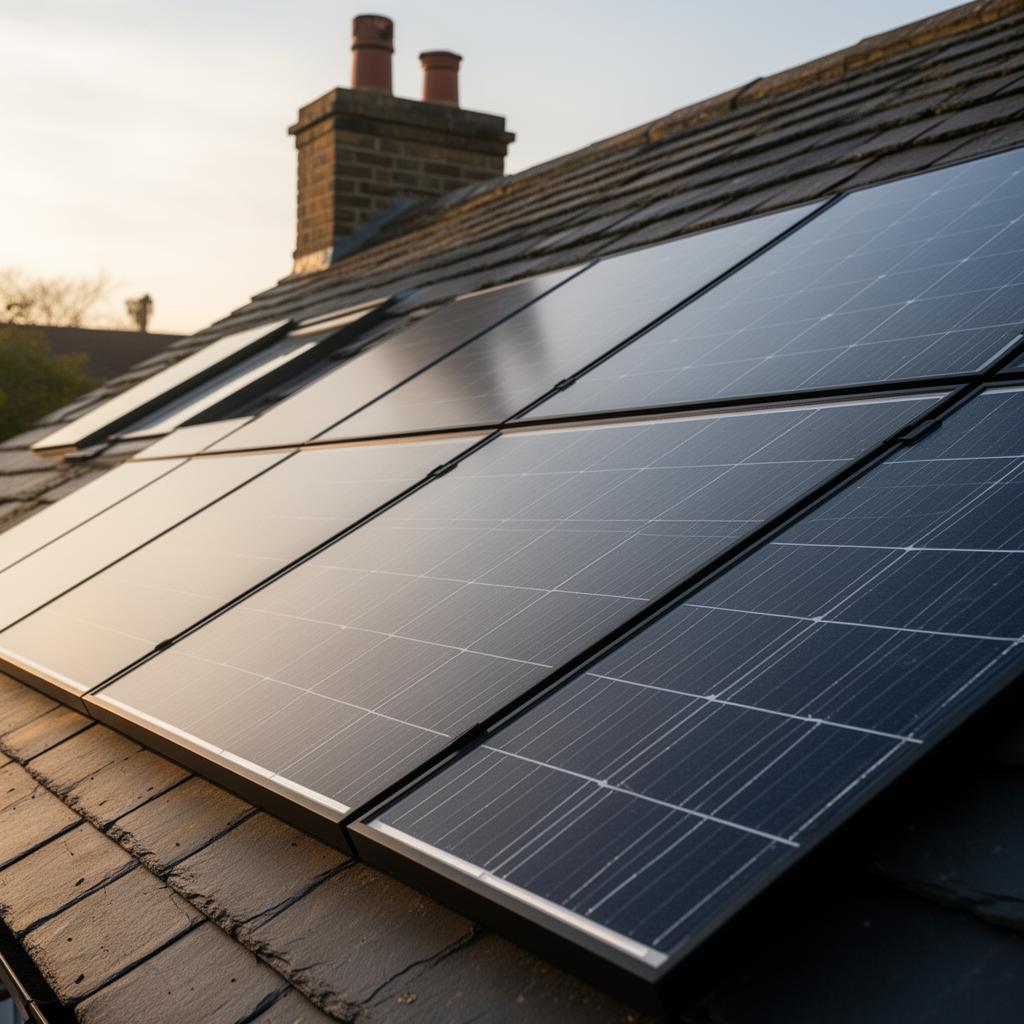
Learning how to add battery to existing solar panels UK homeowners already have installed is one of the most asked questions in the renewable energy space. If you installed solar panels a few years ago and are still exporting surplus electricity for a few pence per kilowatt hour, retrofitting a battery lets you store that surplus and use it in the evening instead, potentially cutting your electricity bill by up to 90%.
How to Add a Battery to an Existing Solar Panel System
- Check your current inverter type — if you have a standard string inverter, you will need an AC-coupled battery with its own inverter; if you have a hybrid inverter, you can add a DC-coupled battery directly
- Choose the right battery size — match the battery capacity to your evening and overnight usage, typically 5 to 10 kWh for a 3-bedroom home
- Get quotes from MCS-certified installers — expect to pay £4,500 to £7,000 for a 10 kWh AC-coupled retrofit battery including installation
- Ensure your consumer unit has space — the battery system needs a dedicated circuit breaker and adequate ventilation
- Register with the DNO — your installer must notify your local Distribution Network Operator of the battery installation
- Set up a time-of-use tariff — tariffs like Octopus Go or Intelligent Octopus let you charge from the grid at 7.5p per kWh overnight and use stored energy during peak hours
Retrofitting a battery to an existing solar system is straightforward for a qualified installer and typically takes one day. The biggest decision is whether to opt for an AC-coupled system that works alongside your existing inverter or to replace the inverter entirely with a hybrid model. AC coupling is simpler and cheaper for retrofit, while a hybrid inverter replacement offers better long-term efficiency if your current inverter is nearing the end of its 10 to 12 year lifespan.
This guide walks you through the entire retrofit process, from choosing between AC and DC coupling to understanding costs, VAT rules and the realistic savings you can expect.
Why Add a Battery to Existing Solar Panels?
When your solar panels generate more electricity than your home is using, the surplus is exported to the grid. Under the Smart Export Guarantee, you receive 3 to 15p per kWh for this exported electricity. Meanwhile, in the evening when the sun goes down, you buy electricity back from the grid at 24 to 30p per kWh.
The maths is obvious. Every kilowatt hour you store in a battery instead of exporting saves you the difference between your import and export rates, roughly 15 to 25p per kWh. For a typical household exporting 1,500 to 2,000 kWh per year, adding a battery can save an additional 300 to 500 pounds annually on top of the savings from the panels themselves.
Add in smart tariff optimisation, where the battery also charges from cheap overnight electricity, and total electricity bill savings can reach 80 to 90% for a typical three-bed home.
AC-Coupled vs DC-Coupled: Which Is Right for a Battery Retrofit?
The most important technical decision when retrofitting a battery is whether to use AC coupling or DC coupling. Each approach has distinct advantages for retrofit installations.
AC-Coupled Battery Retrofit
An AC-coupled battery connects to your home’s AC electrical system, after your existing solar inverter. Your existing inverter continues converting solar DC to AC as before, and a separate battery inverter manages the flow of electricity to and from the battery.
This is the most common approach for retrofits because it does not require replacing your existing solar inverter. The battery system is essentially bolted on to your existing installation, leaving everything that already works in place.
Advantages of AC coupling for retrofits:
- No change to existing solar inverter: your current inverter continues working as before
- Faster installation: typically half a day because there is no need to rewire the solar array
- Lower disruption: your solar panels continue generating during installation with only brief downtime for the final connection
- Works with any existing inverter: regardless of the make, model or age of your current inverter
Disadvantages of AC coupling:
- Additional inverter needed: the battery requires its own inverter, adding to cost and wall space
- Lower efficiency: solar electricity is converted DC to AC by the solar inverter, then AC to DC by the battery inverter for storage, then DC to AC again for use. Each conversion loses 2-5%, giving a total round-trip loss of approximately 10-15%
DC-Coupled Battery Retrofit
A DC-coupled battery connects directly to the DC side of your solar system, before the inverter. This requires either replacing your existing inverter with a hybrid inverter or adding a DC-DC converter to connect the battery to the existing DC wiring.
DC coupling is more efficient because solar electricity flows directly from panels to battery without any AC conversion. The round-trip efficiency is approximately 95-97%, compared to 85-90% for AC coupling.
However, DC coupling usually means replacing your existing inverter, which adds cost and wastes the remaining life of the original unit. This approach is better suited for new installations or for homes where the existing inverter has reached the end of its warranty or is developing faults.
Battery Retrofit Costs for UK Solar Systems
| Retrofit Option | Typical Cost | Includes |
|---|---|---|
| AC-coupled battery (5 kWh) | 3,000 – 4,000 pounds | Battery, battery inverter, installation |
| AC-coupled battery (10 kWh) | 4,500 – 6,000 pounds | Battery, battery inverter, installation |
| DC-coupled battery (5 kWh) | 3,500 – 5,000 pounds | Battery, hybrid inverter replacement, installation |
| DC-coupled battery (10 kWh) | 5,000 – 7,000 pounds | Battery, hybrid inverter replacement, installation |
The average cost for a battery retrofit in the UK is approximately 5,000 pounds for a 10 kWh AC-coupled system. This is the most popular retrofit configuration because it offers good capacity at a reasonable price without disturbing the existing solar installation.
0% VAT on Retrofitted Batteries
Since February 2024, battery storage retrofitted to an existing solar panel system qualifies for 0% VAT. This applies regardless of whether the battery is AC or DC coupled, and regardless of who installed the original solar panels.
The 0% VAT saving on a 5,000-pound battery installation is approximately 835 pounds (the VAT that would have been charged at 20%). This significantly improves the financial case for battery retrofits and has contributed to the surge in demand since the policy was announced.
To qualify, the battery must be installed in a residential property and the installation must be carried out by a VAT-registered company. The relief applies to both the battery hardware and the installation labour.
Step-by-Step: The Battery Retrofit Process
Adding a battery to your existing solar system is a relatively straightforward process.
Step 1: Site survey. An installer visits your home to assess your existing solar system, consumer unit, available wall space for the battery and your electricity consumption patterns. They will note your existing inverter make and model to determine the best coupling approach.
Step 2: System design. Based on the survey, the installer designs the battery system, selecting the right capacity and coupling method. They will provide a quote with expected savings calculations.
Step 3: DNO notification. Your installer notifies the Distribution Network Operator (DNO) of the battery addition. This is a standard notification under G98 and does not require permission for systems up to 3.68 kW per phase.
Step 4: Installation. For an AC-coupled retrofit, installation typically takes half a day. The installer mounts the battery, connects the battery inverter to your consumer unit, installs a CT clamp on your meter tails for energy monitoring and configures the system software.
Step 5: Commissioning and handover. The system is tested, commissioned and configured for your electricity tariff. You receive documentation including the MCS certificate update and operating instructions.
Realistic Savings After Adding a Battery
Here are realistic savings calculations for a typical UK three-bed home with a 4 kWp solar system adding a 10 kWh battery.
| Metric | Solar Only | Solar + Battery |
|---|---|---|
| Self-consumption rate | 40-50% | 75-90% |
| Annual grid import | 2,500 kWh | 800-1,200 kWh |
| Annual electricity bill | 450-550 pounds | 100-250 pounds |
| Annual saving vs no solar | 600-750 pounds | 900-1,100 pounds |
| Additional saving from battery | N/A | 300-500 pounds |
Adding a smart tariff on top of the battery can push self-consumption even higher. Some homeowners report total electricity bills of under 100 pounds per year with solar panels, a 10 kWh battery and Octopus Flux, representing savings of over 90%.
With a battery retrofit costing approximately 5,000 pounds and generating additional savings of 300 to 500 pounds per year, the payback period for the battery element alone is 10 to 17 years. Adding smart tariff arbitrage shortens this to 6 to 10 years.
Choosing the Right Battery for Your Existing Solar System
When retrofitting a battery, compatibility with your existing inverter and system configuration is important. Here are the key factors to consider.
- Capacity matching: choose a battery that roughly matches your daily surplus. If your panels export 5-7 kWh per day during summer, a 5-10 kWh battery is appropriate. Going larger than your surplus means the battery will not fill from solar alone
- AC coupling compatibility: most AC-coupled batteries work with any existing inverter, but verify with the installer
- Smart tariff support: if you plan to use Octopus Flux or Agile, choose a battery with proven tariff integration. GivEnergy, Tesla and FoxESS all have strong tariff support
- Wall space: batteries are large units, typically 600-1,100mm tall. Ensure you have suitable wall space in your garage, utility room or on an external wall
- Future expansion: if you might want more storage later, choose a modular battery system that allows additional units
To compare battery retrofit options for your existing solar system, request a free quote from MCS-certified installers in your area.
Frequently Asked Questions
Can I add a battery to any existing solar panel system?
Yes. AC-coupled batteries can be added to virtually any grid-connected solar system, regardless of the inverter brand, panel type or age of the installation. DC coupling requires either a compatible hybrid inverter or an inverter replacement, which adds cost but is feasible for any system.
Will adding a battery affect my existing solar warranty?
No. An AC-coupled battery retrofit does not modify your existing solar panels or inverter, so their warranties remain unaffected. If you choose DC coupling and replace the inverter, the new hybrid inverter comes with its own warranty. Your panel warranty is independent of the inverter used.
How long does a battery retrofit take to install?
An AC-coupled battery retrofit typically takes 3 to 5 hours (half a day). DC-coupled retrofits that require inverter replacement take a full day. There will be a brief period without solar generation during the final connection, typically 30 to 60 minutes.
Do I need to tell my energy supplier about the battery?
Your installer handles the DNO notification as part of the installation process. You should also inform your energy supplier, particularly if you are on a smart tariff or receiving SEG payments, so they can update your account. If you want to switch to a smart tariff to maximise your battery savings, this is a good time to do it.
Is it better to add a battery now or wait for prices to drop?
Battery prices have fallen significantly over the past five years and are expected to continue declining. However, every year you wait is a year of lost savings. If you are currently exporting 1,500+ kWh per year at low SEG rates, the annual savings from a battery (300 to 500 pounds) outweigh the likely annual price reduction in battery costs. For most homeowners, installing now delivers a better total return than waiting for cheaper hardware.
See what these numbers mean for your home
Free instant estimate — costs, savings, payback and grants for your region.

Related Articles
Is Solar Battery Storage Worth It in 2026?
Solar panels are now a common sight on UK rooftops, but the real game-changer in 2026 is battery storage. A home battery lets you store the electricity your panels generate…
2 June 2026
Why Spring Is the Perfect Time to Install Solar Panels
If you have been thinking about solar panels for a while but never quite pulled the trigger, spring is the moment to act. The combination of lengthening days, mild installation…
23 April 2026
How the Energy Price Cap Affects Heat Pump and Solar Panel Payback
See how the energy price cap affects heat pump and solar panel payback periods. Real calculations using current UK unit rates show why investing now locks in stronger returns.
15 April 2026