AC Coupled vs DC Coupled Batteries: Which Is Right for Your Solar Setup
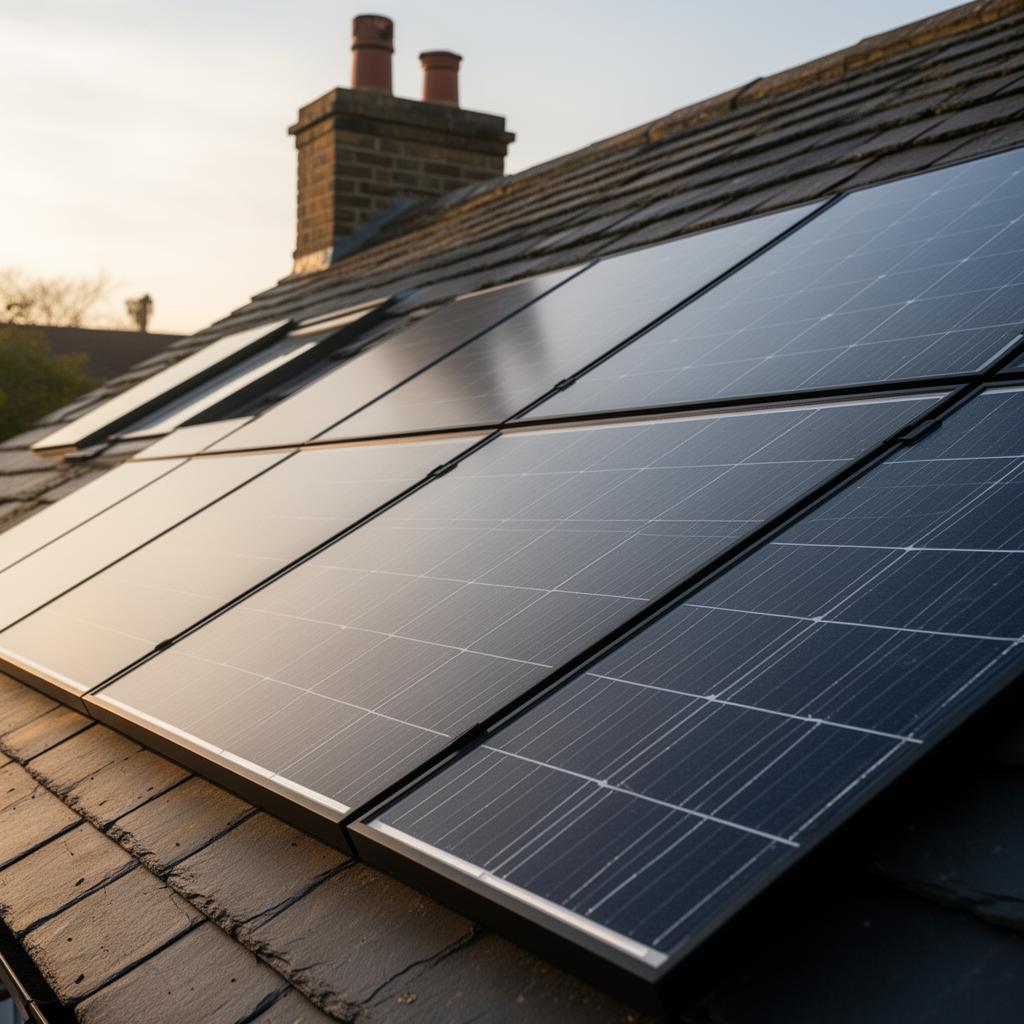
The AC coupled vs DC coupled battery decision is one of the most important technical choices you will make when adding storage to a solar system. Both approaches achieve the same end result, storing surplus solar electricity for later use, but they connect to your system in fundamentally different ways. The right choice depends on whether you are installing a new system, retrofitting a battery to existing panels, your budget and how much you value efficiency over simplicity.
AC Coupled vs DC Coupled Batteries: What Is the Difference?
| AC Coupled | DC Coupled | |
|---|---|---|
| How it connects | Separate battery inverter on AC side | Battery connects directly to solar inverter DC bus |
| Best for | Adding a battery to an existing solar system | New solar and battery installations |
| Efficiency (round trip) | 85–90% | 90–95% |
| Typical installed cost | £4,500–£7,000 (10 kWh) | £4,000–£6,500 (10 kWh) |
| Installation complexity | Simpler — no changes to existing solar wiring | Requires hybrid inverter or inverter replacement |
| Grid charging | Yes — charges from grid or solar | Yes — via hybrid inverter |
AC coupled batteries are the standard choice for retrofitting storage to an existing solar panel system because they connect independently without replacing your current inverter. DC coupled systems are more efficient for new installations because solar energy flows directly into the battery with fewer conversion steps. If you are installing solar and a battery at the same time, a hybrid inverter with DC coupling typically offers the best value and highest round-trip efficiency.
This guide provides a detailed technical comparison of AC and DC coupled batteries, explains the efficiency implications of each approach and helps you choose the right configuration for your UK solar setup.
Understanding the Basics: AC vs DC in Solar Systems
To understand the coupling debate, you need to know the difference between DC and AC electricity in a solar system.
Solar panels generate direct current (DC) electricity. Your home appliances run on alternating current (AC) electricity. An inverter converts DC to AC. A battery stores electricity in DC form. Every time electricity is converted between DC and AC, a small amount of energy is lost as heat, typically 2 to 5% per conversion.
The question of AC vs DC coupling is really a question of where the battery sits in relation to the inverter, and how many conversions the electricity undergoes between generation and storage.
How DC-Coupled Batteries Work
In a DC-coupled system, the battery connects to the DC side of your solar system, between the panels and the inverter. A single hybrid inverter manages everything: converting solar DC to AC for your home, directing surplus solar DC to the battery and converting stored DC battery power to AC when needed.
The electricity flow in a DC-coupled system looks like this:
- Solar to home: Solar DC converts to AC via hybrid inverter (one conversion, ~3% loss)
- Solar to battery: Solar DC flows directly to battery DC (no conversion needed, ~1% loss from charge controller)
- Battery to home: Battery DC converts to AC via hybrid inverter (one conversion, ~3% loss)
- Total round-trip loss (solar to battery to home): approximately 4-6%
The key advantage is that when surplus solar is stored in the battery, there is no DC-to-AC conversion. The DC electricity flows directly from panels to battery, with only the charge controller managing the voltage and current. This makes DC coupling the most efficient way to store solar energy.
How AC-Coupled Batteries Work
In an AC-coupled system, the battery connects to the AC side of your electrical system, after the solar inverter. Your existing solar inverter converts panel DC to AC as normal. A separate battery inverter then converts surplus AC back to DC for storage, and converts it back to AC again when the battery discharges.
The electricity flow in an AC-coupled system:
- Solar to home: Solar DC converts to AC via solar inverter (one conversion, ~3% loss)
- Solar to battery: Solar DC converts to AC via solar inverter, then AC converts back to DC via battery inverter (two conversions, ~6-8% loss)
- Battery to home: Battery DC converts to AC via battery inverter (one conversion, ~3% loss)
- Total round-trip loss (solar to battery to home): approximately 10-15%
The extra conversion step when charging the battery from solar is the main disadvantage. Every unit of solar electricity passes through two inverters before reaching the battery, losing energy at each stage.
AC Coupled vs DC Coupled: Side-by-Side Comparison
| Feature | DC-Coupled | AC-Coupled |
|---|---|---|
| Round-trip efficiency | 94-96% | 85-90% |
| Number of inverters | 1 (hybrid) | 2 (solar + battery) |
| Best for | New installations | Retrofits |
| Retrofit suitability | Requires inverter replacement | Works with any existing inverter |
| Installation complexity | More complex (DC wiring) | Simpler (AC wiring only) |
| Installation time | 1 day (new) / 1 day (retrofit) | Half day (retrofit) |
| Cost (retrofit) | 5,000 – 7,000 pounds | 4,500 – 6,000 pounds |
| Cost (new install) | Lower (one inverter) | Higher (two inverters) |
| Grid charging efficiency | 93-96% | 93-96% |
| Solar charging efficiency | 97-99% | 90-94% |
Efficiency Losses: How Much Do They Actually Cost?
The efficiency difference between AC and DC coupling sounds significant at 5-10%, but what does it mean in pounds and pence? Let us calculate for a typical UK scenario.
Assume a 4 kWp solar system storing 1,500 kWh per year in the battery (the surplus that would otherwise be exported).
DC-coupled system (95% round-trip efficiency):
- 1,500 kWh stored x 95% efficiency = 1,425 kWh available for use
- 75 kWh lost to conversions
- At 24.5p per kWh, the lost electricity is worth 18.38 pounds per year
AC-coupled system (87% round-trip efficiency):
- 1,500 kWh stored x 87% efficiency = 1,305 kWh available for use
- 195 kWh lost to conversions
- At 24.5p per kWh, the lost electricity is worth 47.78 pounds per year
The annual cost of AC coupling’s lower efficiency is approximately 29 pounds per year (47.78 minus 18.38). Over a 10-year battery warranty period, that is 290 pounds in additional conversion losses. This is significant but relatively modest compared to the 1,000 to 2,000 pounds extra cost of replacing an existing inverter with a hybrid unit for DC coupling.
For most retrofits, the higher efficiency of DC coupling does not justify the cost of replacing a working inverter. For new installations where you are buying an inverter anyway, DC coupling via a hybrid inverter is the clear winner.
Grid Charging: Where Efficiency Differences Disappear
An important nuance that is often overlooked: when charging the battery from the grid (for smart tariff arbitrage), both AC and DC coupled systems have similar efficiency. Grid electricity is AC, so both systems must convert AC to DC for battery storage. The extra solar-specific conversion loss that penalises AC coupling does not apply to grid charging.
If you plan to use your battery primarily for tariff arbitrage rather than solar storage, the efficiency argument for DC coupling is much weaker. An AC-coupled battery charging from cheap overnight electricity and discharging during peak hours loses approximately 8 to 10% in round-trip efficiency, versus 6 to 8% for DC coupling. The difference is 2 to 3%, which translates to just 10 to 15 pounds per year for most households.
Feed-in Tariff Implications
If you are one of the UK homeowners still receiving Feed-in Tariff (FiT) payments, the coupling method matters for a different reason. FiT payments are based on deemed export (assumed 50% of generation) for most domestic installations. Adding a battery does not change your FiT generation payments because these are based on meter readings of total generation, not export.
However, if you have an export meter (less common), an AC-coupled battery can be configured to avoid reducing measured export, preserving your FiT export payments while still storing surplus for your own use. The configuration options vary by installer and battery brand, so discuss this specifically if you are on FiT.
DC-coupled batteries route solar DC directly to the battery before it passes through the generation meter, which could theoretically reduce measured generation and affect FiT payments. For FiT homes, AC coupling is generally the safer choice to protect existing tariff payments.
Which Coupling Method Should You Choose?
The decision tree is relatively simple.
Choose DC coupling if:
- You are installing a new solar and battery system from scratch
- Your existing solar inverter has failed or is out of warranty and needs replacing anyway
- Maximum efficiency is your top priority and you are willing to pay extra for an inverter swap
- You want a single, clean installation with one inverter managing everything
Choose AC coupling if:
- You are adding a battery to an existing solar system with a working inverter
- You want the simplest and fastest retrofit with minimum disruption
- Your budget is limited and you want to avoid the cost of replacing a working inverter
- You are on the Feed-in Tariff and want to protect your existing payments
- You primarily plan to use the battery for tariff arbitrage rather than solar storage
For the majority of UK homeowners retrofitting a battery to existing solar panels, AC coupling is the practical choice. The efficiency penalty is real but modest, and the cost saving from keeping your existing inverter is significant.
For new installations, DC coupling via a hybrid inverter is the clear winner: simpler, cheaper (one inverter instead of two) and more efficient.
To get personalised advice on the right coupling method for your system, request a free quote from MCS-certified installers who can assess your existing setup.
Frequently Asked Questions
Is DC coupling always more efficient than AC coupling?
For storing solar energy, yes. DC coupling avoids one conversion step, giving approximately 5 to 10% better round-trip efficiency. For grid charging (tariff arbitrage), the efficiency difference narrows to just 2 to 3% because both systems must convert AC grid electricity to DC for storage.
Can I convert my AC-coupled battery to DC coupling later?
In theory, yes, but it requires replacing both the solar inverter and the battery inverter with a single hybrid inverter, plus rewiring the DC connections. The cost and disruption are substantial, and the efficiency gains rarely justify the expense. It is better to choose the right coupling method from the start.
Does coupling method affect battery warranty?
No. Battery warranties cover the battery cells and their capacity retention regardless of whether the battery is AC or DC coupled. The coupling method affects the external wiring and inverter configuration, not the battery hardware itself. Both coupling methods are standard practice and fully supported by all major battery manufacturers.
Which coupling method is better for backup power?
Both AC and DC coupled systems can provide backup power during grid outages when equipped with an EPS (Emergency Power Supply) relay. DC-coupled systems can continue generating solar electricity and feeding it to the battery during an outage, extending backup duration on sunny days. AC-coupled systems may need additional configuration to allow the solar inverter to operate during a grid outage, though many modern AC-coupled batteries handle this automatically.
Can I mix AC and DC coupling in the same system?
Yes, though this is uncommon in residential installations. Some larger systems use a hybrid inverter with a DC-coupled battery for maximum solar storage efficiency, plus an additional AC-coupled battery for extra capacity or tariff arbitrage. This adds complexity and cost, and is generally only worthwhile for high-consumption homes with large solar panel arrays exceeding 6 kWp.
See what these numbers mean for your home
Free instant estimate — costs, savings, payback and grants for your region.

Related Articles

Is Solar Battery Storage Worth It in 2026?
Solar panels are now a common sight on UK rooftops, but the real game-changer in 2026 is battery storage. A home battery lets you store the electricity your panels generate…
2 June 2026
Why Spring Is the Perfect Time to Install Solar Panels
If you have been thinking about solar panels for a while but never quite pulled the trigger, spring is the moment to act. The combination of lengthening days, mild installation…
23 April 2026
How the Energy Price Cap Affects Heat Pump and Solar Panel Payback
See how the energy price cap affects heat pump and solar panel payback periods. Real calculations using current UK unit rates show why investing now locks in stronger returns.
15 April 2026