Electric Heating Options Explained: Panel Heaters, Storage Heaters and Infrared
For the estimated 4 million UK homes without access to mains gas, electric heating is not a lifestyle choice — it is the default. And even gas-connected households are increasingly considering all-electric heating as part of the move towards net zero. But the range of electric heating options in the UK can be confusing, with wildly different technologies at very different price points.
What are the electric heating options for UK homes?
- Panel heaters – lightweight, cheap to buy (£50–£200), responsive but costly to run at standard tariff rates.
- Storage heaters – charge overnight on cheaper Economy 7/10 rates and release heat during the day, costing £300–£600 per unit installed.
- Infrared heating panels – heat objects directly rather than the air, very efficient for well-insulated rooms, typically £200–£500 per panel.
- Electric radiators – oil-filled or ceramic, offering better heat retention than basic panel heaters at £150–£400 each.
- Electric underfloor heating – ideal for bathrooms and extensions, costing £50–£80 per square metre to install.
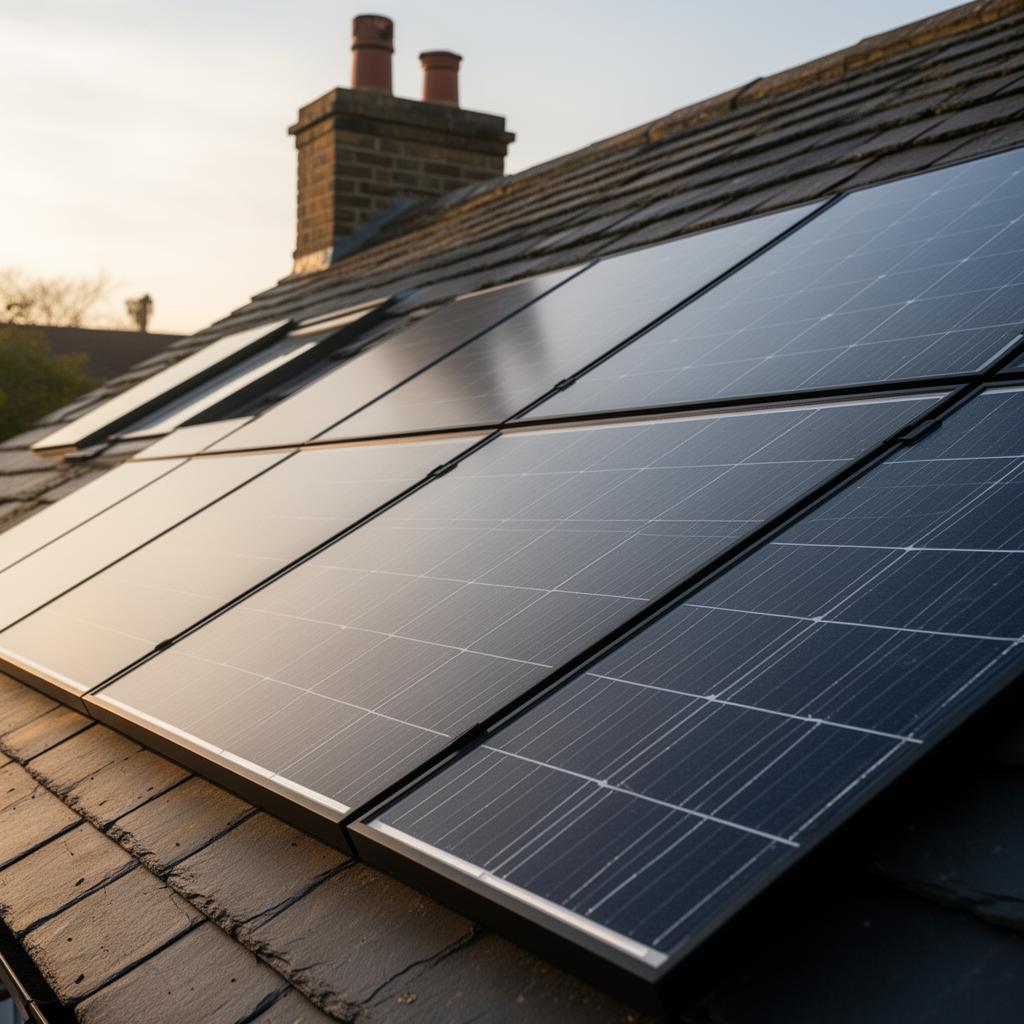
The right electric heating option depends on your tariff, insulation levels and how each room is used. Off-peak tariffs can make storage heaters viable, but in well-insulated homes, infrared panels and modern electric radiators often deliver better comfort at a lower overall cost. With electricity at around 24.5p per kWh under the 2026 price cap, choosing efficient electric heating and pairing it with solar panels can make a real difference to running costs.
This guide cuts through the marketing claims and compares the three main electric heating technologies — panel heaters, storage heaters and infrared panels — on the metrics that matter: running cost, comfort, responsiveness and suitability for different types of home.
Why Electric Heating Costs More (and What You Can Do About It)
Before comparing specific technologies, it is important to understand the fundamental cost challenge with electric heating. Electricity costs roughly 24 to 25p per kWh at current rates, while gas costs around 6 to 7p per kWh. That means electric heating is approximately 3.5 to 4 times more expensive per unit of energy than gas.
However, there are important nuances:
- Electric heaters are 100% efficient at point of use — every unit of electricity becomes heat. Gas boilers waste 8 to 15% of the energy up the flue
- Off-peak tariffs can reduce electric heating costs significantly (see the storage heater section below)
- Heat pumps are 250 to 350% efficient, delivering 2.5 to 3.5 kWh of heat for every 1 kWh of electricity consumed, making them the most cost-effective electric heating option
- Better insulation reduces the total kWh needed regardless of the heat source, narrowing the cost gap
For homes where a heat pump is practical, it will almost always be the cheapest electric heating option. The technologies covered below are most relevant for homes where a heat pump is not feasible, or for supplementary heating in specific rooms.
Electric Panel Heaters: Immediate Heat On Demand
Electric panel heaters (also called convector heaters) are wall-mounted units that heat air as it passes over an internal element. They are the modern equivalent of the portable fan heater, but designed for permanent installation.
How they work
Cool air enters through the bottom of the panel, passes over heating elements, and rises out of the top as warm air. This convection cycle heats the room. Modern ceramic panel heaters also emit some radiant heat from the front surface, providing a more balanced warmth.
Pros and cons
- Fast response: rooms heat up within 10 to 20 minutes
- Low purchase cost: GBP 100 to GBP 400 per unit depending on quality and wattage
- Easy installation: wall-mounted with a standard plug or fused spur, no plumbing needed
- Precise thermostat control: modern units have digital thermostats accurate to 0.5 degrees
- High running cost: no thermal storage, so every watt of heat comes from full-price electricity
- Convection draughts: can feel draughty near the floor as cool air is drawn towards the heater
- Dry air: convection heating can reduce perceived humidity, causing dry skin and irritated airways
Best for
Rooms that need occasional or supplementary heating — home offices, spare bedrooms, conservatories. Not ideal as the primary heating system for a whole house due to high running costs.
Storage Heaters: Charging Overnight, Heating All Day
Storage heaters have been a staple of off-gas-grid UK homes since the 1960s. They charge up with heat during cheap overnight electricity hours and release that stored heat throughout the following day.
How they work
Dense ceramic bricks inside the heater are heated to high temperatures (up to 700 degrees Celsius in some models) using overnight electricity. During the day, heat is released gradually through the casing. Traditional models have manual input and output controls. Modern high-heat-retention (HHR) models have electronic controls, programmable timers, and better insulation that retains more heat for release at the times you choose.
Traditional vs modern storage heaters
| Feature | Traditional Storage Heater | Modern HHR Storage Heater |
|---|---|---|
| Heat retention by evening | 30-50% (often cold by 4pm) | 70-85% (heat available into evening) |
| Controls | Manual input/output dials | Digital thermostat, 7-day programmer |
| Fan assisted | No (passive heat release) | Yes (fan boosts heat output on demand) |
| Purchase cost per unit | GBP 200 – GBP 400 | GBP 500 – GBP 900 |
| Insulation quality | Basic | High-performance vacuum panels |
| Size and weight | Large and very heavy | Slimmer, still heavy (40-60 kg) |
Running cost with off-peak electricity
Storage heaters make financial sense only when paired with an off-peak electricity tariff like Economy 7 or a modern time-of-use tariff. At an off-peak rate of 10 to 12p per kWh, a storage heater system for a 3-bedroom house typically costs GBP 900 to GBP 1,300 per year to run. On a standard flat-rate tariff, the same system would cost GBP 1,800 to GBP 2,500 — making it uneconomic.
Best for
Off-gas-grid homes already on an Economy 7 or time-of-use tariff, particularly where a heat pump is not practical (flats with no outdoor space, listed buildings). Modern HHR models are a significant upgrade over traditional storage heaters and worth the investment if you plan to stay in the property.
Infrared Heating Panels: Radiant Heat That Warms Objects, Not Air
Infrared heating panels represent the newest electric heating technology in UK homes. They work on a fundamentally different principle to convection heaters — instead of warming the air, they emit far-infrared radiation that heats the surfaces, objects and people in the room directly.
How they work
An electric element heats a panel (typically made of carbon fibre, ceramic or aluminium) to around 90 to 100 degrees Celsius. The panel then emits far-infrared radiation — the same type of heat you feel from the sun or a wood stove. This radiation travels in straight lines and is absorbed by walls, floors, furniture and skin, warming them directly. The room air is heated indirectly as these surfaces release warmth.
Why infrared panels can cost less to run
Despite using full-price electricity, infrared panels can deliver a lower total heating bill than convector heaters for several reasons:
- Lower wattage required: because they heat objects directly rather than warming all the air in the room, a smaller panel can achieve comfortable warmth. A 600W infrared panel can heat a room that would need a 1,000 to 1,500W convector
- Reduced heat loss: warm air rises and escapes through ceilings and ventilation. Infrared-heated surfaces stay warm even when doors are opened briefly
- Thermostat cycling: once surfaces are warm, the panel cycles on and off less frequently, reducing average power consumption to 40 to 60% of the rated wattage over an hour
- Drying effect on walls: infrared radiation slightly warms wall surfaces, reducing condensation and keeping walls drier. Dry walls insulate better than damp walls
Costs and sizing
| Room Size | Recommended Panel Wattage | Typical Panel Cost |
|---|---|---|
| Bathroom (4-6 sq m) | 300-450W | GBP 150 – GBP 250 |
| Bedroom (10-14 sq m) | 600-800W | GBP 200 – GBP 350 |
| Living room (18-25 sq m) | 1,200-1,800W (2-3 panels) | GBP 400 – GBP 700 |
Best for
Well-insulated homes going all-electric, rooms with high ceilings (where convection heating wastes energy warming the upper volume), conservatories, and properties where a heat pump is not practical. They are particularly effective in combination with solar panels — run infrared panels during the day when solar generation is highest.
Running Cost Comparison: All Electric Heating Options
Here is a realistic annual running cost comparison for heating a 3-bedroom semi-detached house with moderate insulation, assuming current electricity rates.
| Heating System | Tariff | Estimated Annual Cost |
|---|---|---|
| Air source heat pump + radiators | Standard rate | GBP 700 – GBP 950 |
| Air source heat pump + UFH | Standard rate | GBP 550 – GBP 750 |
| Infrared panels (whole house) | Standard rate | GBP 1,100 – GBP 1,500 |
| Modern HHR storage heaters | Economy 7 off-peak | GBP 900 – GBP 1,300 |
| Electric panel heaters | Standard rate | GBP 1,800 – GBP 2,500 |
| Traditional storage heaters | Economy 7 off-peak | GBP 1,200 – GBP 1,600 |
| Gas combi boiler (for comparison) | Standard gas rate | GBP 850 – GBP 1,100 |
A heat pump is clearly the most cost-effective all-electric option, but where a heat pump is not practical, infrared panels offer the next-best running costs on a standard tariff, while modern storage heaters compete when off-peak electricity is available.
Choosing the Right Electric Heating for Your Home
The best choice depends on your property, budget and circumstances. Here is a quick decision guide.
- Off-gas-grid with outdoor space for an external unit: an air source heat pump is the first choice, with the GBP 7,500 Boiler Upgrade Scheme grant making it more affordable
- Off-gas-grid flat or listed building (no heat pump possible): modern HHR storage heaters on an off-peak tariff, or infrared panels if you prefer responsive, room-by-room control
- Replacing old storage heaters: upgrade to modern HHR models for dramatically better heat retention and control, or switch to infrared panels for a completely different heating experience
- Supplementary heating for one or two rooms: infrared panels or quality ceramic panel heaters — install only where needed and use smart thermostats to avoid waste
- New extension or conservatory: electric underfloor heating (for small rooms) or wet UFH connected to the main heating system (for larger spaces). A solid conservatory roof with proper insulation makes any heating system more effective
Whatever system you choose, proper insulation is the foundation of affordable electric heating. Every pound spent on insulation reduces the electricity needed, and the savings compound year after year. Get a free quote for a whole-house energy assessment.
Frequently Asked Questions About Electric Heating in the UK
Are infrared panels safe for homes with children and pets?
Yes. The front surface of an infrared panel typically reaches 80 to 100 degrees Celsius, which is hot to the touch but less dangerous than a traditional radiator (which can reach 70 to 80 degrees at the surface with a gas boiler running at full output). Ceiling-mounted panels eliminate the risk entirely and are the recommended option for households with young children. Wall-mounted panels should be installed at a height where small children cannot reach them.
Can I replace storage heaters with a heat pump?
In many cases, yes. An air source heat pump with radiators or underfloor heating replaces the storage heater system entirely and runs at roughly half the cost. The main barrier is whether the property has space for the outdoor unit and whether wet heating distribution (pipes and radiators) can be installed. For ground-floor flats, houses and bungalows, this is usually straightforward. For upper-floor flats, it may be more challenging.
Do electric heaters use a lot of electricity on standby?
Modern electric heaters with electronic controls use a small amount of standby power (typically 1 to 3 watts) to maintain the display and thermostat. This equates to less than GBP 5 per year per heater. The significant electricity consumption occurs only when the heating elements are active. Smart thermostats and timers ensure the elements run only when needed.
Is it cheaper to heat one room at a time with electric heaters?
Yes, and this is one of the key advantages of electric heating over central heating. With a gas boiler system, you heat the water that circulates to all radiators (though TRVs offer some zone control). With individual electric heaters, you can heat only the room you are using. For single-occupancy homes or households that spend most of their time in one or two rooms, this targeted approach can reduce total heating costs by 30 to 50%.
What size infrared panel do I need for my room?
As a general guide, allow 60 to 80 watts per square metre for a well-insulated room, or 80 to 100 watts per square metre for a poorly insulated room. A 12 square metre bedroom in a well-insulated home needs a 700 to 950W panel (or two smaller panels). A 20 square metre living room needs 1,200 to 1,600W of infrared capacity. Your installer can provide a precise calculation based on your room dimensions, insulation level and window area.
See what these numbers mean for your home
Free instant estimate — costs, savings, payback and grants for your region.

Related Articles
7 Quick Wins to Cut Your Energy Bills This Summer
Summer might seem like the wrong time to think about energy bills, but it is actually when the smartest homeowners make changes. Lower heating demand means more of your spending…
22 May 2026
The Best Time of Year to Replace Your Boiler (and How to Get the Best Price)
Find out why summer is the best time to replace your boiler in the UK, how to negotiate better prices and what to check before committing to an installation.
9 May 2026
Double Glazing vs Secondary Glazing: Cost, Performance and Which Is Best for Your Home
Double glazing and secondary glazing both improve insulation and reduce noise, but they differ in cost, performance and suitability. We compare the two to help you choose.
7 May 2026