Net Zero Home: A Realistic Guide for UK Homeowners
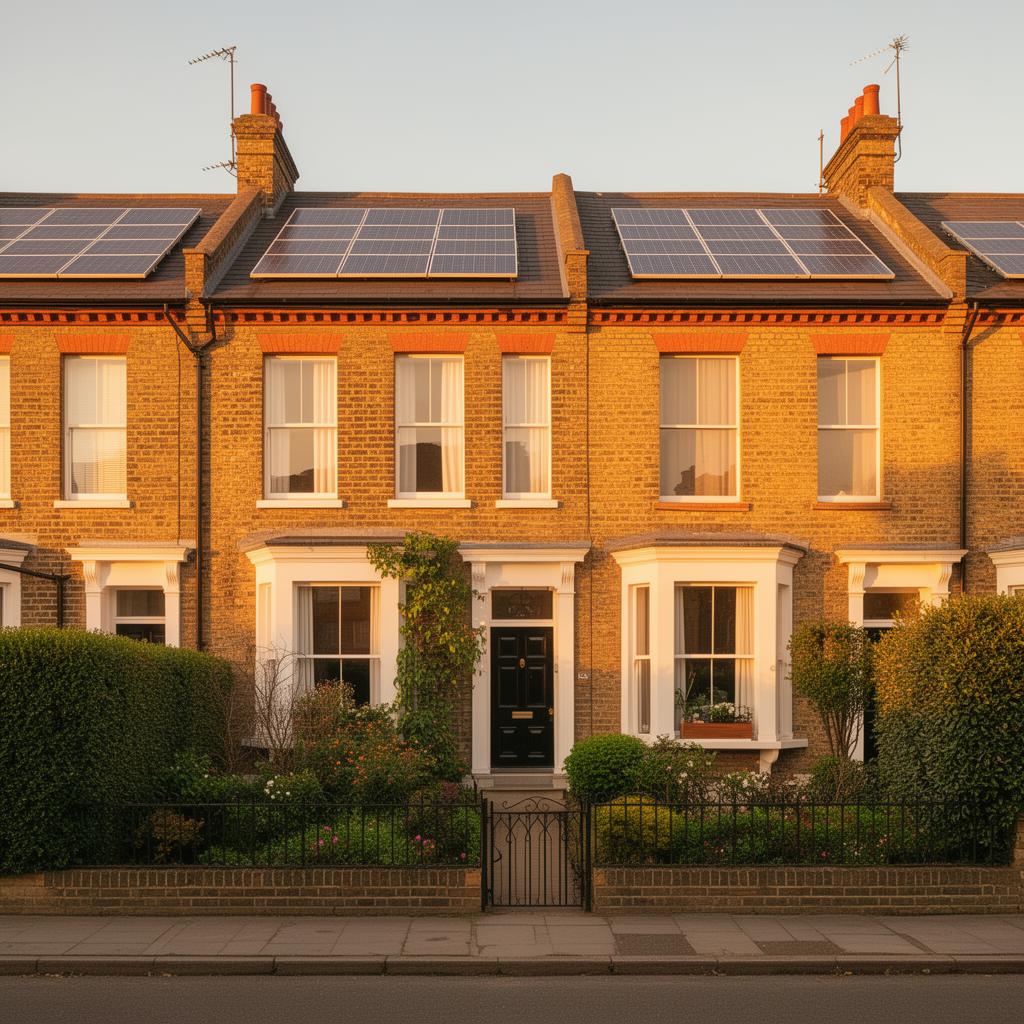
Achieving a net zero home in the UK might sound like something reserved for new-build eco houses, but it is increasingly realistic for existing properties too. A net zero home is one that produces as much renewable energy as it consumes over a year, and with the right combination of insulation, electrified heating and solar generation, millions of UK homeowners can get there — or close to it — without knocking the house down and starting again.
What is a net zero home?
A net zero home is a property that produces as much renewable energy as it consumes over the course of a year, resulting in zero net carbon emissions from its operation. In the UK, this typically means combining high levels of insulation, airtightness, a heat pump for space heating and hot water, solar panels for electricity generation, and potentially a battery storage system. A truly net zero home has an EPC rating of A and annual energy costs close to or below zero.
Achieving net zero in an existing UK home usually requires a whole-house retrofit costing between £25,000 and £60,000, depending on the property’s starting condition. Government grants such as the Boiler Upgrade Scheme (£7,500), ECO4 funding and local authority schemes can reduce this significantly. For new builds, designing to net zero from the outset adds roughly 5–10% to construction costs but delivers energy bills under £200 per year.
This guide explains what net zero actually means at household level, ranks the measures by carbon impact and cost, sets out a realistic phased timeline, and tackles the most common myths about going fully off-gas.
What Does Net Zero Home Actually Mean?
A net zero home balances the energy it uses with the energy it generates from renewable sources over the course of a year. It does not necessarily mean using zero energy — it means the home’s net carbon emissions from energy use are effectively zero.
In practice, a net zero home in the UK typically features three things working together:
- A highly insulated building envelope that minimises how much energy the home needs in the first place
- Electrified heating through a heat pump rather than a gas boiler, so no fossil fuels are burned on site
- On-site renewable generation such as solar panels, ideally with battery storage, to offset the electricity consumed
The key distinction is between operational net zero (covering day-to-day energy use) and whole-life net zero (which also accounts for the carbon embedded in building materials). For most homeowners, operational net zero is the practical and achievable target.
Why UK Homes Are Starting Behind
The UK has some of the oldest and least energy-efficient housing stock in Europe. Around 29 million homes need to be upgraded to meet the government’s 2050 net zero target, and the challenges vary hugely depending on when the property was built.
| Property Age | Common Construction | Typical EPC Rating | Key Challenges |
|---|---|---|---|
| Pre-1919 | Solid brick or stone walls | E or F | No cavity to insulate, heritage constraints |
| 1920s-1960s | Cavity walls, limited insulation | D or E | Unfilled cavities, single glazing |
| 1970s-1990s | Cavity walls, some insulation | D | Partial insulation, ageing boilers |
| 2000s-2012 | Part L compliant | C or D | Better fabric, but still gas-heated |
| Post-2021 | Future Homes Standard pathway | B or A | Already near net zero ready |
The good news is that even the worst-performing homes can be brought close to net zero with the right investment. The question is usually about cost and phasing rather than technical feasibility.
The Net Zero Home Upgrade Hierarchy
Energy professionals follow a simple hierarchy when planning a net zero home retrofit: reduce demand first, then electrify heating, then generate renewable energy. Getting this order right saves money and ensures each system is correctly sized.
Step 1: Reduce energy demand through insulation
The less energy your home needs, the smaller (and cheaper) the heat pump and solar system you need to install. Insulation should always come first.
- Loft insulation to 270mm: GBP 300 to GBP 600, saves GBP 150 to GBP 250 per year
- Cavity wall insulation: GBP 500 to GBP 1,500, saves GBP 200 to GBP 400 per year
- Solid wall insulation (internal or external): GBP 6,000 to GBP 15,000, saves GBP 300 to GBP 600 per year
- Floor insulation: GBP 500 to GBP 1,200, saves GBP 50 to GBP 100 per year
- Window upgrades to double or triple glazing: GBP 4,000 to GBP 8,000, saves GBP 100 to GBP 200 per year
Draught-proofing is the cheapest measure of all, costing as little as GBP 100 to GBP 300 for a whole house and delivering immediate comfort improvements.
Step 2: Electrify your heating with a heat pump
Once the building fabric is improved, replacing the gas boiler with an air source heat pump eliminates on-site fossil fuel combustion entirely. A heat pump delivers 2.5 to 3.5 kWh of heat for every 1 kWh of electricity consumed, making it far more efficient than any boiler.
Installed costs range from GBP 8,000 to GBP 14,000 after the GBP 7,500 Boiler Upgrade Scheme grant. For a well-insulated home, annual running costs are comparable to or lower than a gas boiler, and they will continue to fall as the electricity grid decarbonises and electricity prices stabilise.
Step 3: Generate renewable energy with solar panels
A solar panel system sized at 4 kWp generates around 3,400 kWh per year — enough to offset a significant portion of a heat pump’s electricity consumption. Adding a battery (typically 5 to 10 kWh capacity) lets you store surplus daytime generation for evening use, boosting self-consumption from around 30% to over 60%.
System costs: GBP 5,000 to GBP 7,000 for panels, plus GBP 2,500 to GBP 5,000 for a battery. The combined system typically pays for itself in 8 to 12 years.
What Does a Net Zero Home Cost in Total?
The total investment depends heavily on your starting point. Here are worked examples for two common property types.
| Upgrade | 1970s 3-Bed Semi (EPC D) | Pre-1919 3-Bed Terrace (EPC E) |
|---|---|---|
| Loft insulation top-up | GBP 400 | GBP 500 |
| Wall insulation | GBP 1,000 (cavity) | GBP 10,000 (solid wall) |
| Floor insulation | GBP 800 | GBP 1,000 |
| Double glazing upgrade | GBP 5,000 | GBP 6,000 |
| Air source heat pump (after grant) | GBP 10,000 | GBP 12,000 |
| Solar panels + battery | GBP 9,000 | GBP 9,000 |
| Total investment | GBP 26,200 | GBP 38,500 |
| Estimated annual savings | GBP 1,200 – 1,600 | GBP 1,400 – 1,800 |
These figures look substantial, but spread over a 15 to 20 year period — the natural replacement cycle for boilers, windows and roofing — the additional cost compared to like-for-like replacements is much smaller. Government grants and zero-interest loan schemes can further reduce the upfront burden.
Available Grants and Financial Support for a Net Zero Home
Several UK government schemes help offset the cost of moving towards net zero.
- Boiler Upgrade Scheme (BUS): provides GBP 7,500 towards air source heat pumps and GBP 7,500 towards ground source heat pumps
- ECO4 and Great British Insulation Scheme: free or subsidised insulation for eligible households, typically those on means-tested benefits or in lower EPC-rated homes
- Smart Export Guarantee (SEG): payments for surplus solar electricity exported to the grid, typically 4 to 15p per kWh depending on your supplier
- Zero-rate VAT: energy-saving materials including insulation, heat pumps and solar panels currently attract 0% VAT
To find out which grants apply to your property, request a free quote and we will include all available funding in your proposal.
A Realistic Phased Timeline for Going Net Zero
Very few homeowners can afford to do everything at once, and there is no need to. Here is a realistic phased approach.
Year 1: Fabric first (GBP 1,000 to GBP 3,000)
- Top up loft insulation
- Fill cavity walls if applicable
- Draught-proof throughout
- Install a smart thermostat
- Switch to a 100% renewable electricity tariff
Year 2-3: Solar generation (GBP 7,000 to GBP 12,000)
- Install solar panels
- Add battery storage
- Start saving on electricity bills immediately
Year 3-5: Heating switch (GBP 8,000 to GBP 14,000 after grant)
- Replace gas boiler with an air source heat pump when the boiler reaches end of life
- Upgrade radiators if needed for lower flow temperatures
- Decommission the gas supply
Year 5+: Optimise and future-proof
- Upgrade windows and doors as they need replacing
- Consider solid wall insulation for older properties
- Add EV charging powered by your solar system
Common Myths About Net Zero Homes Debunked
Several misconceptions put homeowners off making the transition. Here are the facts.
Myth: You need a brand new house to achieve net zero. In reality, any home can be retrofitted to near net zero standards. Older homes require more work, but the technology exists and is proven.
Myth: Heat pumps do not work in cold weather. Modern air source heat pumps operate efficiently down to minus 20 degrees Celsius. They are widely used in Scandinavia, where winters are far colder than the UK’s.
Myth: Going off gas means freezing in winter. A properly sized heat pump in a well-insulated home delivers steady, comfortable warmth. Many users report that the even heat distribution from heat pumps is more comfortable than the peaks and troughs of a gas boiler system.
Myth: Solar panels are pointless in the UK. The UK receives enough solar irradiance for panels to generate meaningful electricity. Germany, with similar latitude and less sunshine, has the largest installed solar capacity in Europe.
Myth: It will never pay for itself. With energy prices at current levels, a comprehensive net zero retrofit typically pays for itself within 15 to 20 years through reduced bills — and energy prices are widely expected to rise further.
Frequently Asked Questions About Net Zero Homes in the UK
Can I make my home net zero without removing the gas boiler?
Technically, no. A gas boiler burns fossil fuel on site, which means your home will always have direct carbon emissions. However, you can dramatically reduce emissions by insulating well, installing solar panels and using a smart thermostat to minimise gas consumption while you plan for a future heat pump installation.
How long does a full net zero retrofit take?
If done all at once, a comprehensive retrofit can take 4 to 8 weeks depending on the scope of work. Most homeowners prefer a phased approach over 3 to 5 years, tackling insulation first, then solar, then the heating system switch. This spreads costs and allows you to time upgrades with natural replacement cycles.
Will a net zero retrofit increase my property value?
Evidence increasingly suggests that energy-efficient homes command a price premium. Research by the Department for Energy Security and Net Zero found that improving a home from EPC band D to band B can add GBP 10,000 to GBP 20,000 to its value, depending on location and property type. Lower running costs also make properties more attractive to buyers.
Do I need planning permission for a net zero retrofit?
Most measures fall under permitted development. Solar panels, internal insulation, heat pumps and replacement windows generally do not require planning permission for standard homes. External wall insulation may need approval in conservation areas or for listed buildings. Your installer should advise on any permissions needed for your specific property.
What is the best first step towards a net zero home?
Start with a home energy assessment or EPC survey to understand where your home loses the most heat. From there, prioritise insulation improvements before considering a heating system change. Get a free assessment to find out what measures would deliver the biggest impact for your property.
See what these numbers mean for your home
Free instant estimate — costs, savings, payback and grants for your region.

Related Articles
7 Quick Wins to Cut Your Energy Bills This Summer
Summer might seem like the wrong time to think about energy bills, but it is actually when the smartest homeowners make changes. Lower heating demand means more of your spending…
22 May 2026
The Best Time of Year to Replace Your Boiler (and How to Get the Best Price)
Find out why summer is the best time to replace your boiler in the UK, how to negotiate better prices and what to check before committing to an installation.
9 May 2026
Electric Heating Options Explained: Panel Heaters, Storage Heaters and Infrared
Compare electric heating options for UK homes including modern storage heaters, ceramic panel heaters and infrared panels with running cost breakdowns.
7 May 2026