The Carbon Footprint of UK Homes: Where Emissions Come From and How to Cut Them

The carbon footprint of a UK home is larger than most people realise. The average household is responsible for roughly 26 to 28 tonnes of CO2 equivalent per year when you factor in heating, electricity, transport and the goods we consume. Understanding where those emissions actually come from is the first step towards making meaningful reductions — and many of the biggest wins are more affordable than you might think.
In this guide we break down exactly where your household carbon footprint originates, rank the most effective reduction measures by impact, and give you a realistic action plan with real UK costs in pounds.
What Is the Carbon Footprint of a UK Home?
A carbon footprint measures the total greenhouse gas emissions caused directly and indirectly by a person, household or activity, expressed in tonnes of CO2 equivalent (tCO2e). For UK households, the figure typically sits between 26 and 28 tCO2e per year when you include all sources — not just what comes out of the boiler flue.
The UK’s Climate Change Committee uses a consumption-based approach, meaning it counts emissions from goods manufactured overseas but consumed here. That is why the number is higher than the territorial figure of roughly 5 to 6 tonnes per person that often gets quoted.
The important thing to understand is that you have direct control over a significant portion of this total, and the measures that cut the most carbon often save the most money too.
Where Your Carbon Footprint Comes From: A Full Breakdown
To cut emissions effectively, you need to know where they originate. Here is a typical breakdown for an average UK household.
| Emission Source | Approximate Share | Typical tCO2e/Year |
|---|---|---|
| Space heating and hot water | 25-30% | 6.5 – 8.5 |
| Transport (cars and flights) | 25-28% | 6.5 – 7.5 |
| Food and diet | 15-18% | 4.0 – 5.0 |
| Consumer goods and services | 12-15% | 3.0 – 4.0 |
| Electricity (non-heating) | 8-10% | 2.0 – 2.8 |
| Waste and water | 3-5% | 0.8 – 1.4 |
Heating alone accounts for around a quarter of most households’ entire carbon footprint. For homes with older gas boilers and poor insulation, this figure can be significantly higher. That makes home energy efficiency one of the single most impactful areas to address.
Home Heating: The Biggest Carbon Footprint Reduction Lever
Around 85% of UK homes use natural gas for heating, and a typical gas boiler burns through 12,000 to 15,000 kWh of gas per year. Each kWh of gas produces roughly 0.18 kg of CO2, so the average gas-heated home emits between 2.2 and 2.7 tonnes of CO2 just from the boiler — before you count the upstream emissions from extracting and transporting the gas.
Reducing heating emissions comes down to two strategies that work best together: using less heat (through insulation) and switching to a cleaner heat source (such as a heat pump).
Insulation: The foundation of lower emissions
Before upgrading your heating system, it makes sense to reduce how much heat your home loses. The less energy you need, the smaller and cheaper any replacement system can be.
- Loft insulation (270mm mineral wool): costs GBP 300 to GBP 600 for a typical home and saves around 0.5 tCO2e per year
- Cavity wall insulation: costs GBP 500 to GBP 1,500 and saves roughly 0.6 tCO2e per year
- Solid wall insulation (internal or external): costs GBP 6,000 to GBP 15,000 but saves up to 1.0 tCO2e per year for the worst-performing walls
- Floor insulation: costs GBP 500 to GBP 1,200 and saves around 0.3 tCO2e per year
A well-insulated home can cut heating demand by 40 to 60%, which translates directly into lower bills and lower carbon emissions regardless of your heating system. Find out more about your options on our insulation page.
Heat pumps: Electrifying your heating
An air source heat pump produces roughly one third of the carbon emissions of a gas boiler per unit of heat delivered, because it uses electricity (which is increasingly renewable) and delivers 2.5 to 3.5 units of heat for every unit of electricity consumed. Switching from a gas boiler to a heat pump typically saves 1.5 to 2.5 tCO2e per year.
Installation costs range from GBP 8,000 to GBP 14,000 after the Boiler Upgrade Scheme grant of GBP 7,500. Learn more about whether a heat pump is right for your property.
Solar Panels and Your Home’s Carbon Footprint
A typical 4 kWp solar panel system generates around 3,400 kWh of electricity per year in the UK. With the grid’s current carbon intensity, that displaces roughly 0.7 to 0.8 tCO2e annually — and this figure improves further when you store surplus energy in a battery for evening use rather than exporting it.
Solar panel installation costs have come down significantly. A 4 kWp system typically costs GBP 5,000 to GBP 7,000, while adding a battery storage system costs a further GBP 2,500 to GBP 5,000. The payback period is usually between 8 and 12 years, after which you benefit from essentially free, zero-carbon electricity for another 15 to 20 years.
Solar works particularly well alongside heat pumps, as surplus daytime generation can power the heat pump to pre-heat your home or hot water cylinder.
Transport Emissions: The Other Major Source
Transport typically accounts for a similar share of household emissions as heating. A petrol car driven 8,000 miles per year produces around 2.0 tCO2e. For a two-car household, that figure doubles.
Switching to an electric vehicle (EV) charged on a home solar and battery system can reduce per-car emissions by over 80%. Even charging from the grid, an EV produces roughly a third of the emissions of a petrol equivalent, because electric motors are far more efficient than internal combustion engines.
If an EV is not yet affordable, simple changes like combining journeys, maintaining correct tyre pressure, and reducing motorway speed to 60 mph can cut fuel consumption by 10 to 15%.
Ranking the Biggest Carbon Reduction Measures by Impact
Not all measures are equal. Here is a ranked comparison of the most effective ways to reduce your household carbon footprint, with realistic UK costs and annual carbon savings.
| Measure | Typical Cost | Annual CO2 Saving | Payback Period |
|---|---|---|---|
| Switch to air source heat pump | GBP 8,000 – 14,000 (after grant) | 1.5 – 2.5 tCO2e | 10 – 15 years |
| Switch to EV (per car) | GBP 20,000 – 35,000 | 1.2 – 1.8 tCO2e | 5 – 8 years (fuel savings) |
| Solid wall insulation | GBP 6,000 – 15,000 | 0.7 – 1.0 tCO2e | 12 – 20 years |
| Solar panels (4 kWp) | GBP 5,000 – 7,000 | 0.7 – 0.8 tCO2e | 8 – 12 years |
| Cavity wall insulation | GBP 500 – 1,500 | 0.5 – 0.6 tCO2e | 2 – 4 years |
| Loft insulation (270mm) | GBP 300 – 600 | 0.4 – 0.5 tCO2e | 1 – 2 years |
| Double glazing upgrade | GBP 4,000 – 8,000 | 0.3 – 0.5 tCO2e | 15 – 25 years |
| Smart thermostat | GBP 150 – 250 | 0.2 – 0.4 tCO2e | Under 1 year |
The best approach is to layer multiple measures together. A household that insulates properly, installs a heat pump, adds solar panels and switches to an EV can realistically cut total emissions by 60 to 70%.
A Realistic Carbon Reduction Action Plan for UK Homes
You do not need to do everything at once. Here is a phased approach that spreads the cost while delivering the biggest savings first.
Phase 1: Quick wins (under GBP 1,000)
- Top up loft insulation to 270mm
- Install a smart thermostat and set heating schedules
- Draught-proof doors, windows and letterboxes
- Switch to LED lighting throughout
- Review your energy tariff and switch to a green electricity provider
These measures combined can save 0.8 to 1.2 tCO2e per year and typically pay for themselves within one to two years through lower bills.
Phase 2: Medium investment (GBP 1,000 to GBP 10,000)
- Cavity wall insulation if applicable
- Solar panel installation
- Battery storage to maximise self-consumption
- Upgrade to double or triple glazing where windows are due for replacement
Phase 3: Major upgrades (GBP 10,000+)
- Replace gas boiler with an air source heat pump
- Solid wall insulation for pre-1920s properties
- Switch to an electric vehicle
If you are considering any of these upgrades, get a free quote to understand the costs for your specific property.
Frequently Asked Questions About Carbon Footprint in UK Homes
What is the average carbon footprint of a UK household?
The average UK household produces approximately 26 to 28 tonnes of CO2 equivalent per year when measured on a consumption basis. This includes heating, electricity, transport, food and consumer goods. The direct energy use portion (heating and electricity) accounts for roughly 8 to 11 tonnes of that total.
What is the single best thing I can do to reduce my home’s carbon footprint?
Switching from a gas boiler to an air source heat pump delivers the largest single reduction in home energy emissions, saving 1.5 to 2.5 tonnes of CO2 per year. However, insulating your home first ensures the heat pump works efficiently and costs less to run, so the combination of insulation plus heat pump is the most effective overall strategy.
Do solar panels really make a difference to carbon emissions?
Yes. A typical 4 kWp solar panel system saves around 0.7 to 0.8 tonnes of CO2 per year, and the panels continue generating clean electricity for 25 to 30 years. Over their lifetime, a single system prevents roughly 18 to 24 tonnes of CO2 from entering the atmosphere. When paired with battery storage and a heat pump, the impact is even greater.
Is it worth reducing my carbon footprint if the UK grid is getting greener anyway?
The UK electricity grid is decarbonising steadily, but heating with gas still produces significant emissions and will continue to do so until the boiler is replaced. Upgrading to a heat pump locks in savings now and benefits from every future improvement in grid carbon intensity. Waiting for the grid to decarbonise fully while continuing to burn gas means years of avoidable emissions and higher bills.
How much does it cost to significantly reduce my household carbon footprint?
You can make a meaningful start for under GBP 1,000 with loft insulation, draught-proofing and a smart thermostat. A more comprehensive programme including solar panels and a heat pump might cost GBP 15,000 to GBP 25,000 after grants, but annual savings of GBP 800 to GBP 1,500 on energy bills mean these investments pay for themselves over time. Request a personalised quote to see what makes sense for your home.
See what these numbers mean for your home
Free instant estimate — costs, savings, payback and grants for your region.

Related Articles

7 Quick Wins to Cut Your Energy Bills This Summer
Summer might seem like the wrong time to think about energy bills, but it is actually when the smartest homeowners make changes. Lower heating demand means more of your spending…
22 May 2026
The Best Time of Year to Replace Your Boiler (and How to Get the Best Price)
Find out why summer is the best time to replace your boiler in the UK, how to negotiate better prices and what to check before committing to an installation.
9 May 2026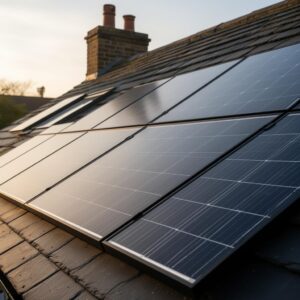
Electric Heating Options Explained: Panel Heaters, Storage Heaters and Infrared
Compare electric heating options for UK homes including modern storage heaters, ceramic panel heaters and infrared panels with running cost breakdowns.
7 May 2026