What Is an EPC and How Can You Improve Your Rating?
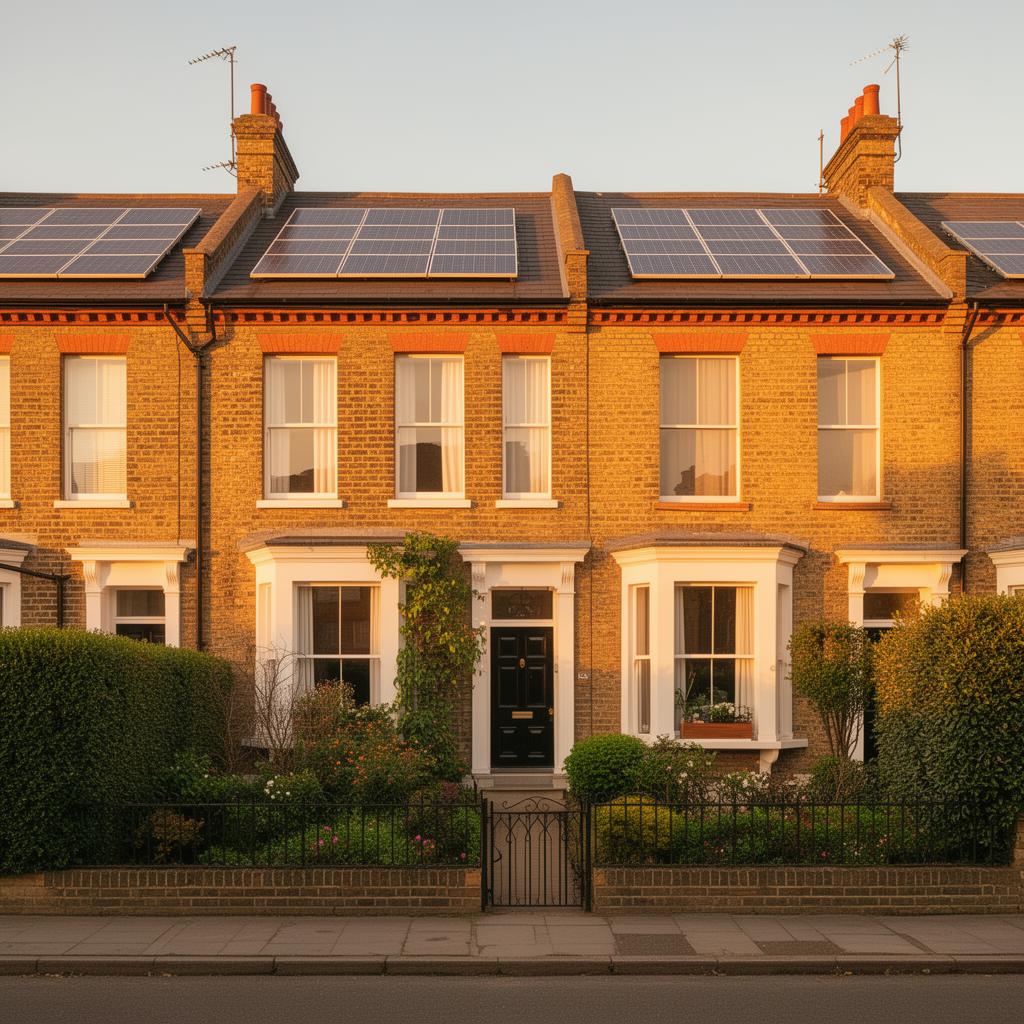
Whether you are selling, renting, or simply trying to reduce your energy bills, your Energy Performance Certificate (EPC) matters. This document rates your home’s energy efficiency on an A-to-G scale and directly affects property values, rental eligibility, and access to government grants. If you want to improve your EPC rating in the UK, this guide explains exactly what the assessor looks at, which upgrades make the biggest difference for each band, and how to get a new certificate after making improvements.
What Is an EPC Rating?
An EPC (Energy Performance Certificate) rating grades a property’s energy efficiency on a scale from A (most efficient) to G (least efficient). Every UK home must have a valid EPC when sold or rented. The certificate scores your property from 1 to 100 based on insulation, heating systems, windows and lighting, with the average UK home rated band D.
An EPC is valid for 10 years and is produced by a qualified Domestic Energy Assessor during a physical inspection of your property. The certificate includes both your current rating and a potential rating showing what score your home could achieve with recommended improvements.
How to Improve Your EPC Rating
- Install wall insulation — cavity or solid wall insulation can improve your score by 10 to 20 points
- Top up loft insulation to 270mm — adds 5 to 10 points and typically costs under £500
- Upgrade your boiler — a modern condensing boiler or heat pump adds 5 to 15 points
- Add solar panels — can boost your rating by 5 to 15 points depending on system size
- Replace single glazing with double glazing — adds 3 to 8 points
- Fit smart heating controls — a programmable thermostat and TRVs add 2 to 5 points
- Switch to LED lighting throughout — a low-cost change worth 1 to 3 points
The improvements are listed in order of impact on your EPC score. In practice, most homes can move up one full EPC band by combining two or three of the top measures. Insulation delivers the strongest returns because it reduces heat loss, which is the single biggest factor in the EPC calculation methodology.
What Is an EPC?
An Energy Performance Certificate is a standardised document that rates the energy efficiency of a building on a scale from A (most efficient) to G (least efficient). Every home in England, Wales, and Northern Ireland must have a valid EPC when sold, rented, or built. Scotland has its own equivalent system.
The EPC includes two key scores:
- Energy Efficiency Rating (EER) — a number from 1 to 100 based on estimated energy costs per square metre. Higher is better.
- Environmental Impact Rating (EIR) — a number from 1 to 100 based on estimated CO2 emissions. Higher is better.
Both are converted into the familiar A-G letter bands:
| EPC Band | Score Range | Description |
|---|---|---|
| A | 92-100 | Highly efficient (very rare in existing homes) |
| B | 81-91 | Efficient (most new builds) |
| C | 69-80 | Fairly efficient (government’s target for all homes) |
| D | 55-68 | Average (most common band in UK) |
| E | 39-54 | Below average |
| F | 21-38 | Poor |
| G | 1-20 | Very poor |
The average EPC rating for existing UK homes is band D, with a score of around 60-65. New-build homes typically achieve band B or better.
What Does an EPC Assessor Look At?
An EPC assessment is carried out by a qualified Domestic Energy Assessor (DEA) and typically takes 45-90 minutes. The assessor records data about your property’s physical characteristics, including:
- Wall construction and insulation — solid or cavity walls, insulated or uninsulated
- Roof/loft insulation — type and depth
- Floor construction — solid or suspended, insulated or not
- Windows — single, double, or triple glazing; age and condition
- Heating system — boiler type, age, efficiency; heat pump details if fitted
- Hot water system — immersion, combi, cylinder; insulation
- Lighting — percentage of low-energy bulbs (LED/CFL)
- Heating controls — programmer, room thermostat, TRVs, smart thermostat
- Secondary heating — gas fires, wood burners, electric heaters
- Renewables — solar panels, wind turbines
The assessor enters this data into government-approved software (RdSAP) which calculates the energy efficiency rating. Importantly, the assessment is based on the physical characteristics of the building, not on how you actually use energy. A house occupied by someone who never turns the heating on gets the same rating as one heated to 25 degrees all day.
Most Impactful Upgrades to Improve Your EPC Rating
The RdSAP methodology assigns different weightings to different building elements. Some upgrades have a much larger impact on your EPC score than others. Here are the most effective, ranked by typical impact:
1. Wall insulation (biggest impact for solid-wall homes)
For homes with uninsulated solid walls, adding insulation (internal or external) can improve the EPC score by 10-20 points — potentially jumping two bands. For uninsulated cavity walls, filling the cavity improves the score by 5-15 points.
Cost: Cavity wall insulation GBP 400-800; solid wall insulation GBP 5,500-15,000.
2. Loft insulation
Topping up from zero or minimal loft insulation to 300mm improves the score by 5-10 points. If you already have 100mm+, the additional improvement from topping up is smaller (2-5 points) but still worthwhile.
Cost: GBP 250-400 for a standard loft.
3. Heating system upgrade
Replacing an old G-rated boiler with a modern A-rated condensing boiler improves the score by 5-15 points. Switching to a heat pump can improve it by 10-20+ points, particularly for the environmental impact rating.
Cost: New boiler GBP 1,800-3,500; heat pump GBP 7,000-14,000 (before the GBP 7,500 BUS grant).
4. Solar panels
Solar panels can improve the EPC score by 5-15 points, depending on the system size and orientation. They are particularly effective at boosting the environmental impact rating.
Cost: A typical 4 kWp system costs GBP 5,000-7,000.
5. Double glazing
Replacing single glazing with double glazing improves the score by 3-8 points. If you already have double glazing, upgrading to triple glazing gives a smaller improvement.
Cost: Whole-house double glazing GBP 3,000-7,000.
6. Heating controls
Adding a room thermostat, programmer, and TRVs (if not already present) improves the score by 2-5 points. Upgrading to a smart thermostat with automation may gain an additional point or two.
Cost: Smart thermostat GBP 150-300; TRVs GBP 10-20 each.
7. LED lighting
Replacing all halogen and incandescent bulbs with LEDs can improve the score by 1-3 points. The impact is small but the cost is minimal (GBP 2-5 per bulb) and the energy savings are immediate.
EPC Requirements for Landlords in 2026
EPC regulations for landlords have been tightening progressively:
- Since 2018, all rental properties in England and Wales must have a minimum EPC of band E before a new tenancy can be granted.
- The government has proposed raising this to band C, though the implementation date has been pushed back repeatedly. As of 2026, the government announced in January 2026 that EPC band C will be required for rental properties by 1 October 2030, but it remains the stated policy direction.
- In Scotland, new-build rental properties must already achieve band B, and the equivalent of band C is being phased in for existing rental stock.
Landlords with properties rated D or below should plan improvements now, both to prepare for likely regulatory changes and to attract tenants who increasingly prioritise energy-efficient homes with lower bills.
The cost cap for landlord improvements under current rules is GBP 3,500 per property (including VAT). If the cost of reaching band E exceeds this, a landlord can register an exemption. The proposed band C requirement is expected to increase this cap significantly.
How to Get a New EPC After Improvements
An EPC is valid for 10 years. If you have made improvements since your last assessment, you need to commission a new EPC to update your rating. Here is the process:
- Gather evidence. Collect receipts, certificates, and photographs of all improvements made. Building regulations completion certificates for insulation, boiler installations, and window replacements are particularly useful.
- Book a reassessment. Use the EPC Register website to find a qualified Domestic Energy Assessor in your area. The cost for a new EPC is typically GBP 60-120.
- Be present for the visit. The assessor may not be able to see insulation that is hidden inside walls or under floors. Having evidence (installation certificates, photos taken during the work, guarantees) ensures these improvements are credited.
- Check the results. Review the new certificate for accuracy. If you believe an improvement has not been recorded, raise it with the assessor before the certificate is lodged.
The new EPC replaces the old one on the public register. If you are selling or renting, the new (improved) rating will be used for all marketing and compliance purposes.
Common EPC Mistakes and Misconceptions
- “My EPC says I have no insulation, but I do.” This is common. If the assessor cannot see the insulation (for example, cavity wall insulation installed many years ago with no visible evidence), they must assume it is not there. Keep installation certificates and provide them at the assessment.
- “My house is warm, so the EPC should be good.” The EPC is based on the building’s physical characteristics, not your heating bills. A warm house heated by an old boiler running constantly will still score poorly.
- “New windows will dramatically improve my rating.” Windows typically account for only 3-8 EPC points. They are worth doing for comfort and bill savings, but wall and loft insulation usually have more impact on the certificate.
- “I cannot improve my EPC because I have solid walls.” Solid wall insulation is expensive, but other measures — loft insulation, floor insulation, a new boiler, solar panels, heating controls, and LED lighting — can collectively improve a solid-wall home’s EPC by 10-20+ points without touching the walls.
To understand which improvements would have the most impact on your specific property, get a free quote for a tailored energy assessment.
Frequently Asked Questions
How much does an EPC cost?
A new EPC for a typical UK home costs GBP 60-120. The price varies by region and property size. You can shop around — the EPC Register website lists qualified assessors, and prices are competitive. Some estate agents include the cost of an EPC in their selling fees.
Do I need an EPC if I am not selling or renting?
No. EPCs are only legally required when a property is sold, rented, or newly built. However, having an up-to-date EPC is useful for understanding your home’s efficiency and accessing certain grants (some schemes require a specific EPC band to qualify).
Can I improve my EPC rating without spending a fortune?
Yes. The cheapest improvements — loft insulation top-up (GBP 250-400), LED lighting (GBP 20-50 total), smart thermostat (GBP 150-300), and draught-proofing (GBP 100-300) — can collectively improve your EPC by 5-10 points for under GBP 1,000. If your home has unfilled cavity walls, adding cavity wall insulation (GBP 400-800) is the single best-value upgrade available.
Does a higher EPC rating increase my property value?
Research from DESNZ indicates that properties with higher EPC ratings command higher sale prices. Moving from band G to band E can add approximately GBP 16,000 to a property’s value. Reaching band C adds further value and makes the property more attractive to buyers who are aware of rising energy costs and potential future regulations. The value uplift varies by region and market conditions.
What happens if my rental property does not meet the minimum EPC?
If your rental property is rated F or G and you cannot meet the band E minimum even after spending up to GBP 3,500 on improvements, you can register an exemption on the PRS Exemptions Register. Exemptions last for five years. Renting a property without a valid EPC or with a rating below the minimum without an exemption can result in a fine of up to GBP 5,000.
See what these numbers mean for your home
Free instant estimate — costs, savings, payback and grants for your region.

Related Articles
Heat Pump Grant Rises to £9,000 for Oil and LPG Homes From 21 July 2026
The standard Boiler Upgrade Scheme grant stays at £7,500. From 21 July 2026 to 31 March 2027, homes currently heated by oil or LPG get an increased £9,000 grant. Corrected…
10 June 2026
The Warm Homes Plan 2026: What Every UK Homeowner Needs to Know
The UK government’s Warm Homes Plan is the biggest energy efficiency programme in British history. Launched in January 2026 with up to £15 billion in funding, it aims to upgrade…
5 June 2026
ECO4 Scheme 2026: Who Qualifies, What’s Covered and How to Apply
The ECO4 scheme runs until December 2026, offering fully funded insulation and heating upgrades for eligible UK households. Find out if you qualify through benefits or the ECO4 Flex route,…
11 May 2026