Central Heating System Types Explained: Wet, Electric, Underfloor and More
Understanding the different types of central heating systems in the UK is essential whether you are buying a new home, replacing an aging system, or planning a major renovation. Each system type has its own strengths, limitations, running costs, and suitability for different property types. This comprehensive guide covers every major option available to UK homeowners in 2026, with honest comparisons to help you choose the right one.
What are the different types of central heating system?
- Wet system (gas or oil boiler) – the most common in UK homes, heats water through a boiler and circulates it to radiators via pipes.
- Combi boiler system – a type of wet system with no hot water cylinder, providing heating and instant hot water from one unit.
- System boiler – works with a sealed system and hot water cylinder, suitable for homes with higher hot water demand.
- Electric storage heaters – charge up overnight on cheaper tariffs and release heat during the day, common in flats without gas.
- Wet underfloor heating – circulates warm water through pipes embedded in the floor, ideal for heat pumps and new builds.
- Air source heat pump – extracts heat from outdoor air and delivers it via radiators or underfloor heating at 300–400% efficiency.
- Electric panel and infrared heaters – direct electric heating with no central distribution, suited to small spaces or supplementary use.
Around 85% of UK homes currently use gas central heating with a wet system, but the shift toward heat pumps is accelerating as the 2035 gas boiler phase-out date approaches. The best system for your home depends on your property type, insulation levels, hot water demand and whether you have access to mains gas. Homes without gas — roughly four million properties — stand to benefit most from switching to a heat pump, which can cut heating costs by 30–50% compared to direct electric or oil heating.
Wet Central Heating (Gas Boiler + Radiators)
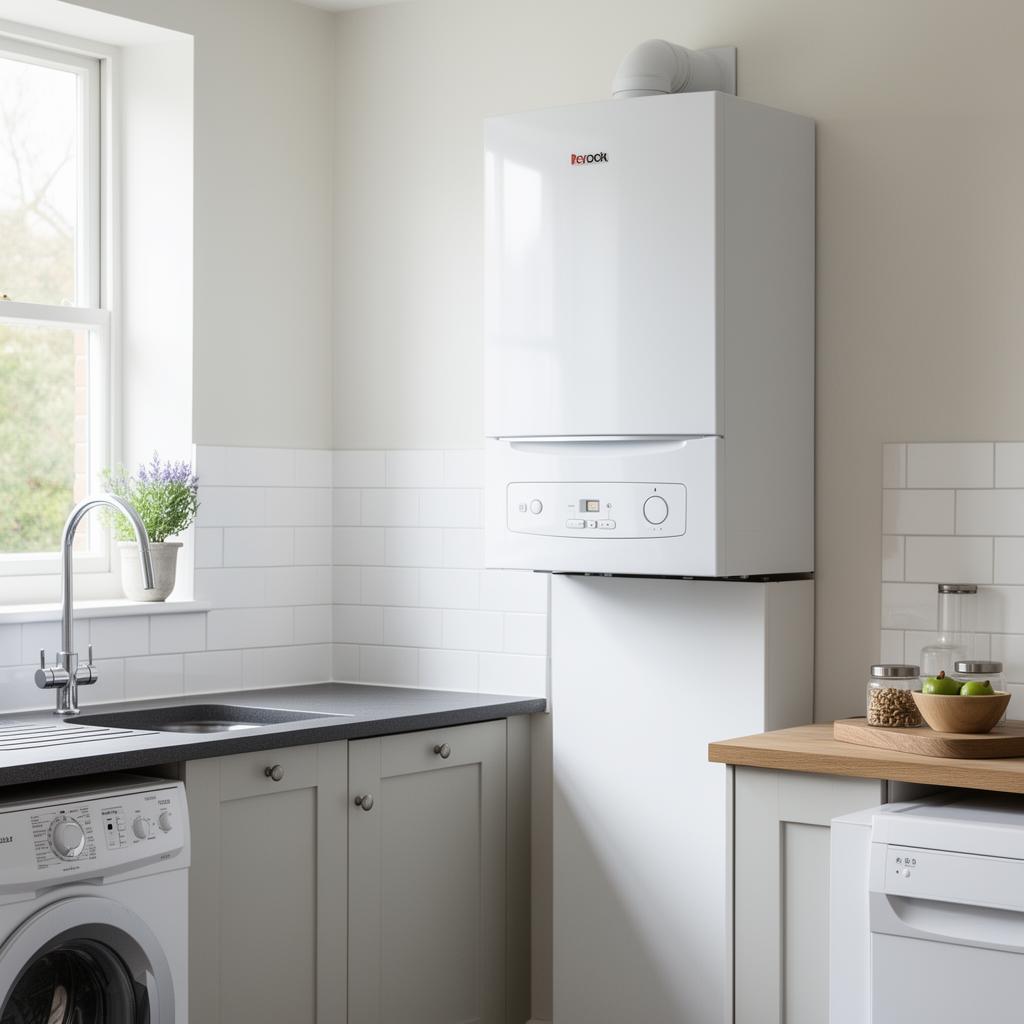
The wet central heating system is by far the most common type in UK homes. A gas boiler heats water, which is pumped through a network of pipes to radiators throughout the house. The radiators emit heat into each room, and the cooled water returns to the boiler to be reheated in a continuous loop.
Around 85% of UK homes use a gas-fired wet heating system, making it the default against which all alternatives are measured.
Pros
- Gas is currently the cheapest fuel per kWh (5.74p/kWh on the Q2 2026 price cap)
- Fast heat-up times — radiators reach full temperature within 15-30 minutes
- Mature technology with a huge installer base and readily available parts
- Compatible with smart thermostats and zoning systems
- Can be converted to a heat pump in future (with modifications)
Cons
- Relies on fossil fuel with associated carbon emissions
- Requires annual servicing and a Gas Safe registered engineer for any work
- Radiators take up wall space
- Pipework can develop leaks and sludge over time
Typical annual running cost (3-bed semi): GBP 800-1,100
If your wet heating system is aging, a modern A-rated boiler can significantly reduce running costs. For homes on the gas grid, this remains the most cost-effective heating method at current energy prices.
Wet Central Heating (Heat Pump + Radiators or Underfloor)
A heat pump system works similarly to a gas wet system — water is heated and circulated through radiators or underfloor pipes. The difference is the heat source: instead of burning gas, a heat pump extracts heat from the outside air (air source) or the ground (ground source) and concentrates it to heat your water.
Air source heat pumps are the most popular choice for UK retrofits, while ground source heat pumps are better suited to new builds with available garden space for boreholes or ground loops.
Pros
- Extremely efficient: 300-400% seasonal efficiency (3-4 kWh of heat per 1 kWh of electricity)
- Dramatically lower carbon emissions than gas
- Eligible for the Boiler Upgrade Scheme grant (GBP 7,500)
- Works with existing radiator systems (though larger radiators may be needed)
- No gas supply required — ideal for off-grid properties
Cons
- Higher upfront cost: GBP 7,000-14,000 (before grant)
- Best performance requires good insulation
- Lower flow temperatures mean slower heat-up times than gas
- Outdoor unit requires space and can produce some noise
- Electricity costs more per kWh than gas, though efficiency compensates
Typical annual running cost (3-bed semi, well insulated): GBP 600-900
Underfloor Heating (Water-Based)
Water-based (wet) underfloor heating uses the same principle as radiator central heating, but instead of wall-mounted radiators, warm water flows through a network of pipes embedded in or laid on top of the floor. It is typically connected to a boiler or heat pump.
This system is particularly well suited to heat pumps because it operates effectively at lower water temperatures (35-45 degrees Celsius versus 55-70 for radiators), which is where heat pumps are most efficient.
Pros
- Even heat distribution across the entire floor
- No radiators taking up wall space
- Works exceptionally well with heat pumps at low flow temperatures
- Comfortable underfoot — particularly pleasant in kitchens and bathrooms
- Lower dust circulation than radiators (beneficial for allergy sufferers)
Cons
- Expensive to retrofit: GBP 50-80 per square metre for wet UFH, plus the cost of new flooring
- Much easier to install during new builds or major renovations
- Slower response time — takes 1-3 hours to heat a room from cold
- Raises floor levels by 15-75mm depending on the system
- Difficult and costly to repair if a pipe develops a leak
Typical installation cost (ground floor of a 3-bed semi): GBP 3,000-5,000
Electric Storage Heaters
Storage heaters are common in homes without a gas supply, particularly in flats, social housing, and properties built in the 1960s-1980s. They contain ceramic bricks that charge up with heat during the night using cheap off-peak electricity (typically on an Economy 7 or Economy 10 tariff), then release that heat gradually during the day.
Pros
- No gas supply needed
- No boiler, pipework, or annual gas safety check required
- Simple and relatively inexpensive to install: GBP 400-800 per heater
- Modern slimline models with better controls and fan-assisted output
- Off-peak charging reduces costs compared to direct electric heating
Cons
- Heat output is difficult to control — rooms can be too warm in the morning and cold by evening
- Even on off-peak tariffs, running costs are higher than gas: GBP 1,200-1,800 per year for a 3-bed property
- Bulky and heavy, particularly older models
- Off-peak tariff rates have narrowed, reducing the cost advantage
- Poor responsiveness — you cannot quickly heat a room that is cold
If you currently rely on storage heaters, upgrading to a heat pump or installing better insulation can make a significant difference to both comfort and cost.
Electric Panel Heaters and Convectors
Electric panel heaters mount on walls like radiators and provide direct electric heating. Unlike storage heaters, they heat on demand using mains-rate electricity. Modern panel heaters often include digital thermostats, timers, and open-window detection.
Pros
- Instant heat with precise room-by-room temperature control
- Very low installation cost: GBP 100-400 per heater
- No pipework, no boiler, no flue
- Slim, wall-mounted design
- Zero maintenance
Cons
- The most expensive heating to run: electricity at 24.67p/kWh versus gas at 5.74p/kWh
- Annual running costs for a 3-bed semi: GBP 2,000-3,000+
- Only suitable as primary heating in very well-insulated properties or small spaces
- 100% efficient but still expensive because of the electricity price
Electric panel heaters are best used as supplementary heating in rooms not reached by the main system, or in properties where gas is not available and a heat pump is not yet feasible.
Infrared Heating Panels
Infrared heating panels work differently from convection-based heaters. Instead of warming the air, they emit far-infrared radiation that directly heats objects and surfaces in the room — walls, furniture, and people. This creates a perceived warmth at a lower air temperature, which can reduce energy consumption.
Pros
- Can feel warm at lower room air temperatures (typically 2-3 degrees lower thermostat setting)
- No moving parts, completely silent, zero maintenance
- Can be ceiling-mounted or wall-mounted — some models resemble mirrors or artwork
- Do not circulate dust or allergens
- Warm walls directly, reducing condensation and damp risk
Cons
- Still powered by electricity at standard rates
- Best suited to well-insulated rooms where heat is retained
- Less effective in large, open-plan spaces with high ceilings
- Need line of sight — furniture blocking the panel reduces effectiveness
- Relatively new technology for whole-house heating in the UK
Typical annual running cost (well-insulated 3-bed semi): GBP 1,000-1,600
Comparing Central Heating System Types: Costs at a Glance
| System Type | Installation Cost (typical) | Annual Running Cost (3-bed semi) | Best For |
|---|---|---|---|
| Gas boiler + radiators | GBP 2,000-4,000 | GBP 800-1,100 | Most UK homes on the gas grid |
| Heat pump + radiators/UFH | GBP 7,000-14,000 (before grant) | GBP 600-900 | Well-insulated homes, off-grid |
| Wet underfloor heating | GBP 3,000-5,000 (ground floor) | Varies by heat source | New builds, major renovations |
| Storage heaters | GBP 2,000-5,000 (whole house) | GBP 1,200-1,800 | Flats, no-gas properties |
| Electric panel heaters | GBP 500-2,000 (whole house) | GBP 2,000-3,000+ | Supplementary heating, small spaces |
| Infrared panels | GBP 1,500-4,000 (whole house) | GBP 1,000-1,600 | Well-insulated homes, off-gas |
How to Choose the Right Heating System for Your Home
The best heating system depends on your property type, insulation level, available fuel, and budget. Here are some general guidelines:
- On the gas grid with average insulation: A modern condensing boiler with smart controls remains the most cost-effective option for most homes.
- On the gas grid with good insulation: Consider a heat pump, especially with the GBP 7,500 BUS grant. Running costs will be comparable to or lower than gas.
- Off the gas grid: A heat pump is almost always the best choice, replacing expensive oil, LPG, or electric heating.
- Flat with no gas: Infrared panels or modern storage heaters, combined with improved insulation, offer the best balance of cost and comfort.
- New build or major renovation: Underfloor heating with a heat pump is the gold standard for comfort and efficiency.
Before making any decision, it is worth improving your insulation first. Better insulation reduces the size and cost of any heating system you choose, and the savings last for the life of the building. You can request a free quote to explore your options.
Frequently Asked Questions
Can I combine different heating system types in one house?
Yes, and many homes do. A common combination is a gas boiler with radiators upstairs and underfloor heating on the ground floor. You might also use infrared panels in a conservatory or home office where running radiator pipework would be impractical. The key is ensuring any combination is properly designed and controlled, ideally with zone valves and individual room thermostats.
What is the cheapest central heating system to run in the UK?
For a well-insulated home, a heat pump system offers the lowest running costs thanks to its 300-400% efficiency. For homes with average insulation on the gas grid, a modern condensing gas boiler is cheapest. Electric heating (storage, panel, or infrared) is always more expensive per kWh, though infrared panels in well-insulated properties can partially close the gap through lower thermostat settings.
Can I switch from storage heaters to a wet radiator system?
Yes, but it is a significant undertaking. You would need a heat source (boiler or heat pump), pipework to every room, radiators, and possibly a hot water cylinder. Budget GBP 5,000-10,000 for a full conversion depending on the property. If a gas supply is available, connecting to the grid and fitting a boiler is usually the most cost-effective route. If not, a heat pump is the best alternative.
Are electric heating systems less carbon-intensive than gas?
It depends on the efficiency. Direct electric heating (panel heaters, storage heaters) at 100% efficiency produces roughly similar carbon emissions per unit of heat as a modern gas boiler, because electricity generation still involves some fossil fuels. However, a heat pump at 300% efficiency produces roughly one-third of the carbon per unit of heat, making it significantly cleaner. As the UK electricity grid continues to decarbonise, all electric heating becomes progressively greener.
See what these numbers mean for your home
Free instant estimate — costs, savings, payback and grants for your region.

Related Articles
7 Quick Wins to Cut Your Energy Bills This Summer
Summer might seem like the wrong time to think about energy bills, but it is actually when the smartest homeowners make changes. Lower heating demand means more of your spending…
22 May 2026
The Best Time of Year to Replace Your Boiler (and How to Get the Best Price)
Find out why summer is the best time to replace your boiler in the UK, how to negotiate better prices and what to check before committing to an installation.
9 May 2026
Electric Heating Options Explained: Panel Heaters, Storage Heaters and Infrared
Compare electric heating options for UK homes including modern storage heaters, ceramic panel heaters and infrared panels with running cost breakdowns.
7 May 2026