How the Energy Price Cap Affects Heat Pump and Solar Panel Payback
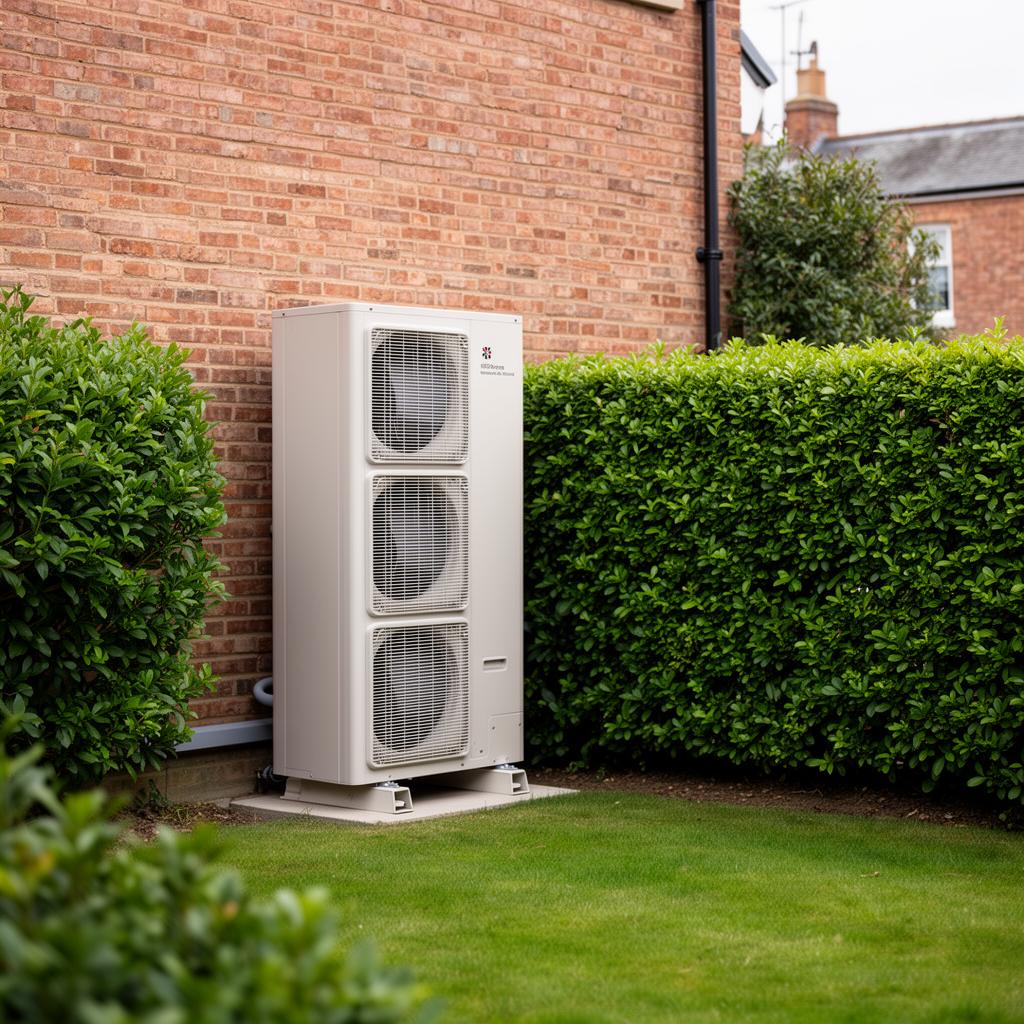
The energy price cap heat pump payback relationship is one of the most misunderstood aspects of home energy investment. When energy prices are high, renewable heating and generation pay back faster because every kilowatt-hour you save or generate is worth more. When prices fall, payback stretches. This guide uses current 2026 unit rates to calculate realistic payback periods for heat pumps and solar panels, and explains why reducing your dependence on grid energy protects you against future price cap rises.
How does the energy price cap affect heat pump and solar panel payback?
The energy price cap directly affects how quickly heat pumps and solar panels pay for themselves. When the cap is high, the savings from generating your own electricity or heating more efficiently are greater, shortening the payback period. Under the 2026 price cap of approximately 24.5p per kWh for electricity and 6.8p for gas, a typical 4kWp solar system pays back in six to eight years, while an air source heat pump replacing a gas boiler pays back in eight to twelve years after the £7,500 BUS grant.
If the price cap rises — as it did during 2022–2023 — payback periods shorten significantly. Every 1p increase in the electricity unit rate saves an additional £35–£40 per year for a 4kWp solar system. For heat pump owners, the ratio between electricity and gas prices matters most: the closer electricity costs get to three times the gas rate, the more competitive heat pumps become. Locking in savings now protects you against future energy price volatility regardless of which direction the cap moves.
Current Energy Prices Under the Q2 2026 Price Cap
As of April 2026, the Ofgem price cap sets the following maximum rates for standard variable tariffs:
| Component | Q2 2026 Rate | Pre-Crisis Rate (2021) | Increase |
|---|---|---|---|
| Electricity unit rate | 24.50p per kWh | 17.5p per kWh | +40% |
| Gas unit rate | 6.76p per kWh | 3.5p per kWh | +93% |
| Electricity standing charge | 56.94p per day | 24p per day | +137% |
| Gas standing charge | 31.43p per day | 26p per day | +21% |
These rates are central to every payback calculation. The electricity rate matters most for solar panels (which offset electricity purchases) and for heat pumps (which use electricity to generate heat). The gas rate matters for comparison, since heat pumps and solar panels are usually replacing or reducing gas consumption.
Heat Pump Payback: How the Price Cap Changes the Maths
A heat pump generates approximately 3 to 4 units of heat for every 1 unit of electricity it consumes. This ratio is called the Coefficient of Performance (COP) or, measured over a full year, the Seasonal Coefficient of Performance (SCOP). A well-installed air source heat pump in a properly insulated UK home typically achieves a SCOP of 3.0 to 3.5.
To understand the payback, we need to compare the running cost of a heat pump against the gas boiler it replaces:
Running Cost Comparison at Current Prices
Assume a typical three-bedroom semi-detached house using 12,000 kWh of heat per year:
| Heating System | Efficiency/COP | Energy Input Needed | Unit Rate | Annual Fuel Cost |
|---|---|---|---|---|
| Old gas boiler (non-condensing) | 75% | 16,000 kWh gas | 6.76p | £1,082 |
| Modern gas boiler (condensing) | 92% | 13,043 kWh gas | 6.76p | £882 |
| Air source heat pump (SCOP 3.0) | 300% | 4,000 kWh electricity | 24.50p | £980 |
| Air source heat pump (SCOP 3.5) | 350% | 3,429 kWh electricity | 24.50p | £840 |
At current prices, a well-performing heat pump (SCOP 3.5) is already cheaper to run than a modern condensing boiler and significantly cheaper than an old non-condensing boiler. The annual saving compared to an old boiler is £242, and compared to a modern condensing boiler is £42.
However, the real saving is greater when you factor in that many heat pump owners use time-of-use electricity tariffs (such as Octopus Intelligent Go) that offer overnight rates as low as 7p per kWh. Running a heat pump predominantly on cheap overnight electricity can reduce the annual cost to around £350 to £500, creating a much larger saving.
Heat Pump Payback Period Calculation
| Scenario | Net Cost After BUS Grant | Annual Saving vs Old Boiler | Payback Period |
|---|---|---|---|
| ASHP at standard rate (SCOP 3.5) | £4,500 – £7,500 | £242 | 19 – 31 years |
| ASHP at time-of-use rate (SCOP 3.5) | £4,500 – £7,500 | £582 – £732 | 6 – 13 years |
| ASHP replacing oil boiler (off-grid) | £4,500 – £7,500 | £500 – £900 | 5 – 15 years |
The Boiler Upgrade Scheme grant of £7,500 is critical. Without it, the payback period roughly doubles. The combination of the BUS grant, 0% VAT and a time-of-use tariff makes the economics compelling, with payback periods of 6 to 10 years in many cases.
Solar Panel Payback: Price Cap Impact
Solar panels generate electricity that you either use in your home (offsetting grid purchases at the full unit rate) or export to the grid (earning the Smart Export Guarantee rate). The payback depends heavily on the electricity unit rate under the price cap.
Typical 4kW Solar System Performance
A well-positioned 4kW solar panel system in central England generates approximately 3,400 to 3,800 kWh per year. Of this, a typical household uses about 40% to 50% directly (self-consumption), with the remainder exported to the grid.
| Component | Calculation at Q2 2026 Rates | Annual Value |
|---|---|---|
| Self-consumed electricity (1,500 kWh at 24.50p) | Offsets grid purchases | £368 |
| Exported electricity (2,000 kWh at 8p SEG rate) | Smart Export Guarantee income | £160 |
| Total annual benefit | £528 |
With a typical 4kW system costing £5,500 to £7,500 installed (at 0% VAT), the simple payback period is:
- At current prices: 10 to 14 years
- At pre-crisis prices (17.5p electricity): 15 to 20 years
- With battery storage (70% self-consumption): 9 to 12 years for the solar-only element
The elevated electricity price cap has shortened solar panel payback by 3 to 5 years compared to pre-crisis rates. Solar panels have a lifespan of 25 to 30 years with minimal degradation, meaning they continue generating free electricity for 15 to 20 years after the payback point.
Adding Battery Storage: The Payback Multiplier
Battery storage dramatically improves solar panel payback by increasing self-consumption. Instead of exporting surplus solar electricity at 8p per kWh, you store it and use it in the evening at the full 24.50p rate. The value of each stored kWh is the difference: 16.50p per kWh.
A 5kWh battery (the most popular size) can store enough surplus solar to cover most evening electricity use from April to September. The additional self-consumption is worth approximately £150 to £250 per year. With the battery costing £3,000 to £5,000 (at 0% VAT), the battery payback is roughly 12 to 20 years from solar use alone.
However, batteries also enable tariff arbitrage: charging from the grid at cheap overnight rates (as low as 7p per kWh) and discharging during peak hours (24.50p). This can add a further £100 to £200 per year in savings, improving the battery payback to 8 to 14 years.
How Future Price Cap Changes Affect Your Investment
The price cap changes every quarter. This matters for payback calculations because your savings each year depend on the prevailing unit rates. Here is how different price scenarios affect the returns:
| Price Scenario | Electricity Rate | Gas Rate | Heat Pump Annual Saving (vs old boiler) | Solar Annual Benefit (4kW) |
|---|---|---|---|---|
| Current (Q2 2026) | 24.50p | 6.76p | £242 (standard) / £732 (ToU) | £528 |
| Rates rise 15% | 28.18p | 7.77p | £340 (standard) / £880 (ToU) | £607 |
| Rates return to pre-crisis | 17.50p | 3.50p | -£120 (standard) / £350 (ToU) | £383 |
| Rates rise 30% | 31.85p | 8.79p | £440 (standard) / £1,030 (ToU) | £687 |
The key insight is that heat pump and solar panel investments become more valuable as energy prices rise. If you install now and prices increase, your savings grow automatically. If prices fall back to pre-crisis levels (which most analysts consider unlikely in the medium term), the savings are reduced but still positive over the long lifespan of the equipment.
Why Reducing Grid Dependence Is the Smartest Long-Term Strategy
The price cap is inherently unpredictable. Wholesale energy prices are influenced by global gas markets, geopolitical events, weather patterns and policy decisions, none of which consumers can control. What you can control is how much grid energy you need.
A home with good insulation, a heat pump, solar panels and battery storage might purchase only 1,500 to 2,500 kWh from the grid per year, compared to 12,000+ kWh for a typical home on gas and grid electricity. The price cap matters much less when your grid purchases are minimal.
Think of it as energy independence. Every improvement you make, from double glazing to loft insulation to solar panels, reduces the portion of your income that is exposed to price cap volatility. The money you invest in improvements is locked in permanently, while energy prices fluctuate.
To calculate the payback for your specific property and situation, request a free quote.
Frequently Asked Questions About Price Cap and Payback
Should I wait for energy prices to rise before installing solar panels or a heat pump?
No. While higher prices improve payback, waiting means missing out on savings in the meantime and risking the loss of current grants and 0% VAT. The BUS grant of £7,500 has a fixed budget that could be exhausted, and the 0% VAT relief expires in March 2027. Installing now locks in the current grants and starts generating savings immediately, regardless of future price movements.
Do heat pumps save money compared to gas boilers at current prices?
At standard tariff rates, a well-performing heat pump (SCOP 3.5 or above) is roughly equivalent to a modern condensing gas boiler on running costs, and significantly cheaper than an old non-condensing boiler. On a time-of-use tariff with cheap overnight electricity, heat pumps are clearly cheaper. The running cost advantage grows if gas prices rise faster than electricity prices, which is the direction of travel as the UK decarbonises.
What happens to my solar panel savings if the price cap falls significantly?
If the electricity unit rate falls, each kWh you generate is worth less in terms of avoided grid purchase. However, solar panels still generate the same physical amount of electricity. Even at pre-crisis rates of 17.5p per kWh, a 4kW system would save approximately £383 per year, still delivering a positive return over its 25-30 year lifespan. Most energy analysts expect electricity rates to remain above pre-crisis levels for the foreseeable future due to grid investment costs and policy charges.
Is it worth insulating my home before installing a heat pump?
Absolutely. Insulation reduces the amount of heat your home loses, which means a smaller, cheaper heat pump can meet your needs. A heat pump in a poorly insulated home needs to work harder, consuming more electricity and reducing its effective COP. Insulating first, then sizing the heat pump for the improved building, is the fabric-first approach recommended by PAS 2035 and delivers the best financial return.
How does the gas standing charge affect the heat pump payback calculation?
If you disconnect from the gas grid after installing a heat pump, you eliminate the gas standing charge entirely, saving approximately £115 per year. This improves heat pump payback by shortening it by roughly one year. You would need to ensure your cooking and hot water are fully electric before disconnecting gas. Many heat pump owners switch to an induction hob and use the heat pump for hot water, making disconnection straightforward. Get a free quote to explore this option for your home.
See what these numbers mean for your home
Free instant estimate — costs, savings, payback and grants for your region.

Related Articles
Is Solar Battery Storage Worth It in 2026?
Solar panels are now a common sight on UK rooftops, but the real game-changer in 2026 is battery storage. A home battery lets you store the electricity your panels generate…
2 June 2026
Why Spring Is the Perfect Time to Install Solar Panels
If you have been thinking about solar panels for a while but never quite pulled the trigger, spring is the moment to act. The combination of lengthening days, mild installation…
23 April 2026
Solar Battery Storage in 2026: Costs, Benefits and Whether It Is Worth Adding
Solar battery storage lets you use your own solar electricity after dark. We break down 2026 costs, expected savings, popular brands and whether adding a battery is worth the investment…
11 April 2026