Social Housing Decarbonisation Fund: What Tenants Need to Know
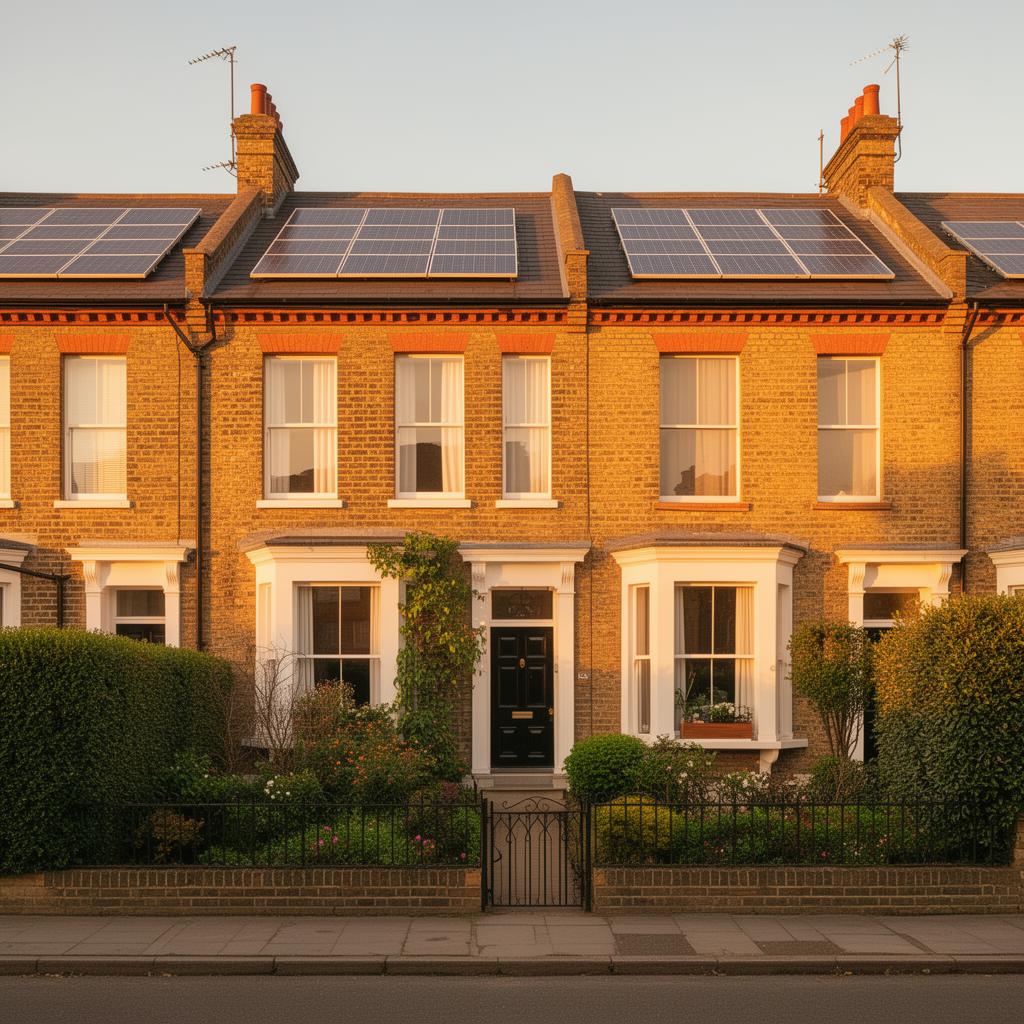
The social housing decarbonisation fund has transformed energy efficiency in council and housing association homes across the United Kingdom, delivering 136,900 energy efficiency measures to date. If you are a social housing tenant, your home may be scheduled for improvements under this programme or its successor, the Warm Homes Social Housing Fund Wave 3. This guide explains what the fund covers, what improvements you can expect, your rights during the works, and how to find out whether your home is included.
What Is the Social Housing Decarbonisation Fund?
The Social Housing Decarbonisation Fund (SHDF) is a government programme that provides grants to local authorities and housing associations to improve the energy efficiency of their housing stock. The goal is to upgrade social homes to at least EPC Band C by 2030, reducing carbon emissions and cutting energy bills for tenants.
The programme launched in 2020 with a demonstrator phase, followed by Wave 1 (2022-2023) and Wave 2 (2023-2025). The successor programme, the Warm Homes Social Housing Fund (WHSF) Wave 3, launched in 2025 and continues the work with additional funding.
Total funding committed across all waves exceeds £1.8 billion, making it the largest social housing energy efficiency programme in UK history. The fund covers a wide range of improvements including insulation, heating upgrades, window replacements, ventilation systems and renewable energy installations.
What Improvements Are Being Delivered
The SHDF follows a whole-house, fabric-first approach based on PAS 2035 standards. This means each property is assessed individually and a tailored improvement plan is created. The most common measures being installed include:
| Measure | Percentage of Properties Receiving | Typical Impact on EPC |
|---|---|---|
| External wall insulation | 35-40% | +15 to +25 EPC points |
| Internal wall insulation | 10-15% | +10 to +20 EPC points |
| Loft insulation top-up | 30-35% | +5 to +15 EPC points |
| Underfloor insulation | 10-15% | +5 to +10 EPC points |
| Window and door replacement | 25-30% | +5 to +10 EPC points |
| Air source heat pump | 15-20% | +15 to +30 EPC points |
| Solar PV panels | 15-20% | +10 to +15 EPC points |
| Ventilation improvements (MVHR) | 20-25% | Indirect improvement |
| Heating controls upgrade | 30-40% | +5 to +10 EPC points |
Many properties receive multiple measures as part of a coordinated retrofit. A typical SHDF project might include external wall insulation, new windows, a ventilation system and upgraded heating controls, all designed to work together as a system.
How Much Are Tenants Saving on Energy Bills?
The financial impact for tenants has been significant. Government evaluation of the SHDF demonstrator and Wave 1 projects found:
- Average annual energy bill reduction of £400 to £700 per household after improvements
- Properties upgraded from EPC E or F to EPC C typically saw savings of £500 to £900 per year
- The deepest retrofits, combining insulation, heat pumps and solar panels, achieved savings of over £1,000 per year
- The average EPC improvement was approximately 20 to 30 points, often lifting homes from EPC D or E to EPC C or B
These savings are particularly meaningful for social housing tenants, who are disproportionately affected by fuel poverty. An estimated 30% of social housing tenants are in fuel poverty, compared to around 13% of the general population. Reducing heating costs by £500 or more per year can make a genuine difference to quality of life.
Your Rights as a Tenant During SHDF Works
If your home is included in an SHDF retrofit project, you have important rights that your landlord and their contractors must respect:
Advance notice: Your landlord must give you reasonable advance notice of the planned works, typically at least four weeks. This should include a description of the work, the expected timeline, and any disruption you should prepare for.
Resident liaison officer: Most SHDF projects appoint a dedicated resident liaison officer who serves as your point of contact. They should introduce themselves before work begins and be available throughout the project to answer questions and address concerns.
Right to refuse: You generally have the right to decline the improvements, though your landlord may require access for essential works under the terms of your tenancy agreement. It is worth carefully considering the benefits before refusing, as the work will reduce your energy bills and improve your home’s comfort at no cost to you.
Minimising disruption: Contractors must take reasonable steps to minimise disruption to your daily life. This includes agreed working hours (typically 8am to 6pm weekdays), dust control measures, protection of your belongings, and cleaning up at the end of each working day.
Moving furniture and belongings: For internal works, the contractor should move and protect furniture as needed. For extensive internal wall insulation, you may need to temporarily vacate rooms. Your landlord should assist with this and, in extreme cases, provide temporary alternative accommodation.
Making good: After the work is completed, the contractor must make good any damage or disruption. This includes redecorating walls affected by internal insulation, rehung curtain rails, refitted shelving and reattached fixtures. The finish should be to a reasonable standard.
Complaints: If you are unhappy with any aspect of the work, raise it with the resident liaison officer or your landlord immediately. If the issue is not resolved, you can complain through your landlord’s formal complaints procedure and, ultimately, to the Housing Ombudsman.
How to Find Out If Your Home Is Included
Whether your home is included in the SHDF depends on your landlord and whether they have successfully bid for funding. Here is how to find out:
- Contact your landlord: Your council housing team or housing association should be able to tell you whether your property is scheduled for improvement under the SHDF or WHSF
- Check your landlord’s website: Many local authorities and housing associations publish information about their retrofit programmes online
- Ask your councillor: Your local councillor can make enquiries on your behalf with the council’s housing department
- Freedom of Information request: If your council is not forthcoming, you can submit an FOI request asking whether they have received SHDF/WHSF funding and which properties are included
If your home is not currently included in the programme, it may be scheduled for a future wave. Landlords are expected to develop long-term retrofit plans for their entire stock, prioritising the least efficient homes (EPC E, F and G) first.
What About Private Tenants and Owner-Occupiers?
The SHDF is exclusively for social housing. If you are a private tenant or an owner-occupier, different schemes may help you:
- Warm Homes Plan (owner-occupiers on benefits): Grants of up to £15,000 for insulation, heating and ventilation
- ECO4 (private tenants and owner-occupiers): Funded by energy companies, covering insulation and heating for low-income households
- Great British Insulation Scheme: Subsidised insulation for homes in council tax bands A to D
- Boiler Upgrade Scheme: Up to £7,500 towards a heat pump
- 0% VAT on energy efficiency products: Applies to all residential properties regardless of tenure
To check what support is available for your home, Green Reach Energy’s quote-comparison service is launching soon — register your interest and we’ll let you know when you can compare installer quotes.
The Warm Homes Social Housing Fund Wave 3
Wave 3, now branded as the Warm Homes Social Housing Fund, builds on the success of earlier phases. Key features include:
- Additional funding of approximately £600 million for 2025-2028
- Broader scope including more emphasis on heat pump installations and solar panels
- Higher per-property spending caps to enable deeper retrofits of the worst-performing homes
- Stronger focus on tenant engagement including better communication, more comprehensive aftercare, and tenant satisfaction monitoring
- Improved quality standards with enhanced PAS 2035 oversight and post-installation monitoring
The government has signalled that SHDF-type funding will continue throughout the 2020s as part of its commitment to bringing all social housing to EPC C by 2030. This represents a long-term investment programme that will eventually reach the majority of social housing stock that currently falls below Band C.
Frequently Asked Questions About the Social Housing Decarbonisation Fund
Will my rent increase after SHDF improvements are made to my home?
Your landlord should not increase your rent specifically because of SHDF improvements. The programme is funded by government grants, not by tenants. Social housing rents are regulated by the Regulator of Social Housing and can only increase by a set percentage each year, regardless of improvements made. However, your service charges may change if new communal systems are installed that have ongoing maintenance costs. Any such changes must be communicated in advance.
Can I refuse SHDF improvements to my home?
In most cases, yes, although your landlord may have rights of access under your tenancy agreement for essential maintenance and improvement works. Before refusing, consider the benefits: the work is free, it will reduce your energy bills, improve your home’s comfort, and may reduce damp and mould problems. If you have specific concerns about disruption or particular measures, discuss them with your landlord’s retrofit team. They may be able to accommodate your concerns.
What if the SHDF work causes damage or problems in my home?
Report any problems immediately to the resident liaison officer or your landlord. All SHDF work is carried out under PAS 2035 standards and backed by TrustMark guarantees lasting up to 25 years. If the work causes damp, mould, draughts or other issues, the contractor must return and put it right at no cost. If the installer fails to do so, your landlord remains responsible and can use the TrustMark guarantee to arrange remediation through an alternative contractor.
How long does an SHDF retrofit take per property?
The duration depends on the scope of work. A straightforward loft insulation top-up may take only one day. External wall insulation typically takes two to four weeks. A comprehensive whole-house retrofit involving insulation, heating replacement, ventilation and glazing upgrades can take four to eight weeks. Your landlord should provide a clear timeline before work begins and keep you updated on progress.
I am a housing association tenant. Does the SHDF cover my home?
Yes. The SHDF is available to both local authority (council) and housing association (registered provider) properties. Your housing association must apply for funding and be successful in the bidding process. If your housing association has not applied, you can ask them why and encourage them to bid for future waves. Many housing associations are developing their own long-term retrofit strategies even where SHDF funding has not yet been secured, funded through a combination of government grants, internal reserves and borrowing.
See what these numbers mean for your home
Free instant estimate — costs, savings, payback and grants for your region.

Related Articles

What the 2026 Future Homes Standard Means for Existing Homeowners
The Future Homes Standard is the biggest change to building regulations in England in a generation. It is designed to ensure new homes produce dramatically fewer carbon emissions. But if…
3 May 2026
Prepayment Meter Rights: Protections Against Forced Installation and Self-Disconnection
Prepayment meter rights UK explained. Learn protections against forced installation, what to do if you cannot top up, emergency credit options and how to switch away from prepay.
12 April 2026 Fuel Poverty in the UK: Definition, Statistics and What Help Is Available
Fuel poverty UK affects 9 million households. Learn the LILEE definition, who is most at risk, the funding gap, and every support scheme available to help you heat your home.
11 April 2026