Standing Charges Explained: What You Pay Before Using Any Energy
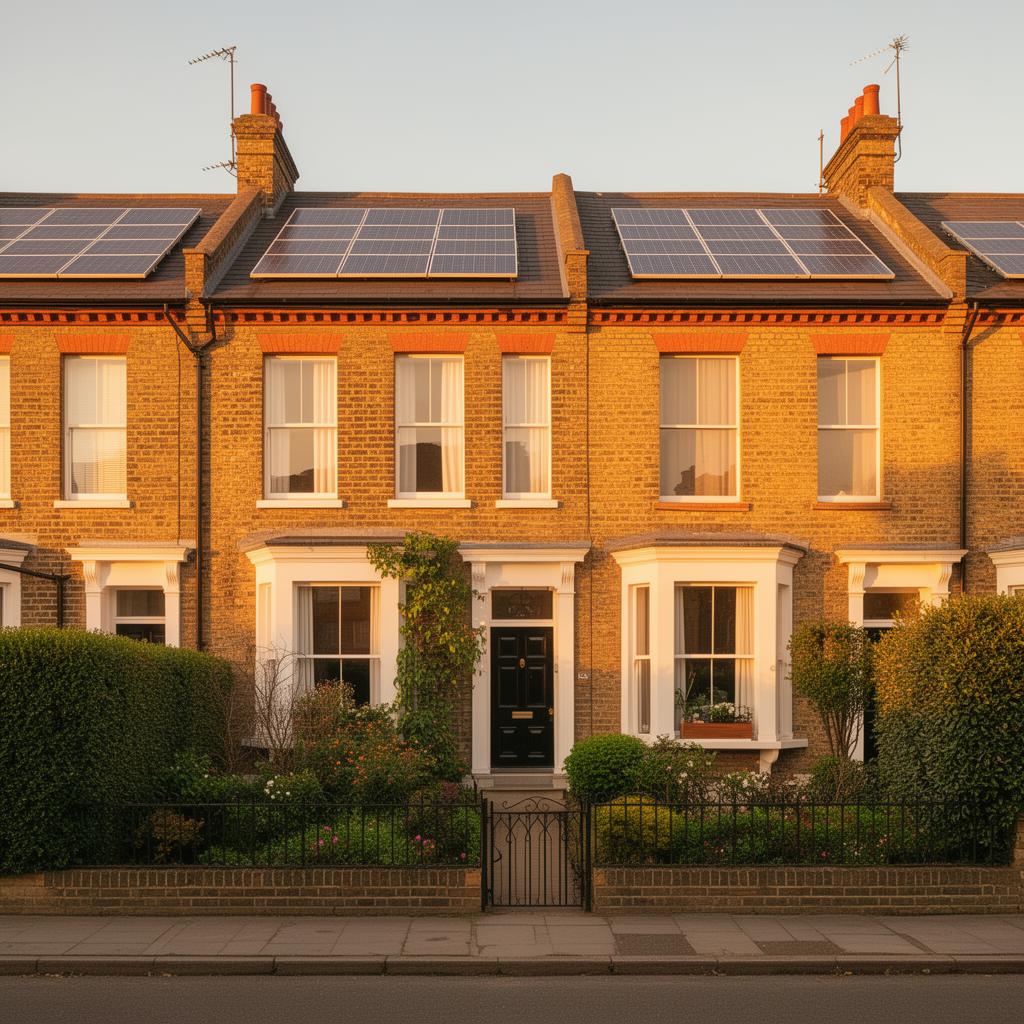
Energy standing charges explained in simple terms: they are the fixed daily amount you pay just to be connected to the gas and electricity grids, before you use a single unit of energy. At current rates, the average UK household pays around 57p per day for electricity and 31p per day for gas, adding up to roughly £321 per year before any actual energy is consumed. For low-usage households, pensioners and those with solar panels, standing charges can represent a disproportionately large share of the total bill.
What Is an Energy Standing Charge?
An energy standing charge is a fixed daily fee you pay to your energy supplier regardless of how much gas or electricity you use. In 2026, the typical standing charge is around 61p per day for electricity and 32p per day for gas under the Ofgem price cap, costing approximately £340 per year before you use a single unit of energy.
Standing charges cover the cost of maintaining the energy network, meter reading, and supplier overheads. Ofgem is currently reviewing whether to reform or abolish standing charges following widespread consumer complaints. Some suppliers already offer zero-standing-charge tariffs, though these typically have higher per-unit rates that may cost more overall if your usage is moderate to high. If you are on a low income or use very little energy, a tariff without a standing charge could save you money.
What Are Energy Standing Charges?
A standing charge is a fixed daily fee that appears on your gas and electricity bills. It is charged regardless of whether you use any energy that day. Even if you go on holiday for a month and use zero gas or electricity, you still pay the standing charge for every day you are connected.
Standing charges cover the fixed costs of maintaining the energy system that cannot easily be allocated based on usage. They exist because the infrastructure needed to deliver energy to your home costs money to maintain whether you use one kWh or one thousand.
Your bill is calculated as: (Standing charge x number of days) + (Unit rate x kWh used) + VAT at 5%. The standing charge is the fixed element; the unit rate is the variable element based on consumption.
What Makes Up the Standing Charge
The standing charge is not a single cost but a collection of fixed charges bundled together. Understanding each component helps explain why the charge has grown over recent years.
| Component | Approximate Share | What It Pays For |
|---|---|---|
| Network costs (distribution and transmission) | 45-50% | Maintaining gas pipes, electricity cables, substations and the national grid infrastructure |
| Supplier operating costs | 15-20% | Billing systems, customer service, metering, administration |
| Policy costs | 15-20% | Government programmes including ECO4, Warm Home Discount, renewable energy subsidies |
| Smart meter costs | 5-8% | The national smart meter rollout programme, including installation and communications infrastructure |
| Bad debt costs | 5-8% | Costs of customers who default on payments, spread across all bill payers |
| Green levies and balancing | 3-5% | Grid balancing services, capacity market charges |
Network costs are by far the largest component. The UK’s gas and electricity networks require billions of pounds of investment each year for maintenance, upgrades and new connections. These costs are regulated by Ofgem and recovered through standing charges and, to a lesser extent, unit rates.
How Standing Charges Have Changed Over Time
Standing charges have risen sharply in recent years, driven largely by the energy crisis and the costs it imposed on the system:
- 2020: Typical electricity standing charge was around 24p per day
- 2021: Rose to around 25p per day as network investment increased
- 2022: Jumped to 45p per day as supplier failures during the energy crisis added costs
- 2023: Peaked at around 53p per day for electricity
- 2024: Remained elevated at 50-61p per day as debt recovery costs persisted
- 2025-2026: Currently around 57p per day for electricity, 31p for gas
The sharp increase from 2022 onwards was partly caused by 29 energy suppliers going bust during the crisis. The costs of honouring their customers’ credit balances and transferring them to new suppliers were added to everyone’s standing charges through the Supplier of Last Resort (SoLR) levy.
Why Energy Standing Charges Hit Low-Usage Households Hardest
Standing charges are regressive by nature. They represent a fixed cost that takes up a larger proportion of the bill for those who use less energy. Consider two households:
| Household | Annual Usage | Standing Charges (Annual) | Usage Charges | Standing Charge as % of Bill |
|---|---|---|---|---|
| Pensioner in a small flat | 1,500 kWh electricity, 5,000 kWh gas | £321 | £560 | 36% |
| Family in a 4-bed house | 4,000 kWh electricity, 18,000 kWh gas | £321 | £1,870 | 15% |
The pensioner pays the same standing charge as the family but uses a fraction of the energy. Standing charges represent over a third of the pensioner’s bill but only 15% of the family’s. This is particularly unfair for households that have invested in energy efficiency measures like insulation and solar panels to reduce their consumption, as they cannot reduce the fixed charge portion of their bill.
Zero Standing Charge Tariffs: The New Alternative
In response to growing public concern, several major energy suppliers have launched or piloted zero standing charge tariffs. These tariffs eliminate the daily fixed charge entirely and instead roll those costs into a higher unit rate.
As of early 2026, zero or reduced standing charge options are available from:
- Octopus Energy: Offers a zero standing charge tariff where the unit rate is higher but there is no daily fee. Best suited to low-usage households
- EDF Energy: Has trialled zero standing charge products for customers with solar panels and battery storage
- E.ON Next: Offers a reduced standing charge option with a modestly higher unit rate
- British Gas: Launched a pilot zero standing charge tariff in late 2025 for selected customer groups
The economics are straightforward. If you use less energy than average, a zero standing charge tariff with a higher unit rate will save you money. If you use more than average, the standard tariff with a standing charge is cheaper because the unit rate is lower.
The break-even point varies by tariff, but as a rough guide, households using less than about 2,000 kWh of electricity and 8,000 kWh of gas per year are likely to benefit from zero standing charge options. Those with solar panels who export surplus electricity and draw less from the grid are particularly well placed.
Ofgem’s Standing Charge Reform Consultation
Ofgem has been consulting on reforming standing charges since 2023. The regulator recognises the regressive nature of the current system and is considering several options:
Option 1: Reduce standing charges and increase unit rates. This would shift some fixed costs into the per-unit price, benefiting low users but increasing costs for high users. It would also strengthen the incentive to reduce consumption and invest in efficiency measures.
Option 2: Move policy costs off standing charges entirely. Government programme costs like ECO4 and the Warm Home Discount could be funded through general taxation rather than energy bills. This would reduce standing charges by an estimated £40 to £60 per year but require equivalent government spending.
Option 3: Graduated standing charges. Different standing charge levels based on property type, usage band or ability to pay. This would be more targeted but significantly more complex to administer.
Option 4: Mandatory zero standing charge option. Requiring all suppliers to offer at least one tariff with no standing charge, giving consumers the choice. This is the approach several suppliers have already adopted voluntarily.
A final decision on reform is expected by late 2026, with any changes likely to be implemented from April 2027 onwards. Consumer groups including Citizens Advice and National Energy Action have strongly supported reducing standing charges, arguing that the current system penalises the most vulnerable households.
How to Reduce Your Fixed Energy Costs
While you cannot directly negotiate your standing charge on a standard tariff, there are practical steps to reduce its impact on your overall bill:
- Switch to a zero standing charge tariff if your usage is below average. Use an energy comparison site to check whether one is available in your area
- Disconnect your gas supply if you switch to fully electric heating such as a heat pump or infrared heating panels. This eliminates the gas standing charge entirely, saving around £113 per year
- Install solar panels to reduce the amount of grid electricity you use. While you still pay the electricity standing charge, your unit rate charges fall significantly
- Improve insulation to reduce overall consumption, making a zero standing charge tariff more financially attractive
- Check you are on the cheapest tariff for your usage level. The best tariff depends on how much energy you actually use, not just the headline rate
To explore how energy efficiency improvements could reduce your bills, get a free quote for measures suitable for your home.
Frequently Asked Questions About Energy Standing Charges
Can I refuse to pay the standing charge on my energy bill?
No. The standing charge is part of your contract with your energy supplier. If you are on a tariff that includes a standing charge, it is a condition of your supply agreement. The only way to avoid it is to switch to a zero standing charge tariff or, for gas, to disconnect your gas supply entirely if you no longer need it.
Do I still pay standing charges if I have a prepayment meter?
Yes. Standing charges are deducted from your prepayment meter credit before any energy is used. This means that on days when you do not top up, the meter continues to accumulate a debt for the standing charge. This is one reason why prepayment customers can find themselves in a cycle of self-disconnection, as their credit is consumed by standing charges before they can use any energy for heating or cooking.
Are standing charges the same across all suppliers?
No. Standing charges vary between suppliers and between tariffs from the same supplier. Under the Ofgem price cap, there is a maximum standing charge that can be applied to standard variable tariffs, but fixed-rate and zero standing charge products may differ. Regional variations also exist because network costs differ depending on where you live. Customers in the north of Scotland typically face higher network charges than those in the south of England.
If I generate all my electricity from solar panels, do I still pay the electricity standing charge?
Yes, unless you go completely off-grid, which is not practical for most UK homes. As long as your home is connected to the electricity grid, you pay the standing charge. However, the unit rate charges on your bill will be dramatically reduced. A typical 4kW solar panel system can cut grid electricity purchases by 40 to 60%, and adding battery storage can increase this to 70 to 80%. The standing charge remains, but your total bill falls substantially. To see what solar panels could save you, request a free quote.
Will standing charges be abolished in the future?
Complete abolition is unlikely because the fixed costs of maintaining the energy network still need to be recovered somehow. However, significant reform is expected. Ofgem is actively consulting on reducing standing charges and giving consumers more choice through zero standing charge tariff options. The most likely outcome is a system where consumers can choose between a tariff with a standing charge and lower unit rate, or a tariff with no standing charge and a higher unit rate.
See what these numbers mean for your home
Free instant estimate — costs, savings, payback and grants for your region.

Related Articles

What the 2026 Future Homes Standard Means for Existing Homeowners
The Future Homes Standard is the biggest change to building regulations in England in a generation. It is designed to ensure new homes produce dramatically fewer carbon emissions. But if…
3 May 2026
Prepayment Meter Rights: Protections Against Forced Installation and Self-Disconnection
Prepayment meter rights UK explained. Learn protections against forced installation, what to do if you cannot top up, emergency credit options and how to switch away from prepay.
12 April 2026 Fuel Poverty in the UK: Definition, Statistics and What Help Is Available
Fuel poverty UK affects 9 million households. Learn the LILEE definition, who is most at risk, the funding gap, and every support scheme available to help you heat your home.
11 April 2026