Planning Permission for Solar Panels: Rules for Every Property Type
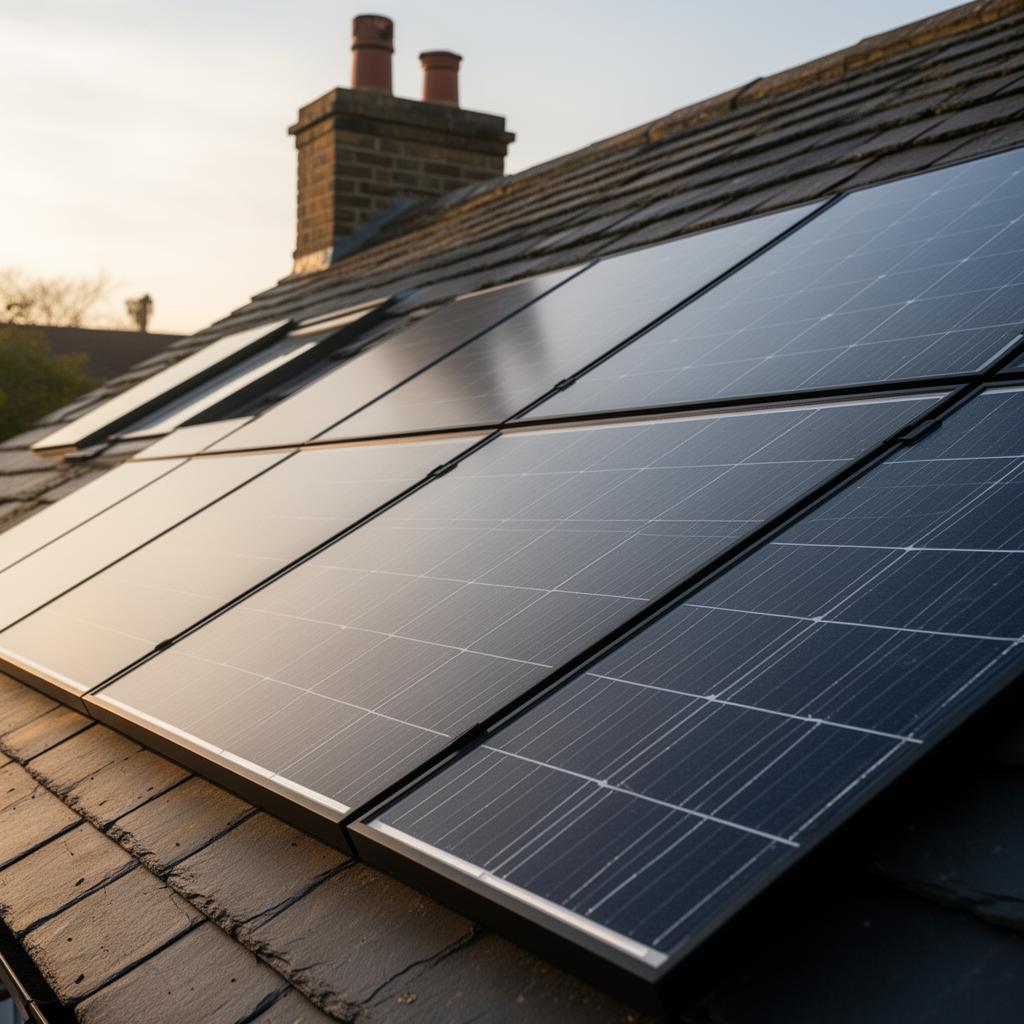
Solar panel planning permission is one of the most common concerns for homeowners considering a renewable energy installation. The good news is that most domestic solar panel installations fall under permitted development rights and do not require a formal planning application. However, there are specific rules about protrusion distances, placement, and property types that you must follow. This guide covers the permitted development criteria for every property type, including special rules for listed buildings, conservation areas, and flats.
Do You Need Planning Permission for Solar Panels?
In most cases, no. Solar panel installations on residential properties in England and Wales fall under permitted development rights, meaning you do not need planning permission provided the panels do not protrude more than 200mm from the roof surface, are not higher than the roofline, and are not installed on a listed building or in a conservation area without consent.
| Property Type | Planning Permission Needed? | Key Conditions |
|---|---|---|
| Standard house | Usually no (permitted development) | Must not protrude 200mm+, not face a highway on a conservation area property |
| Flat or maisonette | Often yes | Permitted development may not apply to flats — check with your council |
| Listed building | Yes (listed building consent) | Approval required from local planning authority |
| Conservation area | Sometimes | Only if panels face and are visible from a highway |
| Ground-mounted | Usually no | Must not exceed 4m height, 9m² area, or be within 5m of a boundary |
Scotland and Northern Ireland have their own permitted development rules that differ slightly. If you are unsure whether your installation requires planning permission, contact your local planning authority before work begins. A good MCS-certified installer will advise you on this during the site survey.
Permitted Development: When You Do Not Need Planning Permission
In England, solar panels on domestic properties benefit from permitted development (PD) rights under the Town and Country Planning (General Permitted Development) Order. This means you can install them without a planning application, provided you meet all the conditions.
Similar PD rights exist in Wales, Scotland, and Northern Ireland, though the specific conditions may differ slightly. This guide focuses primarily on England, with notes on devolved nation variations where relevant.
Solar Panel Rules for Houses: Roof-Mounted Panels
For standard houses (detached, semi-detached, and terraced), roof-mounted solar panels are permitted development if they meet all of the following conditions.
The 200mm Protrusion Rule
Panels must not protrude more than 200mm beyond the plane of the roof. This means the highest point of the panel (including the mounting frame) must be no more than 200mm above the roof surface. Most standard solar panel and mounting systems comfortably meet this requirement, with typical protrusions of 100-150mm.
Height Restriction
Panels must not be higher than the highest part of the roof (excluding the chimney). In practice, this means panels cannot be raised above the ridge line of the roof. Standard flush-mounted installations always comply with this rule.
Visual Impact
Panels should be sited, as far as practicable, to minimise their effect on the external appearance of the building and the amenity of the area. For most installations, this is a straightforward condition to meet.
Removal Condition
When panels are no longer needed for energy generation, they must be removed as soon as reasonably practicable. This is a standard condition that applies automatically.
Solar Panels on Flat Roofs
Flat-roof solar installations have additional restrictions because the panels must be tilted upwards on frames, making them more visible from ground level.
- Panels on flat roofs must not exceed 0.6 metres above the highest part of the flat roof (not including any parapet)
- The panels must be set back at least 1 metre from the external edge of the roof
- On flat roofs that are used as a balcony or terrace, additional restrictions may apply
The 0.6-metre height limit includes the panel and its mounting frame. This allows for an adequate tilt angle on most flat-roof installations, though the optimal angle for maximum energy generation in the UK is approximately 30-35 degrees, which may be slightly constrained by this height limit on smaller roofs.
Ground-Mounted Solar Panels
Ground-mounted solar panel arrays in gardens or grounds are also permitted development, subject to more restrictive conditions.
- The array must not exceed 4 metres in height
- The installation must be at least 5 metres from the boundary of the property
- The total area of ground-mounted panels must not exceed 9 square metres
- The panels must not be installed in front of the principal elevation (the front of the house)
- Ground-mounted panels in the garden of a listed building are not permitted development
The 9 square metre limit is relatively restrictive and typically accommodates a system of approximately 1.5-2 kW. For larger ground-mounted systems, you will need to apply for planning permission.
Solar Panel Planning Rules for Flats and Maisonettes
The permitted development rules are more restrictive for flats and maisonettes. In England, solar panels on flats do not benefit from the same PD rights as houses. Key considerations include the following.
- Installation on a block of flats generally requires planning permission
- The freeholder or management company must consent to any work on communal roof areas
- Individual flat owners cannot install panels on shared roofs without agreement from all leaseholders and the freeholder
- Ground-floor flats with private gardens may be able to install ground-mounted panels under PD rights, subject to the standard restrictions
If you live in a flat and want solar panels, the most practical route is to work with your building’s management company or residents’ association to propose a communal installation that benefits the entire building.
Listed Buildings and Solar Panels
Listed building restrictions add a separate layer of regulation on top of standard planning rules. The key points are as follows.
- Listed building consent is always required for any alteration that affects the character of a listed building, even if planning permission is not needed
- Panels on the street-facing elevation of a listed building are very unlikely to receive consent
- Panels on rear or hidden elevations have a better chance of approval
- Ground-mounted panels in the garden of a listed building always require both planning permission and listed building consent
- Solar tiles or integrated solar roofing may be more acceptable than traditional panels for listed buildings
If your property is listed, consult your local planning authority’s conservation officer before proceeding. They can provide pre-application advice on whether solar panels are likely to receive consent and suggest the least intrusive installation options.
Conservation Areas and Areas of Outstanding Natural Beauty
Properties in conservation areas, Areas of Outstanding Natural Beauty (AONBs), National Parks, the Broads, and World Heritage Sites face additional restrictions.
- Roof-mounted panels are still permitted development but must not be installed on a wall or roof that fronts a highway
- The panels must, so far as practicable, minimise their effect on the appearance of the building and the area
- Ground-mounted panels are subject to the same restrictions as standard properties
- Some conservation areas have Article 4 directions that remove specific PD rights; check with your local planning authority
In practice, solar panels on the rear roof slope of a property in a conservation area are usually permitted without an application. Panels on the front or side elevation facing a road will typically need planning permission.
Building Regulations for Solar Panel Installations
Separate from planning permission, solar panel installations must comply with Building Regulations. The key requirements are as follows.
- Part P (Electrical Safety): The electrical work must comply with Part P and be carried out or certified by a qualified electrician
- Part L (Conservation of Fuel and Power): The installation must be notified to Building Control, though MCS-certified installers can self-certify
- Structural loading: The roof must be capable of supporting the weight of the panels (typically 15-25 kg per panel). Most roofs are adequate, but older or weakened structures may need assessment
If your installer is MCS-certified, they will handle Building Regulations compliance as part of the installation, including all necessary notifications and certifications. Using an MCS-certified installer is essential if you want to claim the Boiler Upgrade Scheme grant or Smart Export Guarantee payments.
When You Definitely Need Planning Permission
To summarise, you will need to submit a planning application in the following situations.
- Installing panels on a block of flats
- Ground-mounted arrays exceeding 9 square metres
- Any installation on a listed building (listed building consent also needed)
- Panels on a wall or roof fronting a highway in a conservation area, AONB, or National Park
- Installations that exceed the 200mm protrusion or 0.6m flat roof height limits
- Properties where Article 4 directions have removed PD rights
- Commercial or mixed-use properties (different PD rules apply)
A planning application for domestic solar panels costs 258 in England (as of 2026) and typically takes 8 weeks for a decision. Most straightforward applications are approved, but it is worth consulting your local planning authority before submitting to understand any local sensitivities.
Ready to explore solar for your home? Get a free quote from an MCS-certified installer who can advise on both the technical and planning aspects of your installation.
Frequently Asked Questions
Do I need my neighbour’s permission to install solar panels?
No. Solar panels do not require neighbour consent under permitted development rights. However, if your installation requires planning permission (for example, in a conservation area), neighbours may be consulted as part of the planning process. In all cases, being a considerate neighbour and discussing your plans informally is good practice.
Can my landlord refuse to let me install solar panels?
If you are a tenant, you need your landlord’s permission before installing solar panels because they are a permanent alteration to the property. Landlords have the right to refuse, though many are open to the idea, especially if the installation adds value to the property. The solar panels remain with the property, so the landlord benefits from increased property value and improved EPC rating.
Are solar panel planning rules different in Scotland?
Scotland has its own permitted development rights under the Town and Country Planning (General Permitted Development) (Scotland) Order. The rules are broadly similar to England but with some differences in specific measurements and conditions. The Scottish Government encourages renewable energy installations and has historically been supportive of solar planning applications. Check with your local Scottish planning authority for the current rules.
Do solar panel installations affect my home insurance?
You should notify your home insurer when installing solar panels. Most insurers cover solar panels under the standard buildings insurance policy at no additional cost, but failing to notify them could invalidate a claim. The panels also add value to your property, so your buildings sum insured may need updating. If you have insulation and other improvements as well, ensure your total rebuild cost reflects all upgrades.
See what these numbers mean for your home
Free instant estimate — costs, savings, payback and grants for your region.

Related Articles
Is Solar Battery Storage Worth It in 2026?
Solar panels are now a common sight on UK rooftops, but the real game-changer in 2026 is battery storage. A home battery lets you store the electricity your panels generate…
2 June 2026
Why Spring Is the Perfect Time to Install Solar Panels
If you have been thinking about solar panels for a while but never quite pulled the trigger, spring is the moment to act. The combination of lengthening days, mild installation…
23 April 2026
How the Energy Price Cap Affects Heat Pump and Solar Panel Payback
See how the energy price cap affects heat pump and solar panel payback periods. Real calculations using current UK unit rates show why investing now locks in stronger returns.
15 April 2026