Solar Panels on New Build Homes: What the 2026 Building Regulations Mean
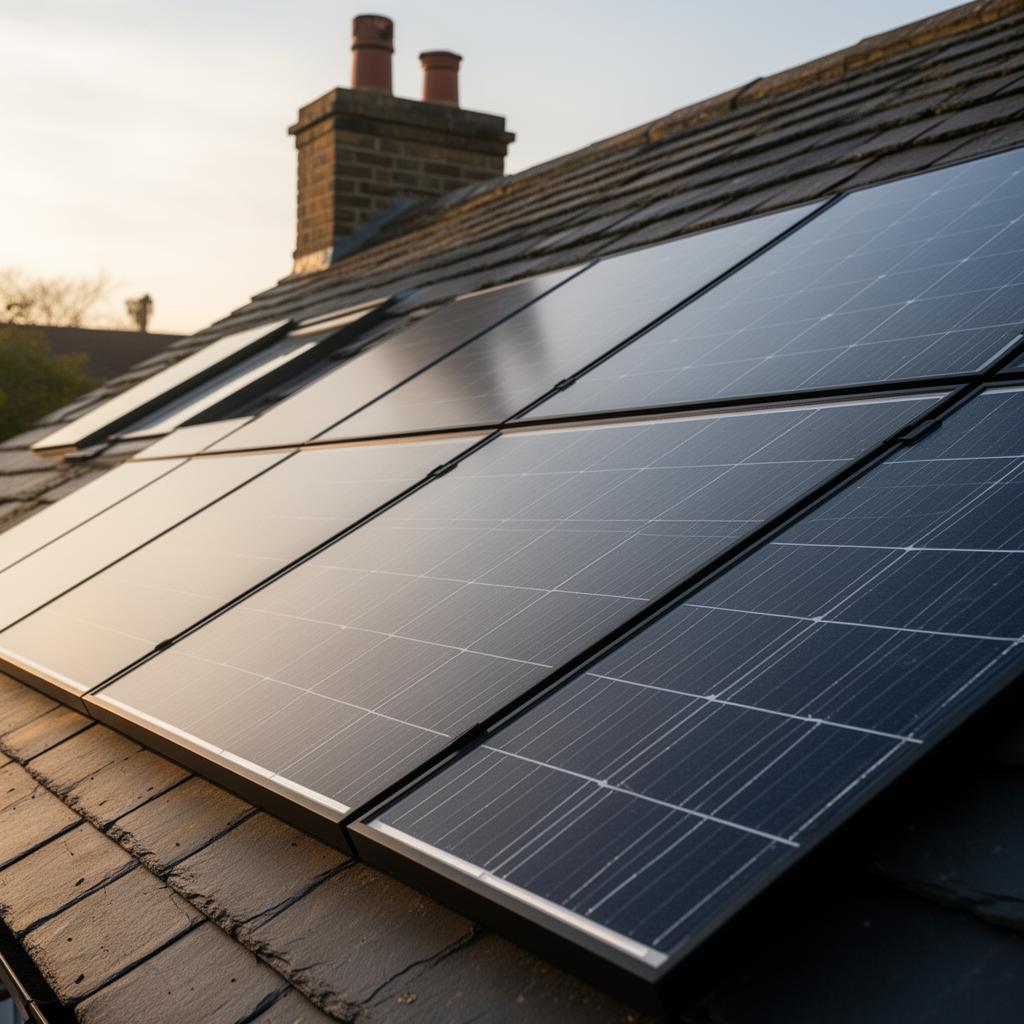
The UK government has been tightening building regulations to ensure new homes are more energy efficient and produce fewer carbon emissions. For anyone buying a new build property in 2026 and beyond, solar panels on new build homes are rapidly becoming the norm rather than the exception. Updated Part L regulations, the forthcoming Future Homes Standard, and Wales-specific mandates are reshaping what developers must include as standard. Here is what these changes mean for homebuyers, self-builders, and the broader solar market.
What Do the 2026 Building Regulations Mean for Solar on New Builds?
The 2026 building regulations — formally the Future Homes Standard taking effect from March 2027 — require all new-build homes in England to produce 75 to 80% fewer carbon emissions than current standards. In practice, this means virtually every new home will include rooftop solar panels alongside a heat pump and enhanced insulation as standard, with developers expected to install 2 to 4 kW systems on most plots.
For buyers, this means new-build homes from 2027 onward will come with solar panels already fitted and factored into the purchase price. If you are buying a new build before March 2027, check whether the developer is already building to Future Homes Standard specifications. Many larger housebuilders have already adopted the new standards ahead of the deadline, but smaller developers may still be building to the current Part L 2021 regulations.
The Updated Part L Building Regulations Explained
Part L of the Building Regulations sets the energy performance standards for new buildings in England. The June 2022 update introduced significantly tighter carbon emission targets, requiring new homes to produce 31% less carbon than those built to the previous 2013 standard.
While Part L does not explicitly mandate solar panels, the carbon reduction targets are so stringent that most developers find it extremely difficult to comply without including renewable electricity generation. In practice, this means the vast majority of new homes built from 2023 onwards include rooftop solar panels as part of the standard specification.
The regulations use a fabric-first approach combined with renewable generation. Developers must first minimise heat loss through improved insulation, airtightness, and thermal bridging, then top up performance with low-carbon heating and renewable electricity. A typical compliance package for a detached house includes:
- Enhanced wall, floor, and roof insulation exceeding previous standards
- Triple-glazed or high-performance double-glazed windows
- Mechanical ventilation with heat recovery (MVHR)
- A low-carbon heating system (often an air source heat pump)
- Rooftop solar panels, typically 2-4 kW
The Future Homes Standard: What Changes From 2025
The Future Homes Standard (FHS) represents a much larger leap. Announced for implementation from 2025, with full technical details published in the final consultation response, the FHS requires new homes to produce 75-80% less carbon emissions than the 2013 baseline.
At this level of carbon reduction, solar panels are effectively mandatory for all new homes. The FHS also bans the installation of gas boilers in new builds, making heat pumps or district heating the default. Combined with solar panels, this means new homes will be dramatically cheaper to run than existing housing stock.
Key elements of the Future Homes Standard include:
- No new gas connections for heating or hot water
- Very high fabric efficiency with U-values around 0.15 W/m2K for walls
- Air source or ground source heat pump heating as standard
- Solar PV sized to match a significant portion of the home’s electricity demand
- Wastewater heat recovery in some dwelling types
- EV charging point pre-wiring or full installation
Wales Solar Panel Requirements From 2027
Wales is taking a slightly different approach with its own building regulations. The Welsh Government has announced that from March 2027, all new homes in Wales must include on-site renewable electricity generation. This is a more explicit mandate than England’s carbon-target approach and specifically names solar PV as the primary expected technology.
Welsh building regulations already require new homes to achieve a 37% carbon reduction compared to the 2013 baseline, and the 2027 update will push this further. The Welsh approach is notable because it removes any ambiguity about whether solar panels are required, making them a specific regulatory obligation rather than an implied one.
Scotland has its own building standards which have similarly tightened. New homes in Scotland must meet a minimum renewable energy contribution, and most developments now include solar PV as standard.
How Much Will New Build Solar Panels Save Homeowners?
The projected savings for households in Future Homes Standard-compliant new builds are substantial. Government modelling suggests the combination of a heat pump, high insulation standards, and solar panels will save homeowners an estimated £830 per year on energy bills compared to a home built to 2013 standards with a gas boiler.
This saving comes from three sources:
- Reduced heating demand – Better insulation and airtightness mean less energy is needed to heat the home in the first place
- Efficient heat pump – An air source heat pump delivers 3-4 units of heat for every unit of electricity consumed, making it far cheaper to run than a gas boiler
- Solar self-consumption – Free electricity from rooftop panels offsets grid imports, particularly during daytime hours
For a four-bedroom detached house with a 4 kW solar system and a heat pump, typical annual energy costs are projected at around £900-£1,100, compared to £1,800-£2,000 for an equivalent gas-heated home built to older standards. Over a 25-year mortgage term, this represents cumulative savings of £20,000-£25,000.
What Size Solar System Do New Builds Get?
The size of solar system installed on new builds varies depending on the property type, roof size, and the other energy measures included in the overall compliance package. Typical installations include:
| Property Type | Typical Solar System Size | Annual Generation | Estimated Annual Saving |
|---|---|---|---|
| 1-2 bed apartment | 1-2 kW (shared array) | 850-1,700 kWh | £200-£400 |
| 2-3 bed terrace | 2-3 kW | 1,700-2,550 kWh | £350-£500 |
| 3-4 bed semi-detached | 3-4 kW | 2,550-3,400 kWh | £450-£650 |
| 4-5 bed detached | 4-6 kW | 3,400-5,100 kWh | £600-£900 |
It is worth noting that developer-installed systems tend to be on the smaller side, meeting the minimum needed for regulatory compliance rather than maximising the roof’s potential. If you are buying a new build, you may want to ask the developer whether a larger system is available as an upgrade option.
Solar Panels on New Builds vs Retrofit: Key Differences
Having solar panels installed during construction offers several advantages over retrofitting them to an existing home.
- Lower cost – The developer benefits from bulk purchasing and the scaffolding is already in place during construction, so the per-panel cost is typically 15-25% lower than a retrofit installation
- Integrated design – Wiring can be routed neatly inside walls and ceilings during the build, rather than surface-mounted on an existing property
- Roof optimisation – The roof can be designed with the ideal pitch and orientation for solar from the outset
- Warranty inclusion – The solar system is covered under the NHBC or similar new home warranty, giving 10 years of defect cover
- Mortgage inclusion – The cost is rolled into the house price and covered by the mortgage, spreading the cost over 25-30 years at mortgage interest rates rather than requiring upfront capital
The main disadvantage is that you have less choice over the panel brand, inverter type, and system size. Developers tend to use whichever products offer the best bulk pricing, which may not always be the highest-performing options on the market.
Should You Add a Battery to a New Build Solar System?
Most new build solar installations do not include a battery as standard because batteries are not required for building regulation compliance. However, adding one makes strong financial sense.
Without a battery, you will export surplus daytime solar generation for just 4-15p per kWh and buy electricity back in the evening at 24-28p per kWh. A battery stores that surplus for later use, dramatically increasing your self-consumption rate from a typical 30-40% without a battery to 70-80% with one.
Some developers offer a battery storage option at the point of sale. If not, having one retrofitted after completion is straightforward, especially if the developer has pre-wired for battery connection. A 5-8 kWh battery costs around £3,500-£5,500 and can save an additional £300-£500 per year when paired with a new build solar system.
What New Build Buyers Should Check Before Completion
If you are buying a new build with solar panels, these are the key questions to ask the developer before exchange.
- What is the total system size in kW and how many panels are installed?
- Which panel brand and model is being used, and what is the product warranty?
- Is the inverter a string inverter or microinverters, and what is its warranty period?
- Has the installation been registered with MCS (Microgeneration Certification Scheme)?
- Will the system be registered for the Smart Export Guarantee before handover?
- Is the system pre-wired for battery storage addition?
- What monitoring app or system is provided to track generation?
- Is the solar system covered under the NHBC warranty?
MCS registration is particularly important because it is required for Smart Export Guarantee eligibility. Without it, you cannot be paid for the electricity you export to the grid. Ensure this is completed before you move in.
If you already own a home without solar and want to understand the costs and savings of a retrofit installation, you can get a free quote from MCS-certified installers to compare.
Frequently Asked Questions
Are solar panels now mandatory on all new homes in the UK?
Not technically mandatory in England, but the carbon emission targets under Part L and the Future Homes Standard make them effectively necessary for compliance in most dwelling types. Wales will have an explicit mandate from March 2027. In practice, the vast majority of new homes built from 2024 onwards include solar panels as standard.
Do new build solar panels add to the house price?
Yes, but the cost is modest compared to the home’s total price. Research suggests solar panels add £3,000-£5,000 to the value of a property, which is broadly in line with the cost of the installation. Because the cost is included in the mortgage, the monthly saving on energy bills typically exceeds the additional mortgage payment, making it cost-positive from day one.
Can I upgrade the solar system on a new build before I move in?
Some developers offer upgrade packages with larger solar arrays or battery storage as part of their specification options. This is worth asking about early in the buying process, ideally before the plot reaches roof stage. After completion, you can always add more panels or a battery independently, though this will be at your own cost rather than included in the mortgage.
What happens to solar panels when I sell a new build home?
Solar panels transfer with the property when you sell. They are a fixture of the building, not a removable item. The MCS registration, any remaining warranty, and the Smart Export Guarantee tariff all transfer to the new owner, making the property more attractive to energy-conscious buyers.
See what these numbers mean for your home
Free instant estimate — costs, savings, payback and grants for your region.

Related Articles

What the 2026 Future Homes Standard Means for Existing Homeowners
The Future Homes Standard is the biggest change to building regulations in England in a generation. It is designed to ensure new homes produce dramatically fewer carbon emissions. But if…
3 May 2026
Prepayment Meter Rights: Protections Against Forced Installation and Self-Disconnection
Prepayment meter rights UK explained. Learn protections against forced installation, what to do if you cannot top up, emergency credit options and how to switch away from prepay.
12 April 2026 Fuel Poverty in the UK: Definition, Statistics and What Help Is Available
Fuel poverty UK affects 9 million households. Learn the LILEE definition, who is most at risk, the funding gap, and every support scheme available to help you heat your home.
11 April 2026