Solar Panels in Winter: How Much Electricity Do They Actually Generate
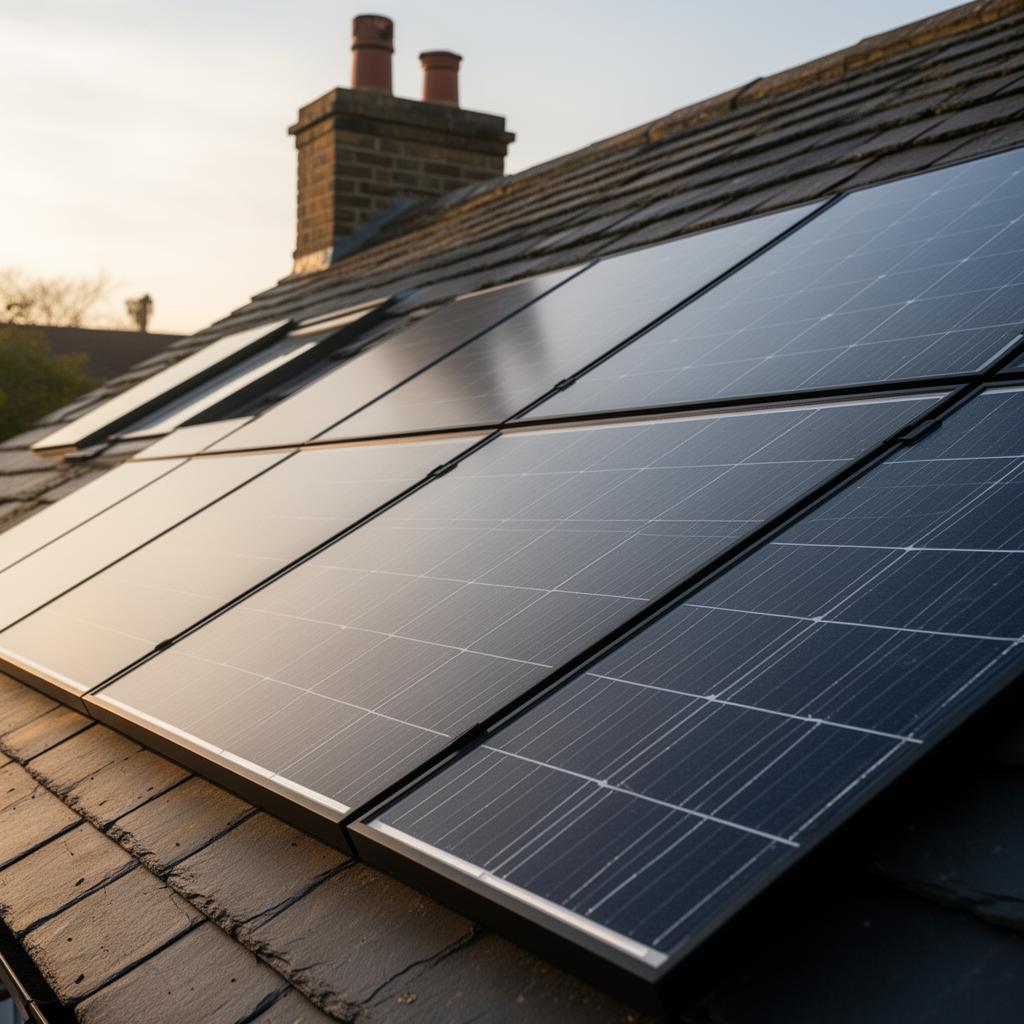
One of the most common concerns for anyone considering solar panels in the UK is whether they produce enough electricity during the winter months. The short answer is yes, solar panels do work in winter, but their output drops significantly compared to summer. Understanding exactly how much solar panels generate in winter and the factors behind the seasonal dip helps you set realistic expectations and plan your energy usage accordingly. For anyone researching solar panels winter UK output, this guide provides the real data.
How Much Electricity Do Solar Panels Generate in Winter?
Solar panels generate roughly 10 to 15% of their annual output during winter in the UK. A typical 4 kW system that produces 3,400 kWh per year will generate around 150 to 250 kWh between December and February — approximately 1.5 to 3 kWh per day compared to 12 to 16 kWh per day in summer. Output depends heavily on your location, roof orientation and how many daylight hours you receive.
While winter output is significantly lower, it is not zero. Panels still generate electricity on overcast days because they respond to daylight rather than direct sunshine. Pairing solar panels with a battery and a time-of-use tariff such as Octopus Go means you can charge your battery cheaply overnight at 7.5p per kWh and use solar output during the day, keeping your overall electricity costs low even in the darkest months.
How Much Does Solar Panel Output Drop in Winter?
Solar panel output in the UK follows a predictable seasonal curve. A typical 4 kW system that generates around 400 kWh in June will produce roughly 65-80 kWh in December, a drop of around 80-83%. This is driven primarily by two factors: fewer daylight hours and a lower sun angle that spreads the same sunlight across a wider area of ground.
During November, December, and January, the UK receives only around 8 hours of daylight compared to 16 or more in midsummer. Even within those 8 hours, the sun sits low on the horizon, meaning the light passes through more atmosphere before reaching your panels. The result is weaker irradiance, measured in watts per square metre, hitting the panel surface.
| Month | Average Daily Generation (4 kW system) | Monthly Total | % of Peak (June) |
|---|---|---|---|
| June | 13.5 kWh | 405 kWh | 100% |
| September | 9.0 kWh | 270 kWh | 67% |
| October | 5.5 kWh | 170 kWh | 42% |
| November | 3.0 kWh | 90 kWh | 22% |
| December | 2.2 kWh | 68 kWh | 17% |
| January | 2.5 kWh | 78 kWh | 19% |
| February | 4.5 kWh | 126 kWh | 31% |
These figures are based on Midlands locations. Systems in southern England will perform slightly better, while installations in Scotland may see even lower winter output.
Why Solar Panels Still Generate on Overcast Winter Days
Solar panels do not need direct sunshine to generate electricity. They respond to all visible light, including the diffuse light that passes through clouds. On a heavily overcast winter day, a typical system will still produce 10-25% of its rated capacity. This means a 4 kW system could generate 0.4-1.0 kW even under thick cloud cover.
Modern monocrystalline solar panels are considerably better at capturing diffuse light than older polycrystalline technology. Panels with half-cut cell designs and multi-busbar technology have improved low-light performance by 3-5% compared to panels from just five years ago.
There is also a counterintuitive benefit to cold temperatures. Solar panel efficiency actually increases in cold weather because the semiconductor material conducts electricity more efficiently at lower temperatures. For every degree below the standard test condition of 25 degrees Celsius, panel output increases by roughly 0.3-0.4%. On a bright, cold winter day, your panels can briefly exceed their rated output.
Cold Temperatures Actually Help Panel Efficiency
This point deserves its own section because it surprises many homeowners. Solar panels are rated at 25 degrees Celsius, but in summer a rooftop panel can reach 60-70 degrees, reducing its efficiency by 10-15%. In winter, panel temperatures might only reach 5-15 degrees, meaning they operate 3-8% above their rated efficiency.
This is why you sometimes see surprisingly high momentary output readings on crisp, clear winter mornings. The combination of cold air and bright sunshine creates ideal conditions for the panels themselves, even though the shorter day means total energy harvested remains lower.
The temperature coefficient of a panel is listed on its datasheet. A typical modern panel has a temperature coefficient of around -0.35% per degree Celsius, meaning for every degree above 25 degrees, output drops by 0.35%, and for every degree below, it rises by the same amount.
How Snow, Frost, and Ice Affect Solar Panels in Winter
Snow settling on solar panels can temporarily block generation entirely. However, in the UK, heavy snowfall is relatively rare and seldom persists for more than a day or two in most regions. Panels are installed at an angle, and the dark surface warms quickly once any sunlight appears, causing snow to slide off.
You should never attempt to clear snow from roof-mounted panels yourself due to the risk of falls and panel damage. In nearly all cases, the energy lost from a day or two of snow cover is negligible over the course of a year.
Frost and ice generally have minimal impact because they are thin enough for light to penetrate, and the panels warm up quickly once generation begins. Heavy frost may delay the start of morning generation by 30-60 minutes but rarely affects the daily total significantly.
Strategies to Maximise Solar Generation in Winter
While you cannot change the weather or the sun’s position, there are practical steps to get the most from your solar panels during the winter months.
Optimal panel angle
The ideal panel angle for year-round UK generation is around 35-40 degrees from horizontal. However, for winter performance specifically, a steeper angle of 50-60 degrees captures more energy from the low winter sun. If you have adjustable ground-mounted panels, tilting them steeper in October and back to a shallower angle in March can increase winter output by 10-15%.
Keep panels clean and clear
Autumn leaves, bird droppings, and general grime accumulate over summer and can reduce output by 5-10%. Arranging a professional clean in October ensures your panels enter winter in the best possible condition. The rain alone is not always enough to clear stubborn deposits.
Shift consumption to daylight hours
With less surplus to store, running heavy appliances like washing machines, dishwashers, and tumble dryers during the middle of the day ensures you use solar electricity directly rather than importing from the grid. Smart plugs and timer settings make this easy to automate.
Use a battery with a smart tariff
In winter, your solar battery may not fill from solar alone. Combining it with a time-of-use tariff like Octopus Go means you can charge the battery at 7.5p per kWh overnight and discharge during peak hours when electricity costs 24-30p per kWh. This turns your battery into a money-saving asset even when solar generation is low.
Do Solar Panels Still Pay for Themselves Despite Winter?
Absolutely. The financial case for solar panels is based on annual generation, not just summer performance. A well-sized 4 kW system in the UK generates around 3,400-3,800 kWh per year, with roughly 75% of that coming between March and September. The winter months contribute a smaller but still meaningful share.
At current electricity prices of around 24p per kWh, a 4 kW system saves approximately £600-£800 per year through self-consumption and export payments. The typical payback period is 6-8 years, after which you have 17-20 years of essentially free electricity. Winter output forms part of that overall return, and the panels continue generating every single day of the year.
If you are considering solar panels and want to understand what they would generate at your property, you can request a free quote from local MCS-certified installers who will model expected output for your specific roof orientation and location.
Regional Winter Solar Output Across the UK
Location matters, though perhaps less than you might expect. The difference between the sunniest and least sunny parts of the UK is around 30% in annual terms, but winter specifically sees a wider gap.
| Region | December Generation (4 kW system) | Annual Total |
|---|---|---|
| South Coast (Brighton, Southampton) | 75-85 kWh | 3,800-4,000 kWh |
| Midlands (Birmingham, Nottingham) | 60-70 kWh | 3,400-3,600 kWh |
| North England (Manchester, Leeds) | 50-65 kWh | 3,200-3,400 kWh |
| Scotland (Edinburgh, Glasgow) | 40-55 kWh | 3,000-3,200 kWh |
| Northern Scotland (Inverness) | 35-45 kWh | 2,800-3,000 kWh |
Even in Scotland, where winter days are shortest, the longer summer days partially compensate. A system in Inverness generates more in June than one in London because the sun is above the horizon for nearly 18 hours.
Frequently Asked Questions
Do solar panels work in the rain?
Yes. Solar panels generate electricity from light, not heat or sunshine specifically. Even on a rainy day, diffuse light reaches the panels and they will produce some output, typically 10-20% of their rated capacity. Rain also helps keep panels clean, which can actually improve performance once skies clear.
Should I turn off my solar panels in winter?
No. Solar panels require no intervention between seasons. They generate automatically whenever light hits them and there is no benefit to switching them off. Even modest winter generation offsets grid imports and contributes to your annual savings.
Is it worth getting a battery just for winter?
A solar battery provides benefits all year round, but in winter its role shifts. Rather than storing large solar surpluses, it can be used with a smart tariff to store cheap overnight electricity for daytime use. This means your battery earns its keep in winter too, just from a different charging source. Pairing solar panels with a battery and a smart tariff is the most effective strategy for year-round savings.
Do solar panels generate anything in December?
Yes. A 4 kW system in the Midlands will generate around 60-70 kWh in December, equivalent to roughly 17% of its peak summer output. That is enough to cover several days’ worth of lighting, broadband, and small appliance use. Every kilowatt-hour generated is one you do not buy from the grid.
Will climate change affect winter solar output?
Modelling suggests the UK will see slightly warmer and wetter winters, which could marginally reduce clear-sky days. However, the primary driver of winter output is daylight hours and sun angle, which are astronomical constants unaffected by climate. Any change to cloud patterns is expected to be modest and should not significantly alter the financial case for solar panels.
See what these numbers mean for your home
Free instant estimate — costs, savings, payback and grants for your region.

Related Articles
Is Solar Battery Storage Worth It in 2026?
Solar panels are now a common sight on UK rooftops, but the real game-changer in 2026 is battery storage. A home battery lets you store the electricity your panels generate…
2 June 2026
Why Spring Is the Perfect Time to Install Solar Panels
If you have been thinking about solar panels for a while but never quite pulled the trigger, spring is the moment to act. The combination of lengthening days, mild installation…
23 April 2026
How the Energy Price Cap Affects Heat Pump and Solar Panel Payback
See how the energy price cap affects heat pump and solar panel payback periods. Real calculations using current UK unit rates show why investing now locks in stronger returns.
15 April 2026