Solar Panel Optimisers: How They Fix Shading Problems and Boost Output
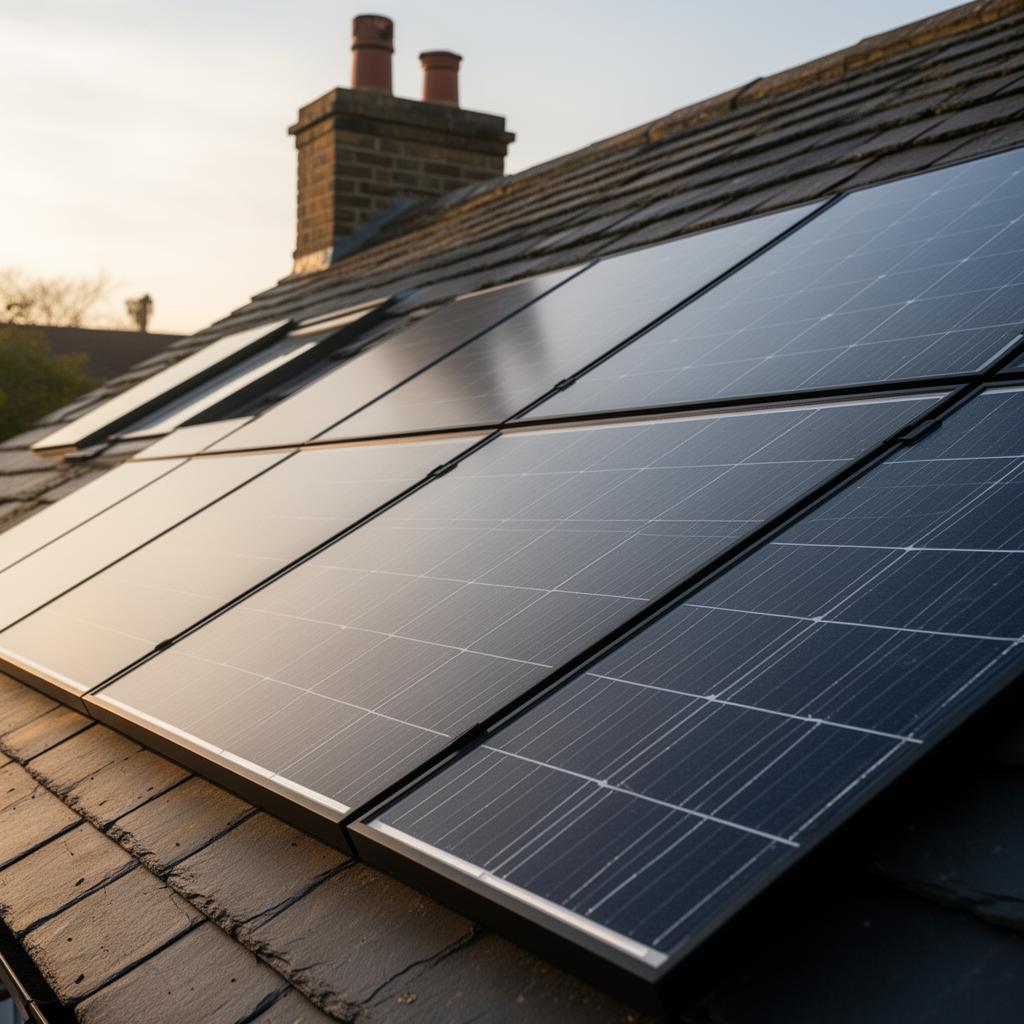
Solar panel optimisers UK homeowners are hearing about more frequently can solve one of the biggest performance killers in residential solar: partial shading. A single chimney shadow, overhanging tree branch or neighbouring building can reduce the output of an entire string of panels by 20 to 40%. Power optimisers let each panel work independently, so a shaded panel only affects itself rather than dragging down the whole array.
What Are Solar Panel Optimisers and How Do They Fix Shading?
Solar panel optimisers are small electronic devices fitted to the back of each panel that allow every module to operate at its maximum power point independently. When one panel is shaded by a chimney, tree or dormer, an optimiser prevents that shaded panel from dragging down the output of the entire string, recovering up to 25 percent of lost generation on partially shaded roofs.
Power optimisers cost between £40 and £60 per panel and are fitted during or after installation. They are most cost-effective on roofs with unavoidable partial shading throughout the day. Systems without optimisers use a single maximum power point tracker in the inverter, which means the worst-performing panel dictates output for the whole string.
This guide explains how solar panel optimisers and MPPT technology work, when they are essential versus optional, which brands lead the UK market and whether the extra cost is justified for your roof.
Why Shading Is Such a Problem for Solar Panels
To understand why optimisers matter, you need to understand how standard solar panel systems handle shading. In a typical string inverter setup, panels are connected in series, like links in a chain. The electrical current flows through every panel in the string, and the weakest panel limits the performance of the entire string.
If one panel in a string of 10 is 50% shaded by a chimney, that panel’s output drops by roughly 50%. But because all panels in the string share the same current, the other 9 panels are also forced to reduce their output to match. The result is that a shadow covering just 10% of your total panel area can reduce system output by 30 to 40%.
This is known as the “Christmas lights effect” because, like old-fashioned Christmas lights wired in series, one weak link affects the whole chain.
How Solar Panel Optimisers Work
A power optimiser is a small electronic device attached to the back of each individual solar panel. It performs Maximum Power Point Tracking (MPPT) at the panel level, allowing each panel to produce its maximum output regardless of what neighbouring panels are doing.
When a panel is partially shaded, the optimiser adjusts the voltage and current to extract the best possible output from the available sunlight. The unshaded panels continue operating at full capacity because they each have their own optimiser managing their individual performance.
The key benefits of panel-level optimisation include:
- Shading tolerance: each panel operates independently, so shading on one panel does not reduce the output of others
- Panel-level monitoring: you can see the output of each individual panel through the manufacturer’s app, making it easy to spot faults or excessive soiling
- Safety: optimisers can shut down individual panels for maintenance or in an emergency, reducing DC voltage on the roof to safe levels
- Design flexibility: panels of different orientations, tilts or even different brands can be mixed on the same string
SolarEdge vs Tigo: Leading Solar Panel Optimiser Brands
Two brands dominate the UK solar optimiser market, each with a different approach.
| Feature | SolarEdge | Tigo |
|---|---|---|
| System type | Full system (optimiser + inverter) | Add-on (works with any inverter) |
| Cost per optimiser | Included with SolarEdge inverter | 35-45 pounds per unit |
| Monitoring | Panel-level via SolarEdge app | Panel-level via Tigo app |
| Warranty | 25 years (optimiser), 12 years (inverter) | 25 years |
| Compatibility | SolarEdge inverter only | Any string inverter |
| Safety shutdown | Yes (SafeDC) | Yes (Rapid Shutdown) |
SolarEdge Power Optimisers
SolarEdge takes an integrated approach. When you choose a SolarEdge inverter, every panel in the system gets an optimiser as standard. This is not optional, it is how SolarEdge systems work. The optimisers are included in the inverter price, so the cost comparison is SolarEdge system versus standard string inverter system rather than optimiser cost alone.
A SolarEdge system typically costs 500 to 1,000 pounds more than an equivalent system with a standard string inverter like Solis or Huawei. For that premium, you get panel-level optimisation on every panel, comprehensive monitoring and SolarEdge’s SafeDC safety shutdown feature.
Tigo Power Optimisers
Tigo takes a selective approach. Their optimisers can be added to individual panels on an existing string inverter system. If only 3 of your 10 panels suffer from shading, you can add Tigo optimisers to just those 3 panels rather than optimising the entire array.
At approximately 35 to 45 pounds per optimiser plus installation, adding Tigo optimisers to a few shaded panels costs 150 to 250 pounds, significantly less than upgrading to a full SolarEdge system. This makes Tigo the better choice for retrofitting optimisers to existing installations or for new installations with only minor shading.
When Solar Panel Optimisers Are Essential
Not every solar panel installation needs optimisers. Here are the scenarios where they are strongly recommended or essential:
- Partial shading from chimneys: most UK roofs have at least one chimney that casts a shadow across nearby panels for part of the day. If more than 20% of your panels are affected, optimisers are essential
- Tree shading: overhanging branches or nearby trees that cast moving shadows across multiple panels throughout the day
- Neighbouring buildings: terraced or semi-detached houses where a neighbouring property’s roof or dormer shades part of your array
- Multi-orientation arrays: if panels are split across east and west-facing roof planes, optimisers allow both orientations to perform independently
- Complex roof shapes: L-shaped roofs, dormers or roof sections at different pitches benefit from panel-level optimisation
When Optimisers Are Not Worth the Cost
Optimisers add cost and complexity, and they are not always justified. You can skip them if:
- Your roof is shade-free: if no shadows fall on your panels between 9am and 3pm (the peak generation hours), a standard string inverter will perform almost identically to an optimised system
- All panels face the same direction: a simple south-facing array with no shading does not benefit significantly from panel-level MPPT
- Budget is tight: the 500 to 1,000 pound premium for a SolarEdge system versus a standard inverter could instead be spent on an extra panel or two, adding more generation capacity
The EPVS (Energy Performance Validation Scheme) uses a 30% shading threshold as a guideline. If a shading analysis shows that less than 30% of your panels are affected by shading during peak hours, the cost of optimisers may not be recovered through increased generation.
Solar Panel Optimisers UK: Cost and Payback Analysis
Here is a realistic cost and payback comparison for a 4 kWp system with moderate shading affecting 3 of 10 panels.
| Scenario | System Cost | Annual Generation | Annual Saving |
|---|---|---|---|
| String inverter (no optimisers) | 6,500 pounds | 3,200 kWh | 785 pounds |
| String inverter + 3 Tigo optimisers | 6,750 pounds | 3,550 kWh | 870 pounds |
| Full SolarEdge system | 7,200 pounds | 3,650 kWh | 895 pounds |
In this scenario, adding 3 Tigo optimisers costs an extra 250 pounds and recovers an additional 85 pounds per year, paying back in under 3 years. The full SolarEdge system costs an extra 700 pounds and recovers 110 pounds per year, paying back in about 6 years. Both are worthwhile investments, but the Tigo retrofit offers the faster return.
Your installer should conduct a shading analysis during the survey to determine whether optimisers are recommended for your specific roof. Get a free quote to have your roof assessed by MCS-certified installers.
Microinverters: The Alternative to Optimisers
Microinverters are a third option that takes panel-level optimisation even further. Instead of a central inverter with optimisers, each panel gets its own small inverter that converts DC to AC right at the panel. Brands like Enphase lead this market.
Microinverters offer all the benefits of optimisers plus the advantage of eliminating the central inverter entirely, removing a single point of failure. However, they typically cost 1,000 to 1,500 pounds more than a standard string inverter system, making them the most expensive option.
For most UK homes with moderate shading, optimisers or selective Tigo retrofits offer the best balance of performance improvement and cost.
Frequently Asked Questions
Can I add optimisers to my existing solar panel system?
Yes. Tigo optimisers can be retrofitted to individual panels on an existing string inverter system. An electrician needs to access each panel to attach the optimiser, which typically means scaffolding and half a day’s labour. Expect to pay 150 to 400 pounds depending on how many panels need optimisers and your roof access.
Do optimisers increase solar panel lifespan?
Not directly. However, by preventing hotspots caused by shading (where shaded cells overheat), optimisers can reduce stress on individual panels. Bypass diodes in modern panels already mitigate hotspot risk, but optimisers provide an additional layer of protection. The main benefit is increased generation rather than extended lifespan.
Are SolarEdge systems more reliable than string inverters?
SolarEdge inverters have a 12-year warranty compared to 10 years for most string inverters. However, SolarEdge systems have more components (an optimiser per panel plus the inverter) which statistically creates more potential failure points. In practice, SolarEdge reliability is good, but if an optimiser fails, you need a professional to access the roof for replacement. A failed string inverter is replaced at ground level.
How much extra output do optimisers add in the UK?
On a shade-free roof, optimisers add approximately 2 to 5% extra output through more precise MPPT tracking. On a partially shaded roof, the improvement can be 10 to 25% depending on the severity and duration of shading. Your installer’s shading analysis will estimate the specific improvement for your roof.
Do I need optimisers for a south-facing roof with no shading?
No. A simple south-facing, shade-free roof is the ideal scenario for a standard string inverter, which will perform within 2-3% of an optimised system at a lower cost. Save the optimiser budget and invest it in additional solar panel capacity or battery storage instead.
See what these numbers mean for your home
Free instant estimate — costs, savings, payback and grants for your region.

Related Articles
Is Solar Battery Storage Worth It in 2026?
Solar panels are now a common sight on UK rooftops, but the real game-changer in 2026 is battery storage. A home battery lets you store the electricity your panels generate…
2 June 2026
Why Spring Is the Perfect Time to Install Solar Panels
If you have been thinking about solar panels for a while but never quite pulled the trigger, spring is the moment to act. The combination of lengthening days, mild installation…
23 April 2026
How the Energy Price Cap Affects Heat Pump and Solar Panel Payback
See how the energy price cap affects heat pump and solar panel payback periods. Real calculations using current UK unit rates show why investing now locks in stronger returns.
15 April 2026