Home Wind Turbines in the UK: Costs, Output and Are They Worth It
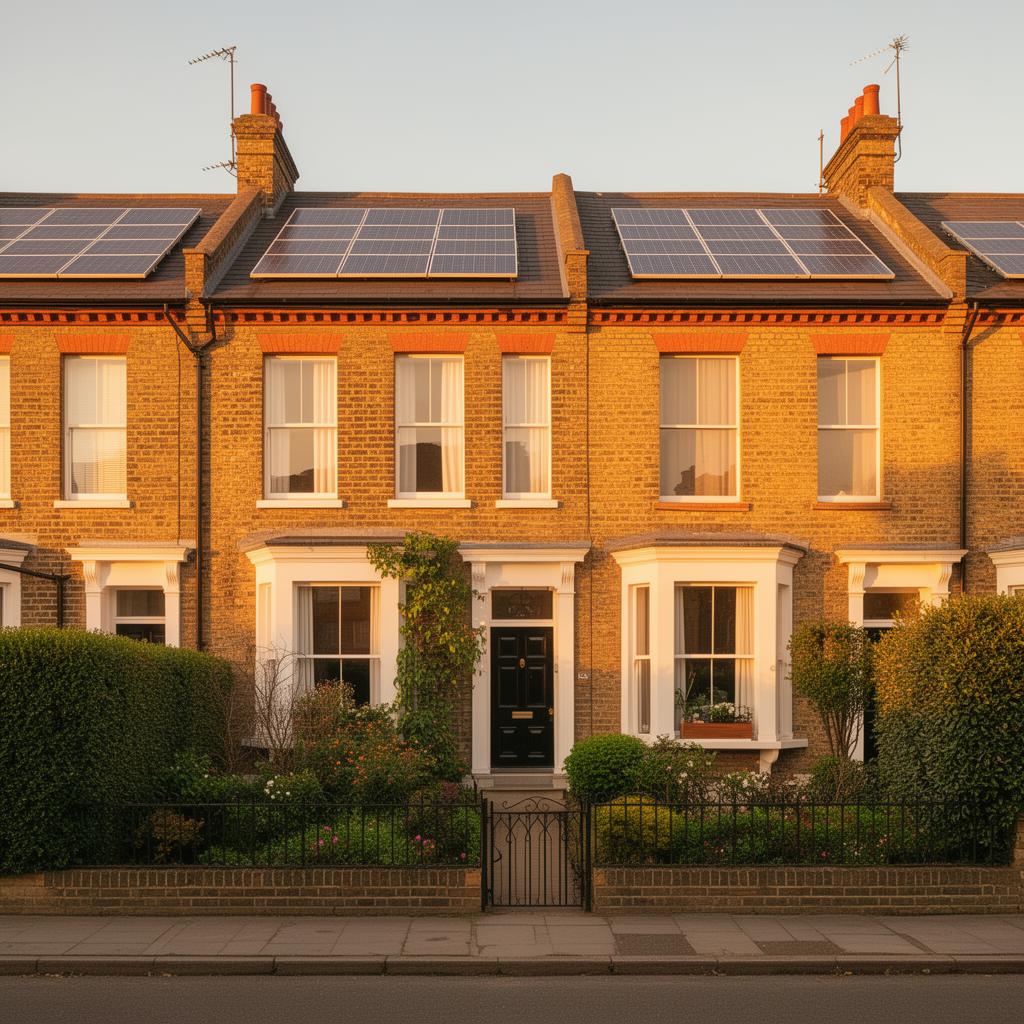
The idea of a home wind turbine UK homeowners occasionally explore sounds appealing on paper. The UK is one of the windiest countries in Europe, and if solar panels can slash electricity bills, surely a wind turbine could do even more, especially during the dark winter months when solar generation drops. Unfortunately, the reality for most UK homes is far less encouraging than the marketing suggests.
How Much Do Home Wind Turbines Cost in the UK?
A home wind turbine in the UK costs between £2,000 and £6,000 for a roof-mounted system or £15,000 to £30,000 for a freestanding pole-mounted turbine. A typical 5 kW pole-mounted turbine generates 5,000 to 8,000 kWh per year in a good location, saving £1,200 to £1,960 annually at current electricity rates.
Are Home Wind Turbines Worth It in the UK?
No, home wind turbines are not worth it for most UK households. Roof-mounted models produce very little usable energy due to turbulence, and pole-mounted turbines require planning permission, an exposed rural site with average wind speeds above 5 m/s and a large budget. For the majority of homes, solar panels offer better returns with lower risk and no planning hurdles.
This guide provides an honest assessment of domestic micro wind in the UK, covering what the turbines actually produce, how much they cost, the planning rules you need to navigate and whether your money is better spent elsewhere.
Types of Home Wind Turbine Available in the UK
Domestic wind turbines fall into two broad categories: roof-mounted and standalone (also called freestanding or pole-mounted). The differences between them are significant.
Roof-Mounted Wind Turbines
Roof-mounted turbines attach to the gable end or ridge of your roof. They are small, typically rated at 0.5 to 2 kW, and are the cheapest option at 1,500 to 3,500 pounds installed. However, their output is consistently disappointing.
The fundamental problem is turbulence. Wind flowing over a house is chaotic and disrupted by the roof itself, chimneys, neighbouring buildings and trees. Roof-mounted turbines typically generate just 0.5 to 2.5 kWh per day in most UK suburban locations, equivalent to roughly 180 to 900 kWh per year. At current electricity prices, that saves 45 to 220 pounds annually, giving a payback period of 7 to 20 years or more.
Studies by the Energy Saving Trust and field trials by various local authorities have repeatedly shown that roof-mounted turbines underperform their rated capacity by 50 to 80% in typical suburban settings. The vibration and noise they generate can also be problematic, causing complaints from both the homeowner and neighbours.
Standalone Wind Turbines
Standalone turbines are mounted on a dedicated mast in your garden, typically at heights of 6 to 11.1 metres (the permitted development limit). Larger models rated at 2.5 to 6 kW can be effective in the right conditions, generating 4,000 to 9,000 kWh per year in exposed rural locations.
The costs are substantially higher. A 5 kW standalone turbine with mast, foundations and grid connection typically costs 15,000 to 25,000 pounds installed. This includes 10,000 to 20,000 pounds for the turbine and installation, plus 3,000 to 5,000 pounds for foundations and groundwork.
The key requirement is wind speed. A standalone turbine needs an annual average wind speed of at least 5 metres per second to be economically viable. Most rural hilltop locations in the UK meet this threshold, but suburban and urban areas rarely do.
Home Wind Turbine UK: Realistic Output Expectations
Wind turbine manufacturers quote rated output at a specific wind speed, typically 12 metres per second. In most UK locations, the average wind speed is considerably lower than this. Here is what you can realistically expect.
| Location Type | Avg Wind Speed | Roof-Mounted (1 kW) | Standalone (5 kW) |
|---|---|---|---|
| Urban/suburban | 3-4 m/s | 200-500 kWh/year | 1,500-3,000 kWh/year |
| Rural lowland | 4-5 m/s | 400-800 kWh/year | 3,000-5,000 kWh/year |
| Rural exposed/hilltop | 5-7 m/s | 600-1,200 kWh/year | 5,000-9,000 kWh/year |
| Coastal/Scottish Highlands | 6-8 m/s | 800-1,500 kWh/year | 7,000-12,000 kWh/year |
For context, a 4 kWp solar panel system generates approximately 3,800 kWh per year in most UK locations and costs 5,500 to 8,000 pounds. A standalone wind turbine generating similar output costs two to three times as much.
Planning Permission Rules for Home Wind Turbines
Wind turbine planning rules vary across the UK nations and are more restrictive than those for solar panels.
England
In England, a standalone wind turbine can be installed under permitted development if it meets all of these conditions:
- The turbine must not exceed 11.1 metres in overall height (hub plus blade tip)
- Only one turbine is permitted per property
- The turbine must be at least 11.1 metres from any boundary (measured to the nearest property boundary, not the nearest building)
- The swept area of the blades must not exceed 3.8 square metres
- The property must not be in a conservation area, listed building curtilage, AONB, World Heritage Site or the Broads
The 11.1-metre boundary setback is the most restrictive condition. Many suburban gardens are not large enough to place a turbine this far from all boundaries, effectively limiting permitted development wind turbines to larger rural properties.
Scotland
Scotland has more generous permitted development rights for domestic wind turbines. The height limit is also 11.1 metres, but the boundary setback rules are less restrictive. Scotland’s windier climate also makes domestic wind more viable in many locations.
Wales
Wales broadly follows England’s rules but with some variations. The height limit and swept area restrictions are the same. Check with your local planning authority for the latest rules specific to your property.
Home Wind Turbine UK Costs: Full Breakdown
| Cost Component | Roof-Mounted (1 kW) | Standalone (5 kW) |
|---|---|---|
| Turbine unit | 800 – 2,000 | 5,000 – 10,000 |
| Mast/mounting | 200 – 500 | 2,000 – 4,000 |
| Foundations | N/A | 1,500 – 3,000 |
| Inverter/controller | 300 – 600 | 1,000 – 2,000 |
| Grid connection | Included in labour | 1,500 – 5,000 |
| Installation labour | 500 – 800 | 2,000 – 4,000 |
| Planning application (if needed) | 206 | 206 |
| Total installed | 1,500 – 3,500 | 12,000 – 25,000 |
The standalone grid connection cost can be particularly painful. If your property’s existing electricity connection does not have sufficient capacity for the turbine’s output, the Distribution Network Operator (DNO) may require an upgrade costing 10,000 to 20,000 pounds on top of the turbine costs.
Are Home Wind Turbines Worth It in the UK?
For the vast majority of UK homeowners, the honest answer is no. Here is why.
Roof-mounted turbines generate too little electricity to justify even their modest cost. At 200-500 kWh per year in a typical suburban location, they save approximately 50 to 120 pounds annually against a cost of 1,500 to 3,500 pounds. The payback period stretches to 12-30 years, by which time the turbine will likely need replacing.
Standalone turbines can generate meaningful electricity in the right location, but the upfront cost is prohibitive for most households. Even in an exposed rural location generating 6,000 kWh per year (saving roughly 1,470 pounds annually), a 20,000-pound installation takes 14 years to pay back. Adding a DNO grid upgrade extends this further.
Compare this to solar panels: a 4 kWp system costing 6,500 pounds and generating 3,800 kWh per year pays for itself in 7 to 8 years and then produces free electricity for another 20+ years. Solar is a better investment for almost every UK home.
When a Home Wind Turbine Does Make Sense
There are niche scenarios where a home wind turbine is a genuine option:
- Remote off-grid properties: if you have no mains electricity connection, a wind turbine combined with solar and batteries can provide year-round power
- Exposed rural hilltop sites: with annual average wind speeds above 6 m/s and no grid upgrade needed, standalone turbines can deliver reasonable payback
- Scottish Highlands and Islands: consistently high wind speeds and longer winter nights make wind a better complement to solar than in southern England
- Environmental priority over financial return: if your primary goal is carbon reduction rather than payback, a wind turbine adds winter renewable generation that solar cannot
For most UK homes, the best approach is to maximise solar panel capacity first, add battery storage for self-consumption, and use a smart tariff to cover the gap. If you are still interested in wind after that, get a free quote from specialists who can assess your site’s wind resource.
Frequently Asked Questions
Do home wind turbines work in cities?
Very poorly. Urban environments create significant turbulence from buildings, reducing wind speed and making it unpredictable. The Energy Saving Trust has repeatedly concluded that roof-mounted wind turbines in urban and suburban settings generate less than half their rated output. Solar panels are a far better investment for city homes.
How noisy are home wind turbines?
Noise varies significantly between models. Modern standalone turbines produce approximately 35 to 45 decibels at 5 metres, roughly equivalent to a quiet conversation. Roof-mounted turbines can also transmit vibrations through the building structure, creating a low-frequency hum that some occupants find disturbing even if the airborne noise is modest.
Can I combine a wind turbine with solar panels?
Yes. Solar and wind are complementary because wind generation often peaks during winter months when solar output is lowest. A combined system with battery storage can provide more consistent year-round generation. However, the cost of adding a wind turbine on top of a solar system means the financial payback is usually longer than investing the same money in more solar panels or a larger battery.
Do home wind turbines qualify for the Smart Export Guarantee?
Yes, provided the turbine is installed by an MCS-certified installer and is MCS-approved. The same SEG export payments available for solar panels apply to wind turbines, typically 3 to 15p per kWh depending on your supplier and tariff.
How long do home wind turbines last?
A well-maintained standalone wind turbine has a design life of 20 to 25 years, though mechanical components like bearings and brake pads may need replacing every 5-10 years. Roof-mounted turbines typically last 10 to 15 years. Both require more maintenance than solar panels, which have no moving parts.
See what these numbers mean for your home
Free instant estimate — costs, savings, payback and grants for your region.

Related Articles
Is Solar Battery Storage Worth It in 2026?
Solar panels are now a common sight on UK rooftops, but the real game-changer in 2026 is battery storage. A home battery lets you store the electricity your panels generate…
2 June 2026
Why Spring Is the Perfect Time to Install Solar Panels
If you have been thinking about solar panels for a while but never quite pulled the trigger, spring is the moment to act. The combination of lengthening days, mild installation…
23 April 2026
How the Energy Price Cap Affects Heat Pump and Solar Panel Payback
See how the energy price cap affects heat pump and solar panel payback periods. Real calculations using current UK unit rates show why investing now locks in stronger returns.
15 April 2026