Solar Panels for New Build Homes in Lancashire: What Developers Offer
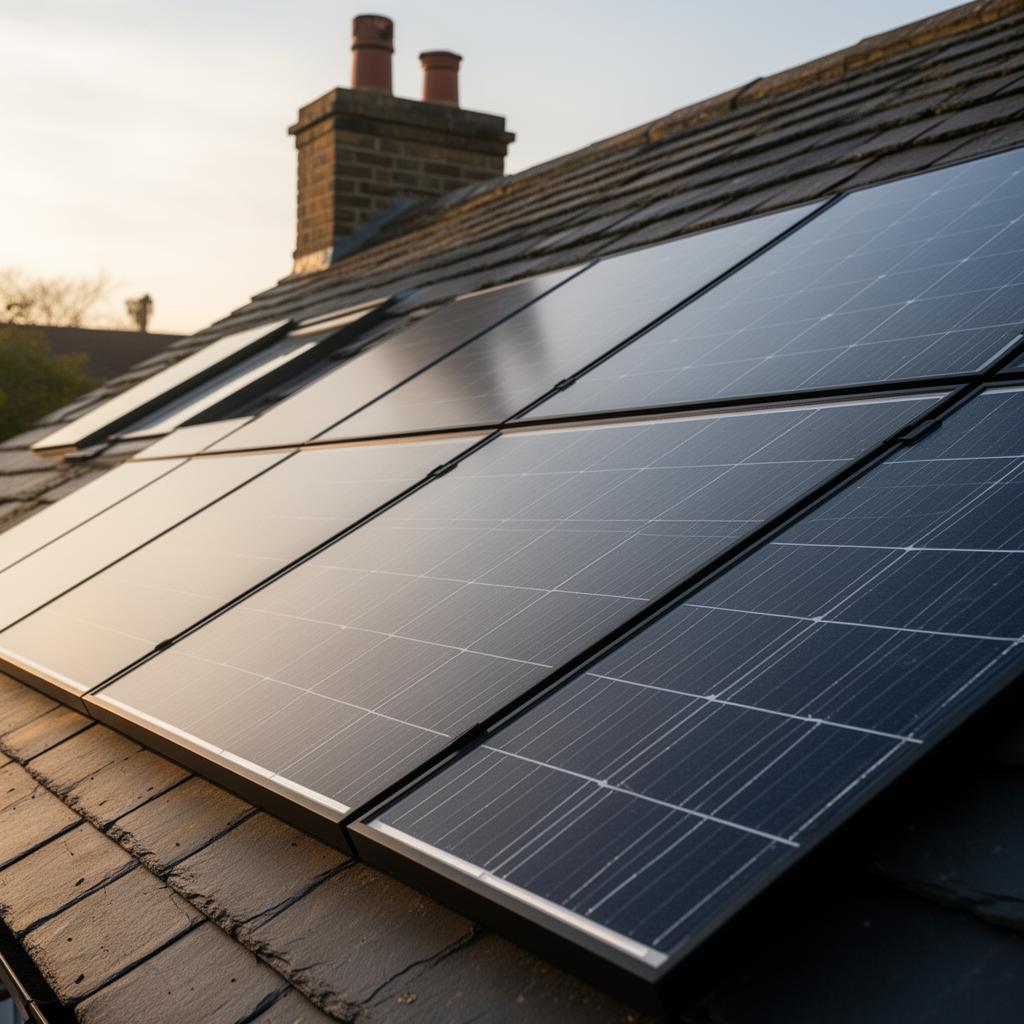
Most new build homes in Lancashire from 2025 onwards come with solar panels as standard, thanks to the updated Building Regulations Part L that require significantly improved energy performance. Developers typically install 2kW to 4kW systems, which meet the regulations but often fall short of what an owner would choose independently. Understanding what you are getting and what upgrade options exist helps Lancashire new build buyers make informed decisions before exchange.
Do New Build Homes in Lancashire Come With Solar Panels?
Some new build homes in Lancashire already include solar panels, but it depends on the developer and the planning conditions for the site. Under current Part L 2021 building regulations, new homes must achieve a 31% reduction in carbon emissions compared to 2013 standards, which many developers meet with solar panels. From March 2027, the Future Homes Standard will require 75 to 80% carbon reductions, effectively making solar panels standard on every new build.
If you are buying a new build in Lancashire before 2027, check the specification carefully. Some developers install minimal 1 to 2 kW solar systems purely to meet regulations, while others offer larger 3 to 4 kW systems as part of upgrade packages. Ask the developer for the predicted annual generation, the panel brand and wattage, whether a battery is included, and whether the system is MCS-certified — which you will need for Smart Export Guarantee payments.
What Building Regulations Require
The 2022 update to Building Regulations Part L (Conservation of Fuel and Power) requires new homes in England to produce 31% less CO2 than the previous standard. Most developers achieve this through a combination of improved insulation, better airtightness, efficient heating systems, and on-site renewable energy generation – typically solar PV panels.
The regulations do not specify a minimum solar system size. Instead, they set a whole-building carbon target that the developer must meet through their chosen combination of measures. This gives developers flexibility, which means the solar system on your new build may range from a token 1.5kW (four to five panels) on a smaller property to a more generous 4kW (ten to twelve panels) on a larger detached house.
The proposed building standards, expected to take effect from 2025, will tighten these requirements further, requiring new homes to produce 75% to 80% less CO2 than the 2013 standard. This will likely push developers to install larger solar systems, heat pumps, and better insulation as standard.
What Lancashire Developers Typically Install
Across Lancashire’s current new build developments – in places like Buckshaw Village, Cottam, Whittingham, Euxton, and Clayton-le-Woods – the solar systems installed by major housebuilders follow a common pattern:
- System size – Typically 2kW to 3.5kW for three-bedroom semis and 3kW to 4kW for four-bedroom detached homes. Occasionally smaller (1.5kW to 2kW) on entry-level two-bedroom properties.
- Panel brand – Usually mid-range Chinese manufacturers such as JA Solar, Trina, or LONGi. These are reliable panels, though rarely the premium brands an independent installer might offer.
- Inverter – Often a basic string inverter from Solis, Growatt, or similar. Functional but without the monitoring capabilities and battery-ready features of brands like GivEnergy or SolarEdge.
- Battery storage – Almost never included as standard. Developers view batteries as an optional upgrade rather than a regulation requirement.
- Monitoring – Basic monitoring through the inverter’s app, if any. Some developers do not even inform buyers how to monitor their solar output.
The developer’s primary goal is meeting Building Regulations at the lowest cost. The panels will generate electricity and reduce your bills, but the system may not be optimised for your household’s usage patterns or future expansion.
How to Assess What You Are Getting
Before buying a new build in Lancashire, ask the developer these questions about the solar installation:
What is the system size in kW? A 2kW system generates roughly 1,700 kWh per year in Lancashire, saving an estimated £200 to £350. A 4kW system generates 3,400 kWh, saving an estimated £400 to £700. The difference in annual savings is significant.
Which roof slope are the panels on? Panels should be on the south or south-west facing slope. If they are on the east or west slope (sometimes done because the south-facing roof is the street-facing side and the developer prefers a clean aesthetic), output will be 15% to 20% lower.
Is the inverter battery-ready? A hybrid inverter that can connect to a battery later costs the developer only marginally more than a standard inverter, but saves you £500 to £1,000 if you decide to add a battery in the future. If the developer has installed a non-hybrid inverter, adding a battery later requires replacing it.
Is the system qualified? It should be. relevant certification is needed for the export tariff (getting paid for surplus electricity) and confirms the installation meets quality standards. Ask for the installer certificate before completion.
Who handles the warranty? The developer may use a subcontractor for the solar installation. Check whether the warranty is with the developer, the subcontractor, or the panel and inverter manufacturers directly. A manufacturer warranty is the most robust because it survives even if the installer or developer ceases trading.
Can You Upgrade Before or After Purchase?
Some developers offer solar upgrades as part of their options packages (alongside kitchen upgrades, flooring choices, etc.). If available, upgrading from a 2kW to a 4kW system during the build costs roughly £1,500 to £3,000 – cheaper than adding panels after you move in because the scaffolding and electrical work are already in progress.
Adding a battery at the same time as the build is also cheaper than retrofitting. If the developer offers a battery option, it typically adds £2,500 to £4,000 to the price. Check whether they are offering a quality brand (GivEnergy, Tesla, Solax) or a lesser-known product.
If the developer does not offer upgrades, you can add more panels and a battery after completion. Any qualified installer can extend the system. Adding panels to an existing new-build solar array costs £800 to £1,500 per kW depending on the inverter compatibility and roof access requirements.
Be aware that some new build warranties (including NHBC) may have conditions about modifying the electrical or roof systems within the defects period. Check your warranty terms before commissioning any additional work.
export tariff for New Builds
Once you have moved in and have the installer certificate, register for the export tariff to get paid for surplus electricity. Many new build buyers in Lancashire do not realise this is available or forget to sign up, leaving money on the table.
A 3kW new-build system in Lancashire exports roughly 1,000 to 1,500 kWh per year. At the best export tariff rate of 15p per kWh (Octopus Outgoing Fixed), that is £150 to £225 per year. At the worst rate (3p per kWh from some suppliers), it is just £30 to £45. The choice of export tariff provider alone can be worth £100 or more annually.
You will need a smart meter that records exports. Most new builds are fitted with smart meters, but check yours is actually commissioned and communicating correctly. Some new build smart meters are installed but not activated by the energy supplier, requiring a quick call to get them working.
New Build Solar vs Retrofit Solar: Value Comparison
Developer-installed solar on a new build is typically included in the house price with no separate charge. The developer absorbs the cost (which they recover through the premium for an energy-efficient home). This means you are effectively getting solar panels “free” as part of the purchase price.
However, the system may be smaller and less optimised than what you would choose independently. A homeowner buying a 4kW system through an independent qualified installer gets to specify the panel brand, inverter type, orientation, and battery compatibility. A new build buyer gets whatever the developer has included.
The practical approach for Lancashire new build buyers: accept the developer’s solar system as a baseline benefit, sign up for the best export tariff tariff immediately, and plan to add a battery and potentially more panels within the first few years when you understand your actual energy usage patterns.
Are new build solar panels good quality?
Generally yes. Developers use panels from established manufacturers (JA Solar, Trina, LONGi) that are reliable and come with 20 to 25-year performance warranties. The panels themselves are fine. Where quality varies is in the installation standard and the choice of inverter. Check that the installation has relevant certification, which confirms it meets the required quality standards.
Can I add more solar panels to my new build?
Yes, provided there is roof space and the existing inverter can handle the additional capacity (or you upgrade the inverter). A qualified installer can assess the existing system and design an extension. The new panels do not need to be the same brand as the originals, though matching the wattage helps with system balance.
Why do some new builds have heat pumps instead of gas boilers?
Some developers, particularly on smaller developments in Lancashire, are installing air source heat pumps instead of gas boilers to meet the proposed building standards ahead of schedule. This is increasingly common and offers buyers lower running costs. If your new build has a heat pump, ensure you understand how to operate it efficiently – heat pumps work best at lower, constant temperatures rather than the high, intermittent heating patterns typical of gas boilers.
See what these numbers mean for your home
Free instant estimate — costs, savings, payback and grants for your region.

Related Articles
Is Solar Battery Storage Worth It in 2026?
Solar panels are now a common sight on UK rooftops, but the real game-changer in 2026 is battery storage. A home battery lets you store the electricity your panels generate…
2 June 2026
Why Spring Is the Perfect Time to Install Solar Panels
If you have been thinking about solar panels for a while but never quite pulled the trigger, spring is the moment to act. The combination of lengthening days, mild installation…
23 April 2026
How the Energy Price Cap Affects Heat Pump and Solar Panel Payback
See how the energy price cap affects heat pump and solar panel payback periods. Real calculations using current UK unit rates show why investing now locks in stronger returns.
15 April 2026