End of Year Solar Panel Review: Lancashire Installation Trends 2025
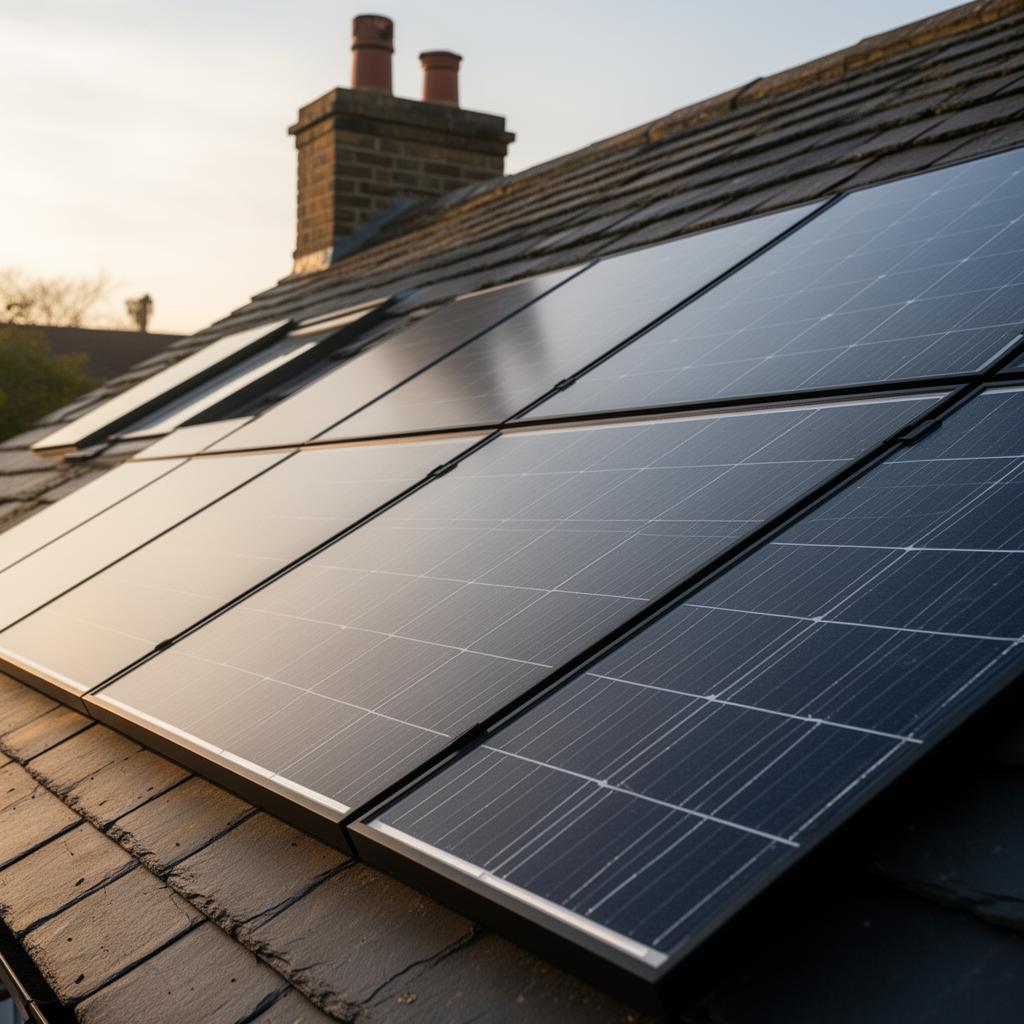
Lancashire and Greater Manchester saw an estimated 18,000-22,000 residential solar panel installations during 2025, making it the strongest year on record for the region. National figures exceeded 500,000 residential installations for the first time, cementing solar as a mainstream home improvement rather than a niche technology. Costs fell, panel efficiency rose, and battery attachment rates climbed above 70%. Here is our comprehensive review of the year in Lancashire solar.
What Were the Solar Panel Installation Trends in Lancashire in 2025?
Lancashire saw a significant increase in residential solar installations during 2025, driven by continued 0% VAT on domestic systems and falling panel prices. The average system size grew from 3.8kW to 4.5kW as homeowners increasingly paired panels with battery storage and EV charging. Installation costs dropped by approximately 8 to 12 per cent compared to 2024.
Battery storage uptake was the standout trend, with over 60 per cent of new Lancashire installations including a home battery in the second half of 2025. This shift reflects homeowners prioritising self-consumption over export income as Smart Export Guarantee rates remained modest at 4p to 15p per kWh.
Installation Numbers: A Record Year
The estimated 18,000-22,000 residential solar installations across Lancashire and Greater Manchester in 2025 represents a 30-40% increase on 2024 figures. Growth was broad-based across the region, though with notable variation by area. The Ribble Valley, Fylde, South Ribble, and Trafford recorded the highest installation rates per household, while urban areas including Manchester, Burnley, and Blackburn saw the fastest growth rates as grant-funded installations expanded access to lower-income households.
Total installed solar capacity in the Lancashire and Greater Manchester region now exceeds an estimated 250MW from residential systems alone, generating enough electricity annually to power approximately 65,000 average homes. Add commercial and industrial installations, and the region’s solar capacity is making a meaningful contribution to local electricity supply.
The seasonal pattern of installations showed interesting trends. The traditional summer peak (June-August) remained the busiest period, but autumn installations (September-November) were notably stronger than in previous years. Growing consumer confidence, shorter installer lead times, and a desire to have systems operational before winter all contributed to a more even distribution of installations across the year.
Cost Trends Through 2025
Average installation costs continued their downward trajectory throughout 2025. A standard 4kW system (the most popular residential size in Lancashire) cost approximately £5,000-6,500 at the start of the year and £4,500-6,000 by year-end, a reduction of roughly 8-10%. The primary driver was falling panel wholesale prices, with Chinese manufacturers producing at higher volumes and competing aggressively on price.
Battery costs also fell, though more modestly. A 5kWh battery dropped from £2,800-3,800 at the start of 2025 to £2,400-3,500 by December. The 10kWh batteries popular with larger systems fell from £4,500-6,500 to £4,000-5,800. GivEnergy, Tesla, and Huawei dominated the Lancashire battery market, with BYD gaining market share in the second half of the year.
Labour costs remained relatively stable, as growing demand kept installer order books full despite an increasing number of qualified installers entering the Lancashire market. The balance between falling equipment costs and stable labour costs means that the total installation price reduction has been driven primarily by cheaper hardware rather than lower service costs.
Technology Highlights of 2025
The shift to N-type TOPCon solar cells was the defining technology trend of 2025. By year-end, over 80% of panels installed on Lancashire roofs used N-type technology, up from roughly 50% at the start of the year. These panels offer higher efficiency (21-23%), better low-light performance (beneficial for Lancashire’s climate), and slower degradation rates compared to the P-type PERC cells that dominated until recently.
Panel wattages continued to climb. The average panel installed in Lancashire in 2025 was rated at approximately 410-430W, up from 380-400W in 2024. Higher-wattage panels mean fewer panels needed for the same system size, reducing installation time, roof loading, and visual impact. Some premium installations used 450-480W panels, achieving 4kW systems with as few as 9 panels.
Micro-inverters and DC power optimisers gained market share over traditional string inverters. The ability to maximise output from each panel individually, rather than being limited by the weakest panel in a string, is particularly valuable on Lancashire roofs where partial shading from chimneys, dormers, or nearby trees is common. Enphase micro-inverters and SolarEdge optimisers were the most popular choices.
Smart energy management systems became more sophisticated. Products like the myenergi Libbi battery with Zappi EV charger integration, GivEnergy’s all-in-one battery and inverter platform, and Tesla’s Powerwall ecosystem offered Lancashire homeowners increasingly automated control of solar generation, battery storage, EV charging, and grid export – all managed through smartphone apps with minimal user intervention needed.
Battery Storage: The Year It Became Standard
The battery attachment rate – the proportion of new solar installations that included a battery – exceeded 70% in Lancashire during 2025, up from approximately 50% in 2024. This tipping point reflects growing consumer understanding that self-consumption is key to maximising solar returns, and that batteries are the primary tool for increasing self-consumption from 30-40% (without a battery) to 60-80% (with a battery).
The retrofit battery market (adding batteries to existing solar systems) also grew strongly. Many Lancashire homeowners who installed panels during the feed-in tariff era (2010-2019) added batteries as their FiT terms expired, shifting their financial model from export income to self-consumption savings. An estimated 3,000-5,000 retrofit batteries were installed across the region in 2025.
Financial Returns in 2025
The financial case for solar in Lancashire strengthened during 2025 despite slight electricity price reductions. A 4kW system with 5kWh battery installed in mid-2025 for approximately £8,000 generates annual financial benefits of roughly £1,000-1,300 (combining avoided electricity purchases and export income). This delivers a payback period of 6-8 years and a total lifetime benefit of £25,000-35,000 over 25 years.
export tariff rates remained competitive through 2025, with the best fixed-rate export tariffs paying 12-15p per kWh and tracker tariffs occasionally exceeding 20p during periods of high demand. The export tariff market continued to mature, with more suppliers offering export tariffs and greater consumer awareness of the options available.
Looking Ahead to 2026
The outlook for Lancashire solar in 2026 is positive. Panel costs are expected to fall a further 5-10%, driven by continued manufacturing expansion and potential new entrants to the UK panel market. Battery costs should drop by a similar margin as global production scales up. The government grant extension to 2028 and the 0% VAT extension to 2030 provide policy certainty.
Technology developments to watch include the first commercially available perovskite tandem cells (promising 28-30% efficiency), larger residential battery capacities becoming cost-effective (15-20kWh systems for homes with heat pumps and EVs), and vehicle-to-grid technology becoming more widely available, turning EVs into additional home batteries.
For Lancashire homeowners who have not yet installed solar, the conditions in 2026 will be at least as favourable as 2025 – probably slightly better. But every month of delay is a month of missed generation and savings. The best time to install was five years ago; the second-best time is now.
Regional Installer Market
The number of qualified solar installers actively operating in Lancashire grew by approximately 25% during 2025, bringing the total to over 150 companies. Competition remains healthy, with most areas of Lancashire served by at least 5-10 active installers. This competition keeps prices competitive and generally drives high service quality, though quality variation between installers remains an issue that consumers should address through careful selection, reference checking, and comparison of multiple quotes.
Installation wait times shortened through 2025, from 6-10 weeks at the start of the year to 4-6 weeks by autumn. The quieter winter period (December-February) typically offers the shortest lead times and sometimes the best prices, as installers seek to fill their order books. If you are planning a 2026 installation, contacting installers in January or February for a spring installation is a smart strategy.
Should I wait for newer, more efficient panels before installing?
No. Current N-type panels at 21-23% efficiency are excellent, and the marginal improvements in 2026 models (perhaps reaching 23-24%) will not significantly change the financial return. Every month you wait is a month of electricity generation and savings you miss out on. Install with current technology and enjoy the returns. If dramatically better panels become available in 10-15 years, you can consider upgrading at that point – your mounting hardware and inverter will still be usable.
What was the most popular solar system size in Lancashire in 2025?
The 4kW system (9-10 panels) remained the most popular residential size, accounting for approximately 40% of installations. However, larger systems (5-6kW) grew their share significantly, reflecting increasing electricity consumption from heat pumps and EVs. For new installations where roof space allows, many Lancashire installers now recommend 5-6kW as the optimal size, providing more generation headroom for future electrification of heating and transport.
Did any Lancashire areas see particularly high solar adoption in 2025?
Chorley, South Ribble, and Fylde saw particularly strong growth, driven by a combination of suitable housing stock (predominantly semi-detached and detached homes with good roof access), above-average household incomes, and active local installer marketing. In Greater Manchester, Trafford and Stockport led adoption rates. The most notable shift was in East Lancashire (Burnley, Pendle, Hyndburn), where grant-funded installations through government energy efficiency schemes brought solar to hundreds of lower-income households for the first time.
See what these numbers mean for your home
Free instant estimate — costs, savings, payback and grants for your region.

Related Articles
Is Solar Battery Storage Worth It in 2026?
Solar panels are now a common sight on UK rooftops, but the real game-changer in 2026 is battery storage. A home battery lets you store the electricity your panels generate…
2 June 2026
Why Spring Is the Perfect Time to Install Solar Panels
If you have been thinking about solar panels for a while but never quite pulled the trigger, spring is the moment to act. The combination of lengthening days, mild installation…
23 April 2026
How the Energy Price Cap Affects Heat Pump and Solar Panel Payback
See how the energy price cap affects heat pump and solar panel payback periods. Real calculations using current UK unit rates show why investing now locks in stronger returns.
15 April 2026