Heat Pump Sales Data Q3 2025: Lancashire and UK Comparison
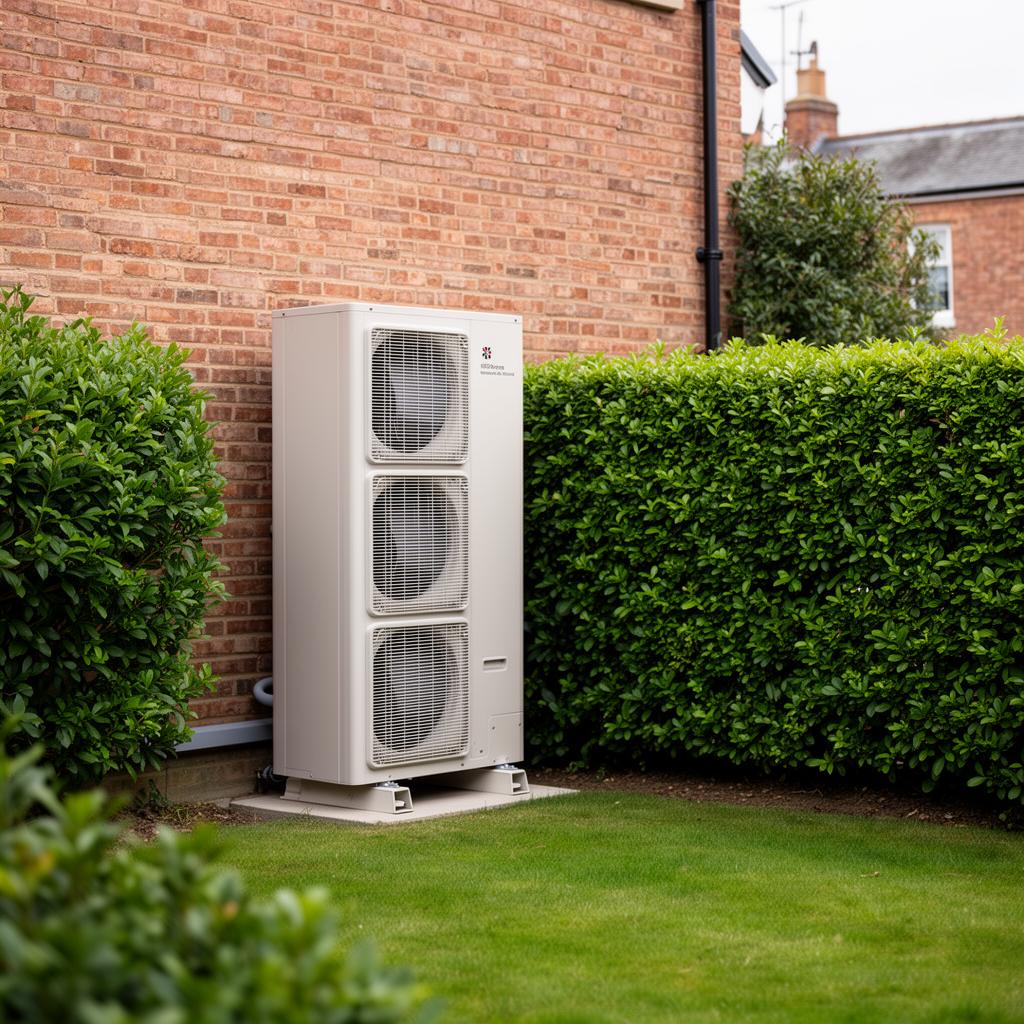
Heat pump installations across the UK reached approximately 55,000 units in Q3 2025 (July-September), bringing the annual run rate to over 200,000 installations for the first time. Lancashire and Greater Manchester accounted for an estimated 3,500-4,500 of those Q3 installations, broadly in line with the region’s share of UK housing stock. While these numbers represent significant growth compared to the 35,000-40,000 national installations in Q3 2024, the UK remains well behind its target of 600,000 installations per year by 2028.
What Were Heat Pump Sales Figures in Q3 2025?
UK heat pump installations reached approximately 55,000 units in Q3 2025, a 28 per cent increase on Q3 2024. Lancashire accounted for an estimated 2,100 to 2,400 installations during this period, driven by the £7,500 Boiler Upgrade Scheme grant and growing installer capacity. Air source heat pumps represented 94 per cent of all installations, with ground source making up the remainder.
Despite the growth, the UK remains behind its target of 600,000 heat pump installations per year by 2028. Lancashire’s installation rate per capita is slightly above the national average, partly because the region has a high proportion of off-gas-grid rural properties in the Ribble Valley and Forest of Bowland where heat pumps offer the clearest financial benefit over oil and LPG heating.
National Installation Trends
The Q3 2025 figures show clear momentum. Year-on-year growth in heat pump installations is running at approximately 40-50% nationally. Air source heat pumps dominate the market at around 92% of installations, with ground source accounting for 6% and hybrid systems (heat pump plus gas boiler backup) making up the remaining 2%.
The government heat pump grant has been the primary driver, with over 80% of domestic installations utilising up to £7,500 in grants. Demand has been strong enough that the scheme’s annual budget has been increased, and the government has signalled continued commitment to the programme. government energy efficiency schemes-funded heat pump installations have added further volume, particularly in social housing and low-income private properties.
Average installed costs have fallen by approximately 8-10% compared to Q3 2024, driven by increased competition among installers, growing manufacturer scale, and improving installation efficiency as the workforce gains experience. A typical 8-10kW air source heat pump installation now costs £10,000-13,000 before the government grant.
Lancashire Specific Data
Lancashire’s heat pump adoption rate has historically lagged slightly behind the national average, partly due to the region’s housing profile. A higher proportion of terraced houses (which present installation challenges for outdoor units), a larger share of older solid-walled properties, and lower average incomes compared to the South East have all contributed to slower uptake.
However, Q3 2025 saw Lancashire’s installation rate accelerate faster than the national average. government grant applications from Lancashire postcodes increased by approximately 55% year-on-year, compared to 40% nationally. This acceleration appears to be driven by growing installer capacity in the region (the number of qualified heat pump installers in Lancashire has roughly doubled in two years), greater consumer awareness following high-profile local installations and media coverage, improved solutions for terraced house installations, and active promotion by Lancashire councils through government energy efficiency scheme flexibility provisions and local energy guidance services.
Within Lancashire, installation rates vary significantly by area. The Ribble Valley, Fylde, and South Ribble have the highest installation rates per capita, reflecting larger properties with more space for outdoor units and higher average incomes. Urban areas including Burnley, Pendle, and Hyndburn have lower private-market installation rates but higher government energy efficiency schemes-funded installations targeting fuel-poor households.
Greater Manchester Comparison
Greater Manchester’s heat pump installation rate is slightly above the Lancashire average, driven by GMCA’s stronger institutional support for decarbonisation, larger commercial and public sector installations in the city region, and the net zero 2038 target creating additional political and policy momentum.
Trafford, Stockport, and Bury lead the GM boroughs for private installations, while Manchester, Salford, and Oldham have the highest volumes of grant-funded installations. The combined Lancashire and Greater Manchester region now accounts for approximately 8-9% of national heat pump installations – roughly proportional to its population share.
Market Leaders and Brand Trends
The brands dominating the Lancashire heat pump market in Q3 2025 mirror national trends with some regional variation. Vaillant Arotherm Plus remains the most installed model nationally, known for reliability and quiet operation. Daikin Altherma maintains a strong second position, popular with installers for its straightforward installation process. Samsung and Mitsubishi hold significant market shares, particularly in larger properties. Grant Aerona3 has gained ground in the North West, partly due to the manufacturer’s UK base and strong regional distribution.
Among newer entrants, Chinese manufacturers including Midea and Gree are beginning to appear in the UK market through partnerships with established heating brands. Their competitive pricing could accelerate cost reductions across the sector, though some installers remain cautious about long-term warranty support from brands with shorter UK track records.
Challenges Remaining
Despite the positive growth trajectory, significant challenges remain for heat pump adoption in Lancashire and nationally. The installation workforce, while growing, is still insufficient for the government’s 600,000 per year target. Training new heat pump installers takes 12-18 months, and the current pipeline of trainees will not fill the gap until 2027-2028 at the earliest.
Consumer awareness and confidence remain barriers. Surveys consistently show that 30-40% of UK homeowners have limited understanding of how heat pumps work, and misconceptions about noise, performance in cold weather, and running costs persist. Lancashire’s lower average consumer awareness compared to London and the South East suggests that targeted regional awareness campaigns could unlock significant additional demand.
The electricity-to-gas price ratio remains unfavourable. With electricity costing roughly four times as much per kWh as gas, heat pumps need to achieve COPs of 3.0 or better to match gas running costs. Most modern heat pumps comfortably exceed this, but the perception of expensive electricity continues to deter some homeowners. Heat pump electricity tariffs offering reduced rates are helping to address this, but awareness and availability of these tariffs need to improve further.
Outlook for Q4 2025 and Beyond
Q4 (October-December) is historically the weakest quarter for heat pump installations as homeowners are reluctant to be without heating during the switch. However, growing installer capacity means more installations can be completed quickly with minimal disruption, and the urgency of preparing for winter motivates faster decision-making among homeowners who have been considering a heat pump.
Industry forecasts suggest UK heat pump installations will reach 200,000-220,000 for the full year 2025, representing continued strong growth but still falling short of the trajectory needed for 600,000 per year by 2028. For Lancashire, the improving installer base, growing council engagement, and steady cost reductions all point towards continued acceleration through 2026 and beyond.
How does UK heat pump adoption compare to European countries?
The UK significantly lags behind European leaders. France installed approximately 600,000 heat pumps in 2024, Italy around 500,000, and Norway (with a population of just 5.4 million) has already equipped over 60% of homes with heat pumps. Even accounting for the UK’s later start, the installation rate needs to at least triple to catch up with comparable European nations. The government’s 600,000 per year target would bring the UK broadly in line with France’s current rate.
Is the government grant likely to continue beyond its current end date?
The government has committed to supporting heat pump adoption and has already extended and increased a government grant scheme scheme budget. While the specific form of support may evolve, the policy direction strongly suggests continued financial incentives for heat pump installation. The question is whether the grant amount remains at £7,500 or is adjusted as market costs fall. Lancashire homeowners are advised to take advantage of the current grant level while it is confirmed, rather than waiting for potential future changes.
See what these numbers mean for your home
Free instant estimate — costs, savings, payback and grants for your region.

Related Articles
What the 2026 Future Homes Standard Means for Existing Homeowners
The Future Homes Standard is the biggest change to building regulations in England in a generation. It is designed to ensure new homes produce dramatically fewer carbon emissions. But if…
3 May 2026
Prepayment Meter Rights: Protections Against Forced Installation and Self-Disconnection
Prepayment meter rights UK explained. Learn protections against forced installation, what to do if you cannot top up, emergency credit options and how to switch away from prepay.
12 April 2026 Fuel Poverty in the UK: Definition, Statistics and What Help Is Available
Fuel poverty UK affects 9 million households. Learn the LILEE definition, who is most at risk, the funding gap, and every support scheme available to help you heat your home.
11 April 2026