Renewable Heat Incentive Legacy Payments: What Former RHI Claimants Get
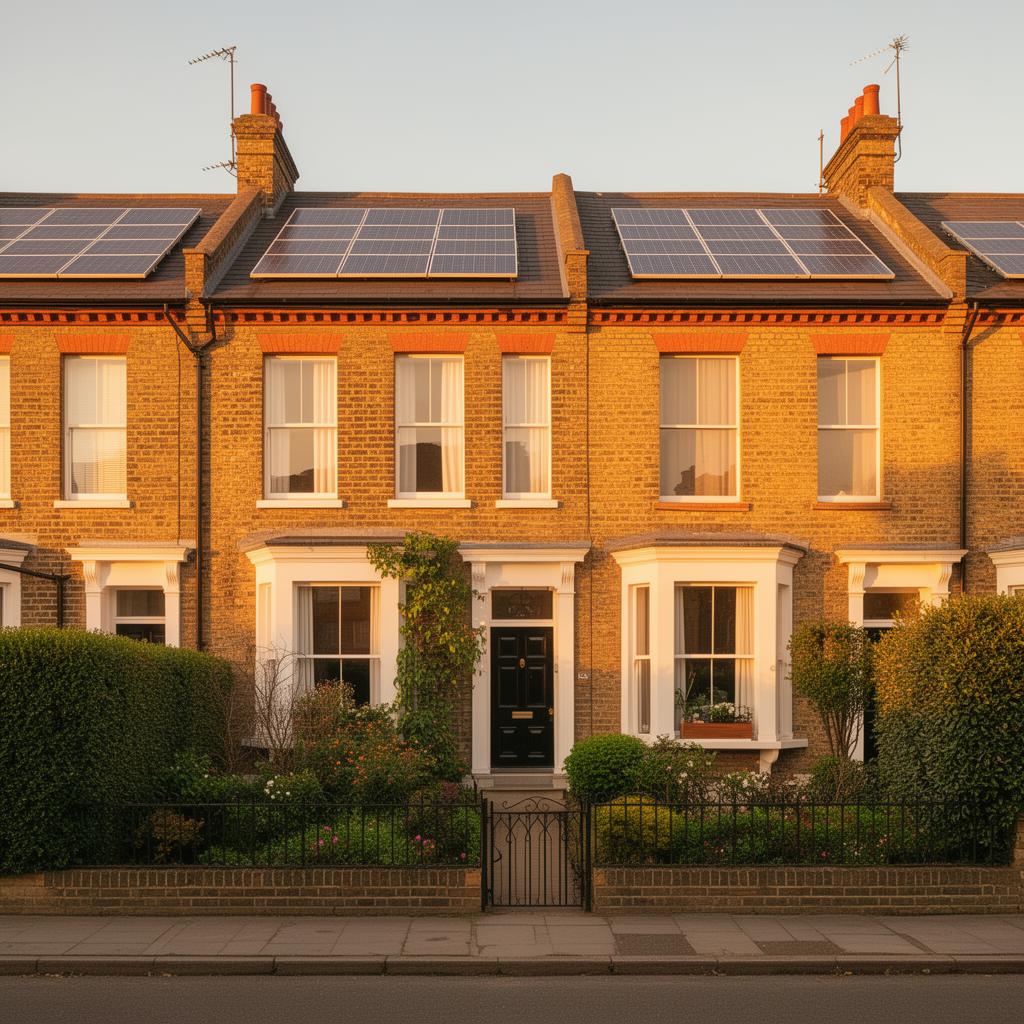
The domestic previous government heating incentive (RHI) closed to new applications on 31 March 2022, replaced by the government heat pump grant. However, the estimated 90,000 UK households already receiving RHI payments – including thousands across Lancashire and Greater Manchester – continue to receive quarterly payments for the full 7-year term of their agreement. If you installed a heat pump, biomass boiler, or solar thermal system before the scheme closed, your payments are expected to continue until 2029 at the latest.
What Are Renewable Heat Incentive Legacy Payments?
Renewable Heat Incentive legacy payments are quarterly payments that continue to be made to homeowners who joined the domestic RHI scheme before it closed to new applicants on 31 March 2022. Payments are based on the renewable heat generated by your system and last for seven years from your original application date. Typical payments range from £800 to £1,500 per year for an air source heat pump.
If you are a current RHI recipient, your payments are adjusted annually in line with the Consumer Price Index. You must continue to maintain your system and keep it operational, with Ofgem conducting periodic checks. Once your seven-year payment term ends, no further RHI payments are made, but you continue to benefit from lower running costs compared to fossil fuel heating.
How RHI Payments Continue to Work
RHI payments are based on the estimated annual heat output of your renewable heating system, multiplied by a tariff rate per kWh. The tariff rate was fixed at the time you joined the scheme and is adjusted annually in line with the Consumer Prices Index (CPI). This means your payments increase with inflation, providing a degree of protection against rising living costs.
Payments are made quarterly in arrears by the energy regulator, the scheme administrator. For metered systems (most heat pumps), payments are based on actual heat generation as recorded by the heat meter. For deemed systems (most biomass boilers and solar thermal), payments are based on estimated annual heat demand calculated from your EPC at the time of application.
A Lancashire homeowner with an air source heat pump installed in 2021 receiving the 10.85p per kWh tariff (CPI-adjusted to approximately 12-13p in 2025) and generating 12,000 kWh of heat per year receives quarterly payments of approximately £360-390, or £1,440-1,560 per year. This income continues for the remaining years of their 7-year agreement.
Current Tariff Rates for Existing Claimants
The RHI tariff rates are updated annually on 1 April based on CPI inflation. The original tariff rates (before CPI adjustment) were approximately 10.85p per kWh for air source heat pumps, 21.16p per kWh for ground source heat pumps, and 21.30p per kWh for solar thermal systems. Biomass boilers received tiered rates depending on heat generation levels.
After several years of CPI adjustments, current effective tariff rates for most claimants are approximately 15-25% higher than the original rates. The exact rate depends on which year you joined the scheme and the cumulative CPI adjustments since then. Your quarterly payment statement from the energy regulator shows the current rate applicable to your installation.
Ground source heat pump owners receive the highest payments per kWh, reflecting the higher installation costs of GSHP systems. A Ribble Valley homeowner with a ground source heat pump generating 15,000 kWh per year could be receiving over £3,000 annually in RHI payments – a substantial income that more than covers the electricity cost of running the system.
Your Ongoing Obligations
Receiving RHI payments comes with ongoing obligations that you must meet to maintain your eligibility. These are not onerous, but failing to comply can result in payment suspension or clawback.
Annual maintenance: you must maintain your renewable heating system in proper working order. For heat pumps, this means an annual service by a qualified engineer (costing £100-200). For biomass boilers, annual servicing and chimney sweeping are required. Keep all service records as the energy regulator may request them during compliance checks.
Metering accuracy: for metered systems, the heat meter must be functioning correctly. If your heat meter fails or becomes inaccurate, you must arrange replacement promptly and notify the energy regulator. Payments during any period without a functioning meter may be estimated or withheld.
Meter readings: the energy regulator requires you to submit meter readings quarterly or to have an auto-reading system in place. Missing reading submissions can delay payments. Most Lancashire RHI claimants submit readings through the government grant portal, which takes about 5 minutes per quarter.
Property changes: if you sell the property, you must notify the energy regulator. RHI payments can be transferred to the new owner (who assumes the ongoing obligations) or can remain with you if the new owner does not wish to participate. If the system is removed or substantially altered, payments cease.
What Happens When RHI Payments End
RHI payments run for exactly 7 years from the date of accreditation. For the last cohort of claimants (those who joined just before the scheme closed in March 2022), payments will end in March 2029. Earlier claimants will reach the end of their 7-year term before then.
When payments end, your renewable heating system continues to provide free heat from renewable sources – you simply stop receiving the tariff payments. The system’s value then becomes purely the energy cost saving compared to the heating source it replaced. For most Lancashire heat pump owners, this saving is £200-500 per year compared to gas and £500-1,000 per year compared to oil.
There is no replacement for the RHI for existing renewable heating installations. The government heat pump grant provides upfront capital grants rather than ongoing payments, so RHI claimants will not receive any further government income after their 7-year term concludes.
Tax Treatment of RHI Payments
For domestic RHI claimants, payments are tax-free. You do not need to declare domestic RHI income on your tax return, and it does not affect your personal tax position. This makes the RHI particularly valuable for higher-rate taxpayers, as the payments are equivalent to considerably more in gross income.
However, RHI income is counted as income for the purposes of means-tested benefits, including Universal Credit and pension top-up benefits. If you receive these benefits, declare your RHI payments to the relevant government department as they may affect your entitlement. For most Lancashire claimants who are not on means-tested benefits, this is not relevant.
Selling Your Home with an Active RHI Agreement
If you sell your Lancashire home while still receiving RHI payments, you have options. The most common approach is to transfer the RHI agreement to the new owner. This can be an attractive selling point – a buyer purchasing a home with 2-3 years of remaining RHI payments is effectively receiving £3,000-9,000 in expected future income. Estate agents in Lancashire report that active RHI agreements add value and marketability to properties.
The transfer process involves both you and the buyer contacting the energy regulator to arrange the handover. The new owner must agree to the ongoing obligations (maintenance, meter readings, compliance checks). The transfer typically takes 4-8 weeks to process.
Alternatively, you can retain the RHI payments yourself after selling, though this is less common and may require a specific agreement with the buyer regarding system access and maintenance responsibilities.
Can I upgrade my heat pump without losing my RHI payments?
Replacing your heat pump with a like-for-like or higher capacity model generally does not affect your RHI payments, provided you notify the energy regulator and the replacement system meets the same certification standards. However, substantially changing the system (for example, switching from air source to ground source, or reducing capacity) requires the energy regulator approval and may affect your tariff rate. Contact the energy regulator before making any changes to your RHI-registered system.
What if my heat meter breaks?
Contact the energy regulator immediately to report the fault. You have a reasonable period (typically 3-6 months) to arrange replacement. During this period, the energy regulator may estimate your heat generation based on previous readings. A replacement heat meter costs £200-400 including installation. Do not delay reporting a faulty meter, as failure to maintain accurate metering can result in payment suspension or clawback of estimated payments.
Are RHI payments increasing with inflation?
Yes. RHI tariffs are adjusted annually on 1 April in line with the Consumer Prices Index. In recent years, with CPI running at 4-10%, this has provided meaningful increases in quarterly payments. The CPI adjustment is automatic – you do not need to apply for it. Your updated tariff rate appears on your next quarterly payment statement after the April adjustment date.
See what these numbers mean for your home
Free instant estimate — costs, savings, payback and grants for your region.

Related Articles
Heat Pump Grant Rises to £9,000 for Oil and LPG Homes From 21 July 2026
The standard Boiler Upgrade Scheme grant stays at £7,500. From 21 July 2026 to 31 March 2027, homes currently heated by oil or LPG get an increased £9,000 grant. Corrected…
10 June 2026
The Warm Homes Plan 2026: What Every UK Homeowner Needs to Know
The UK government’s Warm Homes Plan is the biggest energy efficiency programme in British history. Launched in January 2026 with up to £15 billion in funding, it aims to upgrade…
5 June 2026
ECO4 Scheme 2026: Who Qualifies, What’s Covered and How to Apply
The ECO4 scheme runs until December 2026, offering fully funded insulation and heating upgrades for eligible UK households. Find out if you qualify through benefits or the ECO4 Flex route,…
11 May 2026