Solar Panel Warranties Explained: What Is Actually Covered?
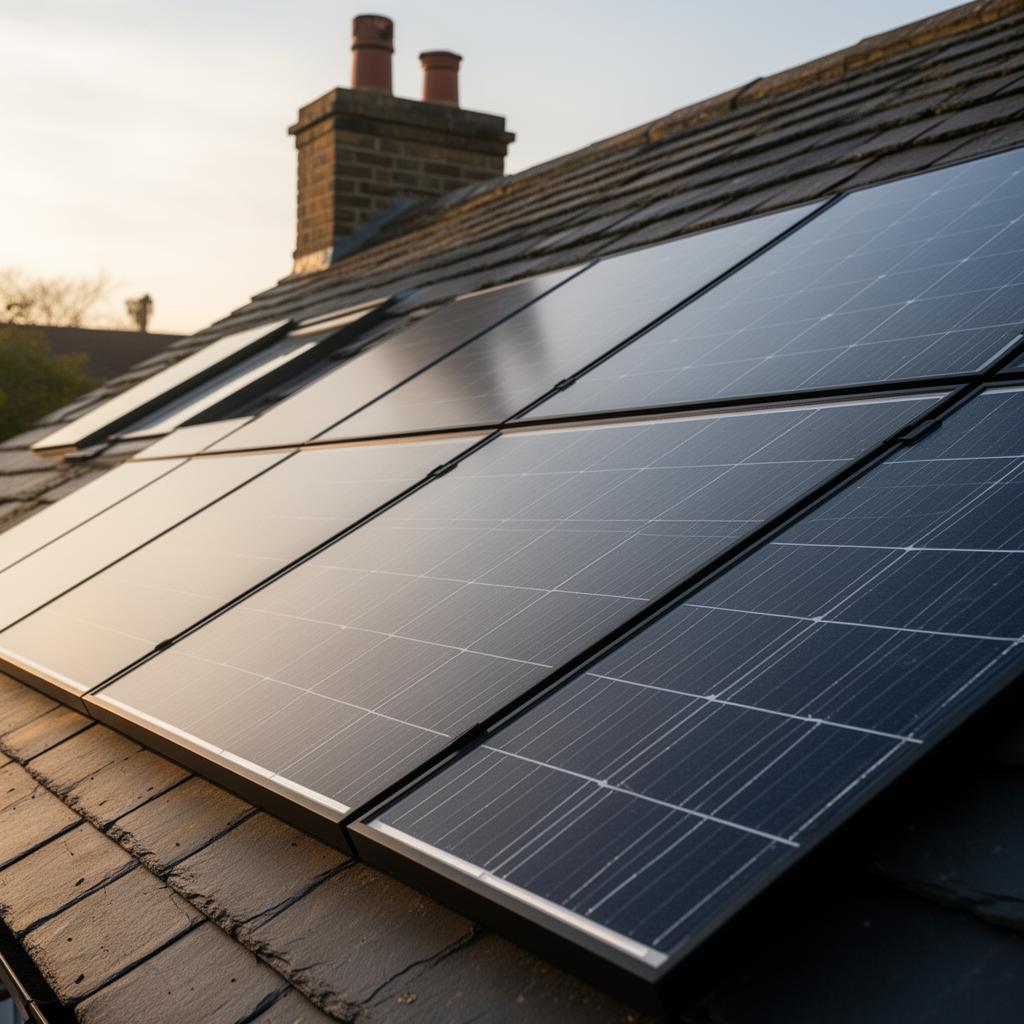
A solar panel system comes with at least three separate warranties – product, performance, and workmanship – each covering different things for different periods. Understanding exactly what is and is not covered is important because a 25-year performance warranty does not mean your installer will come back in 20 years to fix a leaking roof penetration. Here is a plain English breakdown of what each warranty means for Lancashire homeowners.
What Do Solar Panel Warranties Cover?
| Warranty Type | Typical Duration | What It Covers |
|---|---|---|
| Product warranty | 10 to 15 years | Manufacturing defects, faulty cells, delamination and junction box failures |
| Performance warranty | 25 to 30 years | Guarantees panels produce at least 80 to 85% of rated output after 25 years |
| Inverter warranty | 5 to 12 years | Covers inverter breakdown, with extended warranties available up to 25 years |
| Battery warranty | 10 to 15 years | Guarantees a minimum number of charge cycles or retained capacity (typically 70%) |
| Installation warranty | 2 to 10 years | Covers workmanship issues such as roof leaks, wiring faults and mounting failures |
The most important warranty is the installer’s workmanship guarantee, as roof leaks and wiring faults are more common than panel failures. Always check that your installer is MCS-certified and offers at least a 5-year installation warranty backed by an insurance-backed guarantee, which protects you if the installer ceases trading.
Product Warranty: Manufacturing Defects
The product warranty (also called the materials warranty) covers manufacturing defects in the solar panels themselves. This includes defective cells, delamination (layers separating), junction box failures, cracked glass from manufacturing stress, and electrical connection faults. It does not cover damage from external causes like storms, falling objects, or improper installation.
Most quality panel manufacturers offer product warranties of 12-25 years. Premium brands like SunPower, LG (legacy models), REC, and Panasonic typically offer 25 years. Mid-range brands like JA Solar, Trina, Canadian Solar, and Jinko offer 12-15 years. Budget brands may offer as little as 10 years. In a Lancashire context, where panels face regular rain, wind, and occasional hailstones, a longer product warranty provides meaningful peace of mind.
If a panel fails under the product warranty, the manufacturer will typically provide a replacement panel. However, the labour cost to remove the faulty panel and install the replacement may or may not be covered – check the warranty terms carefully. Some manufacturers include labour for the first 5-10 years, then cover only the replacement part thereafter.
Performance Warranty: Warranted Output
The performance warranty guarantees that the panels will produce a minimum percentage of their rated output over time. A typical performance warranty guarantees at least 80-84% of the original rated output after 25 years, with some premium manufacturers guaranteeing 88-92% after 25 years. This warranty protects against unexpectedly rapid degradation.
The practical implications for Lancashire homeowners: if you install a 400W panel with a 25-year performance warranty guaranteeing 84% minimum output, the manufacturer guarantees that panel will still produce at least 336W after 25 years. If independent testing shows it produces less than this threshold, you can claim under the warranty.
In practice, most quality panels exceed their performance warranty by a comfortable margin. Real-world data from UK installations shows typical degradation rates of 0.3-0.5% per year, meaning a panel installed in Lancashire in 2025 is likely to still produce 87-92% of its original output in 2050 – well above the warranty threshold.
Claiming on a performance warranty requires independent testing to prove the panel is underperforming, which can be complicated and costly. The warranty is more of a quality backstop than something you are likely to need. Its main value is as an indicator of manufacturer confidence in their product.
Inverter Warranty: The Critical Component
The inverter converts the DC electricity from your panels into AC electricity for your home. It is the component most likely to need replacement during the system’s lifetime, as inverters contain electronic components that wear out faster than the panels themselves.
Standard inverter warranties range from 5-12 years for string inverters (the single large box, typically in the loft or garage) and 15-25 years for micro-inverters (small units attached to each panel). Brands like SolarEdge and Enphase offer extended warranties of up to 25 years on their latest products, matching the panel lifespan.
A string inverter typically costs £800-1,500 to replace when the warranty expires. Over a 25-year system lifespan, you might need to replace it once or twice if you start with a 10-year warranty product. Micro-inverters and power optimisers cost more initially but their longer warranties and individual panel-level failure (rather than whole-system failure) can reduce lifetime replacement costs.
When choosing an inverter for your Lancashire installation, consider the warranty length alongside the initial cost. Paying an extra £200-400 for a product with a 15-year warranty instead of a 5-year warranty could save you a £1,000 replacement at year 6.
Workmanship Warranty: The Installation Itself
The workmanship warranty (also called the installation warranty) is provided by your installer, not the panel manufacturer. It covers the quality of the installation work – including roof penetrations and waterproofing, mounting system integrity, electrical connections and wiring, and sealing and flashing around panels.
Workmanship warranties vary dramatically between installers. Some offer as little as 1-2 years, while reputable installers offer 10-15 years. relevant certification requires a minimum 2-year installation warranty, but this is a bare minimum and falls short of covering the period during which installation faults are most likely to manifest.
For Lancashire installations, where driving rain is a regular occurrence, the waterproofing of roof penetrations is particularly important. A leak that develops 3-4 years after installation is almost certainly an installation fault, and you need a workmanship warranty that covers this. Insist on a minimum 10-year workmanship warranty from your installer, and check that the warranty is backed by an insurance-backed guarantee (IBG) in case the installer goes out of business.
Insurance-Backed Guarantees: Your Safety Net
An insurance-backed guarantee (IBG) is a separate insurance policy that honours the workmanship warranty if your installer ceases trading. Given that some solar installation companies do go out of business (the industry has seen several closures among smaller operators), an IBG provides essential protection.
Under certification requirements, qualified installers must offer an IBG as standard. The IBG typically covers the workmanship warranty period and is underwritten by an independent insurance company. Check that your installer provides this, and keep the IBG certificate safely with your other warranty documents.
If your installer does go bust and you need to make a claim, the IBG provider will arrange for another qualified installer to carry out the warranty repair at no cost to you. The process can take longer than a direct warranty claim, but it ensures you are not left without recourse.
What Is Not Covered by Any Warranty
Several common issues fall outside all warranty coverage. Storm damage, falling tree branches, and impact damage are not covered by product or workmanship warranties – you need your home insurance for these. Most home insurance policies cover solar panels as fixtures of the building, but confirm with your insurer and ensure the panels are listed on your policy with their replacement value.
Damage from animals (pigeons nesting under panels is common in Lancashire), cleaning damage, or modifications made by anyone other than the original installer void most warranties. DIY maintenance beyond basic visual inspection should be avoided to protect your warranty status.
Loss of generation due to shading (from new tree growth or neighbouring construction) is not covered. If a newly built extension next door shades your panels, this is a planning and civil matter, not a warranty claim.
Do I need to maintain my solar panels to keep the warranty valid?
Most manufacturers do not require specific maintenance for warranty validity, but some stipulate annual visual inspections. In practice, keeping panels free from physical damage and ensuring the system is not modified by unqualified persons is sufficient. Professional cleaning and inspection every 2-3 years is good practice but rarely a strict warranty requirement. Keep records of any maintenance or inspections performed.
What happens if the panel manufacturer goes out of business?
If the panel manufacturer ceases to exist, the product and performance warranties become unenforceable. This is a risk with lesser-known brands. Choosing panels from established manufacturers with strong financial positions reduces this risk. Major brands like JA Solar, Trina, Canadian Solar, and Jinko have significant market presence and are more likely to honour long-term warranties. Your workmanship warranty and IBG remain valid regardless of the panel manufacturer’s status.
Should I register my warranty with the manufacturer?
Yes. Many manufacturers require warranty registration within a specified period (typically 30-90 days after installation) to activate the full warranty coverage. Your installer should handle this, but verify that registration has been completed and request written confirmation. Keep your warranty registration details, serial numbers, and installer contact information in a safe place for future reference.
See what these numbers mean for your home
Free instant estimate — costs, savings, payback and grants for your region.

Related Articles
Is Solar Battery Storage Worth It in 2026?
Solar panels are now a common sight on UK rooftops, but the real game-changer in 2026 is battery storage. A home battery lets you store the electricity your panels generate…
2 June 2026
Why Spring Is the Perfect Time to Install Solar Panels
If you have been thinking about solar panels for a while but never quite pulled the trigger, spring is the moment to act. The combination of lengthening days, mild installation…
23 April 2026
How the Energy Price Cap Affects Heat Pump and Solar Panel Payback
See how the energy price cap affects heat pump and solar panel payback periods. Real calculations using current UK unit rates show why investing now locks in stronger returns.
15 April 2026