Lancashire Energy Efficiency Statistics 2025: How the County Compares
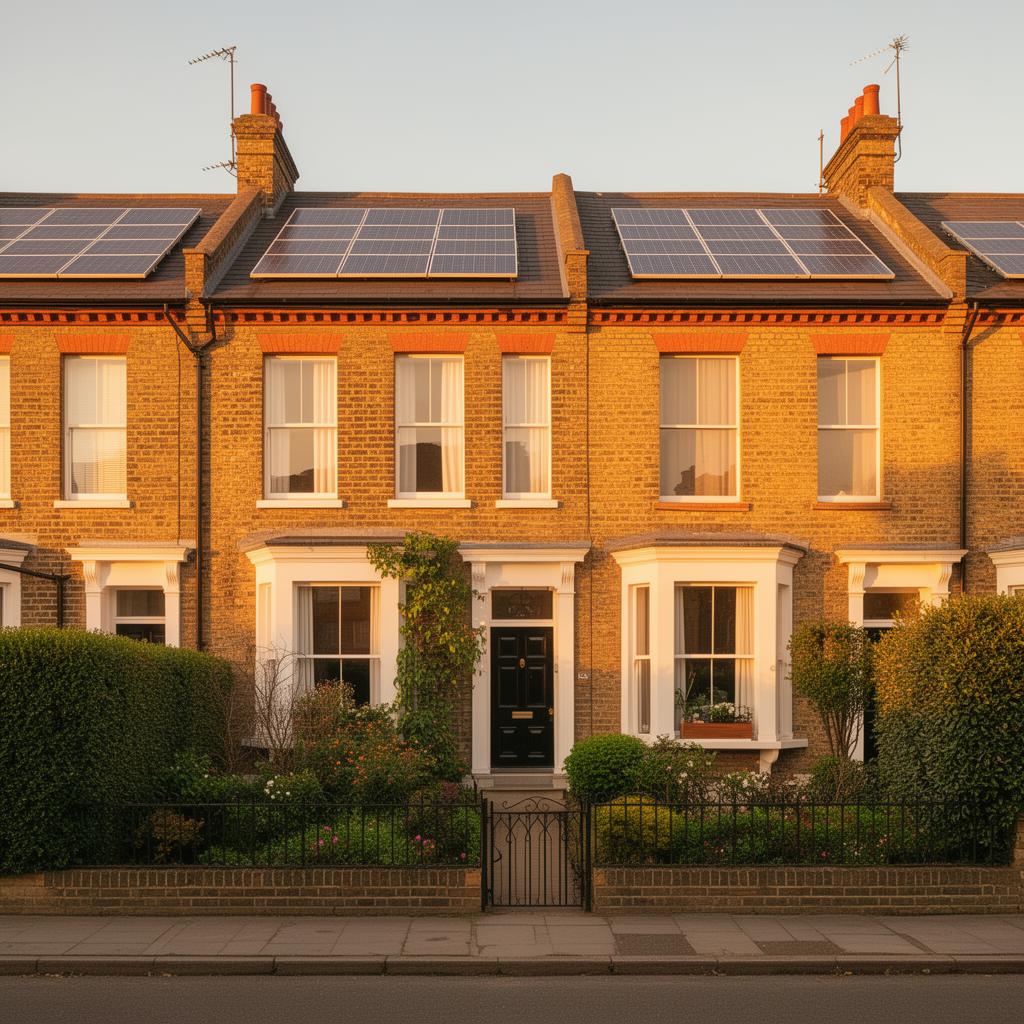
Lancashire has some of the least energy-efficient housing in England, with over 40% of homes rated D or below on their Energy Performance Certificate. Burnley, Hyndburn and Pendle consistently rank among the bottom 20% of English local authorities for housing energy performance, driven by a high proportion of pre-1919 stone terraces with solid walls. By contrast, newer developments in Chorley and South Ribble perform closer to national averages. Here is a detailed look at how Lancashire’s boroughs compare, what is being done to close the gap, and where the biggest opportunities for improvement lie.
How Energy Efficient Is Lancashire Compared to the UK?
Lancashire’s average EPC rating is D, with approximately 62% of homes rated D or below, compared to the England average of 55%. The county has a higher proportion of older, hard-to-treat properties — 28% were built before 1930, many with solid walls and limited cavity insulation potential. Fuel poverty affects an estimated 14% to 18% of Lancashire households, above the national average of 13%, with Burnley, Pendle and Hyndburn consistently ranked among the most fuel-poor districts in England.
These statistics underline why Lancashire receives proportionally more ECO4 and HUG2 funding than many other counties. The combination of older housing stock, lower average incomes and higher-than-average gas consumption per household creates a strong case for energy efficiency investment. Positively, Lancashire has seen a significant increase in grant-funded insulation installations since 2023, with over 15,000 measures delivered through ECO4 and local authority programmes in the 2024/25 financial year.
The Borough-by-Borough Picture
Based on the latest EPC data and government housing statistics, here is how Lancashire’s districts compare for energy efficiency:
Burnley has the highest proportion of E, F and G rated homes in Lancashire, at approximately 18% of its housing stock. The town’s Victorian and Edwardian terraces, particularly in areas like Burnley Wood, Padiham and the Daneshouse/Stoneyholme area, were built with solid stone walls that are expensive to insulate. Average annual energy costs in Burnley’s worst-performing homes exceed £2,500, compared to a Lancashire average of £1,600 to £1,800.
Hyndburn and Pendle share similar challenges, with 15% to 17% of homes rated E or below. Accrington, Oswaldtwistle, Great Harwood, Nelson and Colne all have extensive areas of pre-1919 terraced housing. These areas also have higher-than-average rates of fuel poverty, with roughly 15% to 20% of households spending more than 10% of their income on energy.
Rossendale performs slightly better overall but has pockets of poor performance, particularly in the older mill towns of Rawtenstall, Bacup and Haslingden where stone-built terraces predominate. The valley geography means properties in elevated positions face higher heating demand due to exposure and lower temperatures.
Blackburn with Darwen has a mixed picture. The inner-urban terraces (BB1, BB2 postcodes) have significant energy efficiency challenges, while post-war estates and newer developments on the outskirts perform better. The borough has been active in delivering government-funded improvements, with thousands of cavity wall and loft insulation installations completed in recent years.
Preston, Lancaster and the Fylde coast have more diverse housing stocks. Preston’s mixture of Victorian terraces (PR1), inter-war semis (Fulwood, Penwortham) and modern estates (Cottam, Ingol) gives a spread of ratings. Lancaster’s university-area housing is often poorly rated, while family homes in the suburbs perform better.
Chorley and South Ribble consistently show the best energy performance in Lancashire, benefiting from a higher proportion of post-1980 housing (including Buckshaw Village) and fewer pre-1919 solid-wall properties. Average EPC ratings in these boroughs are closer to the national average of C/D.
Key Statistics for Lancashire
- Total dwellings in Lancashire: approximately 650,000
- Homes rated C or above: approximately 38% (national average: 46%)
- Homes rated D: approximately 40%
- Homes rated E, F or G: approximately 12% (national average: 9%)
- Average domestic gas consumption: 14,200 kWh per year (national: 12,000 kWh)
- Average domestic electricity consumption: 3,100 kWh per year (national: 2,900 kWh)
- Fuel poverty rate: approximately 14% of households (national: 13%)
- Homes with cavity wall insulation: approximately 65%
- Homes with at least 200mm loft insulation: approximately 55%
Lancashire’s higher gas consumption reflects the combination of colder winters (more heating degree days than southern England), older, less insulated housing, and a higher proportion of larger properties than urban areas. The 14,200 kWh average is nearly 20% above the national figure, representing a significant additional cost burden for Lancashire households.
What Is Being Done to Improve Performance?
Several coordinated programmes are addressing Lancashire’s energy efficiency gap. The local energy support programmes programme, a partnership between Lancashire’s borough councils, coordinates government energy efficiency scheme and government insulation scheme delivery across the county. Since its launch, local energy support programmes has facilitated insulation improvements in over 20,000 Lancashire homes, with a focus on the worst-performing properties in fuel-poor areas.
Individual borough councils are running their own programmes alongside local energy support programmes. Blackburn with Darwen has invested in area-based schemes targeting specific estates for comprehensive upgrading. Burnley Borough Council has partnered with housing associations to improve the energy performance of both social and private sector housing in the town’s most deprived wards.
The Lancashire government energy efficiency scheme (local energy programme) partnership coordinates with energy suppliers to maximise government energy efficiency schemes delivery in the county, focusing on the boroughs with the highest fuel poverty rates. This targeted approach ensures funding flows to where it is most needed rather than being distributed randomly.
Heat pump installations are also growing across the county. government grant voucher data shows Lancashire is in the top quarter of English counties for heat pump uptake, with strong adoption in the Ribble Valley, Fylde and South Ribble districts where property types and household finances align well with the technology.
The Fuel Poverty Challenge
Fuel poverty remains a serious issue across parts of Lancashire. Under the current Low Income Low Energy Efficiency (LILEE) definition, a household is in fuel poverty if it has a below-average income and lives in a home that requires above-average costs to heat to an adequate standard. In Burnley, Hyndburn and Pendle, fuel poverty rates of 18% to 22% are among the highest in England.
The combination of low incomes and inefficient housing creates a vicious circle. Households cannot afford to heat their homes adequately, leading to cold-related health problems (respiratory conditions, cardiovascular issues, mental health impacts), which in turn affect employment and income. Breaking this cycle requires sustained investment in housing energy performance alongside income support measures.
Lancashire’s public health teams report that cold homes contribute to excess winter deaths in the county. The most vulnerable groups – elderly people living alone, families with young children, and those with pre-existing health conditions – are disproportionately affected. Every home brought from E rating to C rating reduces the occupant’s risk of cold-related illness and cuts their energy bills by £400 to £800 per year.
Looking Ahead: Lancashire’s Energy Future
Lancashire’s housing energy performance is improving, but the pace needs to accelerate to meet national targets. The county needs to improve approximately 250,000 homes from D or below to C or above by 2035. At current rates of improvement (roughly 15,000 to 20,000 homes per year receiving significant measures), this will take 12 to 17 years – tight against the timeline but achievable with continued funding and political will.
The biggest challenge remains the solid-wall housing stock in East Lancashire. These properties are the most expensive to insulate (£8,000 to £15,000 per home) and the hardest to improve to EPC C. New breathable insulation technologies, improved government funding, and growing installer capacity are all helping, but the scale of the task should not be underestimated.
How does my area compare for energy efficiency?
You can check your area’s energy performance on the EPC register or through official neighbourhood statistics. Generally, East Lancashire (Burnley, Hyndburn, Pendle, Rossendale) has the poorest performance, central Lancashire (Preston, Blackburn) is mixed, and southern Lancashire (Chorley, South Ribble) performs best. New-build areas consistently outperform older housing regardless of location.
What is the average energy bill in Lancashire?
The average Lancashire household spends approximately £1,600 to £1,900 per year on gas and electricity, slightly above the national average of £1,500 to £1,700. Poorly insulated homes in East Lancashire spend £2,000 to £2,500, while well-insulated modern homes spend £900 to £1,300. The variation is driven primarily by housing quality rather than occupant behaviour.
Am I eligible for free insulation in Lancashire?
You may be eligible through government energy efficiency schemes (if you receive qualifying benefits or are declared eligible through LA Flex) or government insulation scheme (if your home is in Council Tax bands A to D with an EPC of D or below). Contact your energy supplier, the local energy support programmes partnership, or your local borough council’s energy team to check. Over 40% of Lancashire homes are estimated to qualify under one scheme or the other.
See what these numbers mean for your home
Free instant estimate — costs, savings, payback and grants for your region.

Related Articles
What the 2026 Future Homes Standard Means for Existing Homeowners
The Future Homes Standard is the biggest change to building regulations in England in a generation. It is designed to ensure new homes produce dramatically fewer carbon emissions. But if…
3 May 2026
Prepayment Meter Rights: Protections Against Forced Installation and Self-Disconnection
Prepayment meter rights UK explained. Learn protections against forced installation, what to do if you cannot top up, emergency credit options and how to switch away from prepay.
12 April 2026 Fuel Poverty in the UK: Definition, Statistics and What Help Is Available
Fuel poverty UK affects 9 million households. Learn the LILEE definition, who is most at risk, the funding gap, and every support scheme available to help you heat your home.
11 April 2026