Agrivoltaics in Lancashire: Solar Panels on Farmland Explained
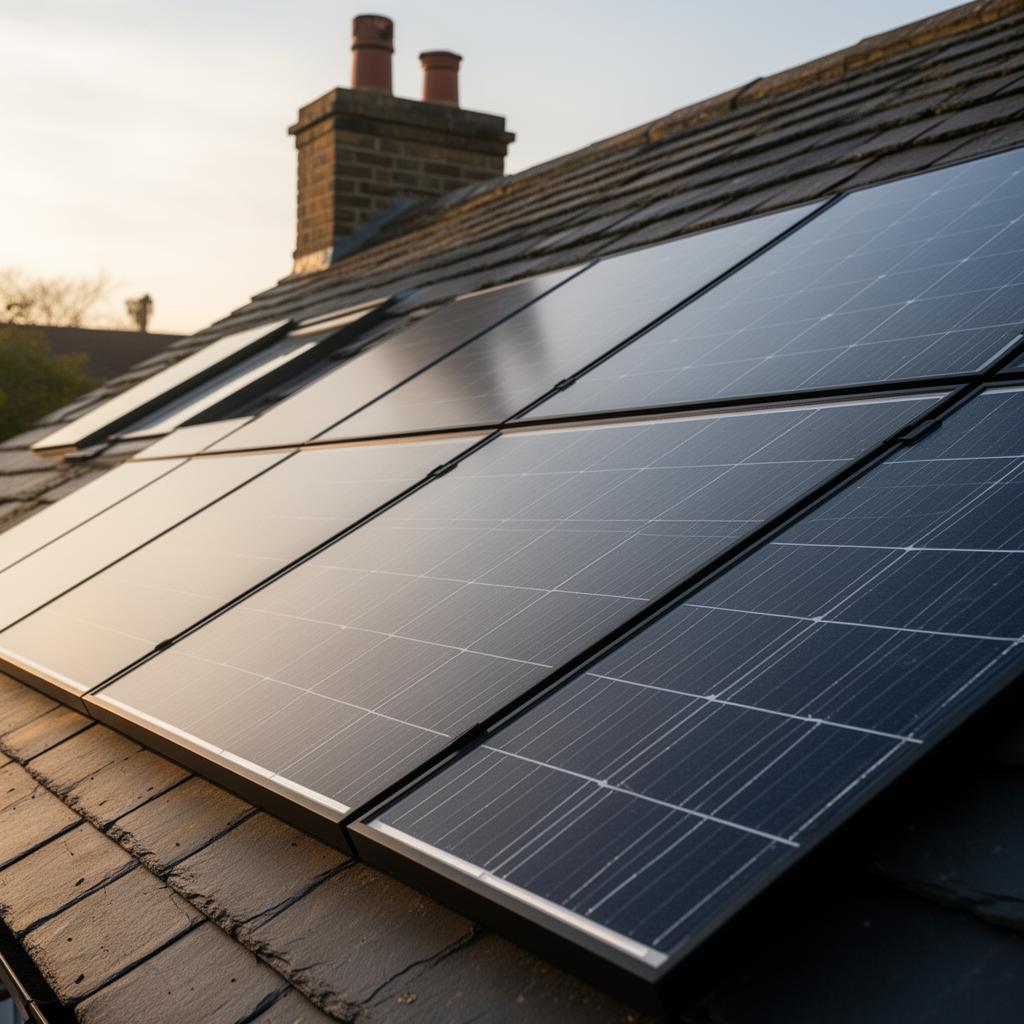
Agrivoltaics – the practice of installing solar panels on agricultural land while continuing to farm beneath and around them – is gaining traction across the UK, and Lancashire’s 100,000-plus hectares of farmland present significant opportunities. Done correctly, agrivoltaic systems can generate £800-1,200 per acre per year in electricity income while maintaining 80-95% of the land’s agricultural productivity. For Lancashire farmers facing squeezed margins and uncertain subsidy futures, this dual-use approach offers a compelling additional revenue stream.
What Is Agrivoltaics?
Traditional solar farms typically remove land from agricultural production entirely, covering fields with ground-mounted panels at standard height and density. Agrivoltaics takes a different approach, elevating panels on taller structures (typically 3-5 metres clearance) or spacing them wider apart to allow farming activity to continue underneath and between the panels.
The concept works because most crops do not need full, direct sunlight for every hour of the day. Many plants actually benefit from some shade during the hottest periods – a phenomenon called the light saturation point. By providing partial shade, elevated solar panels can reduce heat stress on crops, reduce evapotranspiration (water loss from the soil and plants), and in some cases, actually increase yields compared to open fields.
For livestock farming – which dominates Lancashire agriculture, particularly in the Ribble Valley, Bowland, and the Pennine fringes – solar panels provide shade and shelter for animals. Sheep grazing beneath solar panels is already well established on UK solar farms, and elevated agrivoltaic structures allow cattle access too.
Types of Agrivoltaic Systems Suited to Lancashire
Several agrivoltaic configurations are relevant to Lancashire farming.
Elevated fixed-tilt systems mount panels at 3-5 metres above ground on steel structures, allowing tractors and livestock to pass beneath. These are the most common agrivoltaic design and work well for grassland, arable crops, and mixed farming. The panels are typically installed at a lower density than a standard solar farm, generating around 0.5-0.7 MW per hectare compared to 1 MW+ for conventional ground-mounted arrays.
Vertical bifacial systems install panels vertically in rows running east-west, with large gaps between rows for farming. Bifacial panels generate electricity from both sides, capturing morning sun on the east face and afternoon sun on the west face. This design allows unrestricted farming between the rows and is particularly suited to arable fields. Vertical systems generate less total electricity per hectare but have minimal impact on crop yields.
Inter-row systems space standard ground-mounted panel rows further apart than a conventional solar farm (5-10 metres between rows instead of 3-4 metres), allowing strip cropping or grazing between the rows. This is the simplest and cheapest agrivoltaic approach, though it represents a compromise between electricity generation and agricultural use.
Economics for Lancashire Farmers
The financial case for agrivoltaics depends on several factors: the electricity price, the type of farming being displaced or maintained, available grants, and the cost of the installation. A typical elevated agrivoltaic system costs £800-1,200 per kW installed – roughly 50-70% more than a conventional ground-mounted system due to the taller structures and wider spacing.
For a 10-acre Lancashire farm generating approximately 2.5-3.5 MW of solar capacity through an agrivoltaic system, annual electricity income (through a power purchase agreement or grid export) might be £120,000-200,000, while the agricultural production from the same land continues to generate its existing income with only modest reduction.
Compare this to the rental income from leasing land to a conventional solar farm developer (typically £800-1,500 per acre per year, totalling £8,000-15,000 for 10 acres) and the agrivoltaic approach is significantly more lucrative for farmers who own and operate the solar installation themselves. However, the capital investment is also much larger – potentially £2-4 million for a 10-acre system – requiring significant funding or partnership arrangements.
Planning Permission and Agricultural Policy
Planning permission for agrivoltaic systems falls under the same framework as conventional solar farms. Applications are made to the local planning authority (the relevant Lancashire district council) and assessed against local plan policies, landscape impact, grid connection capacity, and agricultural land classification.
Agrivoltaics has a potential planning advantage over conventional solar farms because the agricultural use of the land is maintained. Planning officers have historically raised concerns about the loss of agricultural land to solar development, particularly on higher-quality (Grade 2 and 3a) agricultural land. An agrivoltaic proposal that demonstrates continued farming activity may face fewer planning objections.
The government’s National Planning Policy Framework supports renewable energy development but also protects the best and most versatile agricultural land. Agrivoltaics potentially satisfies both objectives. Lancashire’s Grade 3 and 4 agricultural land in the Fylde, the West Lancashire Plain, and the Ribble Valley could be particularly suitable for agrivoltaic development.
From an agricultural policy perspective, ELMS (Environmental Land Management Schemes) payments and Basic Payment Scheme entitlements are generally maintained for agrivoltaic land where farming continues, though the specific eligibility criteria should be confirmed with the Rural Payments Agency for each site.
Crop Performance Under Solar Panels
Research from trials across Europe and the UK shows that many crops perform well under agrivoltaic systems. Grassland (the dominant agricultural use in upland Lancashire) is largely unaffected by partial shading, with yields typically 90-100% of open-field levels. Some grass species actually benefit from reduced heat stress during summer dry periods.
Root vegetables, brassicas, and salad crops can tolerate the 20-30% light reduction typical under elevated panels. Potatoes, carrots, and lettuce have shown minimal yield reduction in UK agrivoltaic trials. Cereals (wheat, barley, oats) are more sensitive to light reduction, with yields typically dropping 10-20% under elevated panels – though this may be offset by reduced lodging (crop flattening by wind) and lower drought stress.
For Lancashire’s predominantly pastoral farming, the compatibility with livestock grazing is the most relevant factor. Sheep grazing is well proven under solar panels of all configurations. Cattle grazing requires elevated structures (minimum 4 metres clearance) and robust fencing around panel supports, adding cost but enabling continued beef and dairy operations.
Grid Connection Challenges
One of the biggest practical challenges for agrivoltaic projects in Lancashire is grid connection. Electricity North West’s rural distribution network was not designed for large-scale power export from farms, and connection costs can be substantial. A 2-3 MW farm-scale connection might cost £100,000-500,000 depending on distance to the nearest suitable substation and any network reinforcement required.
Getting a grid connection offer early in the project development process is essential. Apply to Electricity North West for a connection quotation before committing to detailed design work. The quotation is free for initial enquiries and provides a realistic indication of connection costs and timescales.
Battery storage can help manage grid constraints by storing excess generation and exporting during periods of grid capacity. Some Lancashire agrivoltaic developers are including battery systems as standard to maximise the value of generation and provide grid services that generate additional revenue.
Do I need to be a large landowner to consider agrivoltaics?
Not necessarily, though scale helps with economics. A minimum of 5-10 acres is typically needed for a viable agrivoltaic project due to the fixed costs of grid connection, planning applications, and project management. Smaller holdings might explore community-scale agrivoltaic cooperatives where multiple neighbouring farms share infrastructure costs, or simpler approaches like solar panels on barn roofs combined with livestock grazing beneath separate ground-mounted arrays.
Will agrivoltaics affect my agricultural subsidy payments?
Provided farming activity continues, most agricultural support payments can be maintained. The Rural Payments Agency assesses each site individually, so confirm eligibility before proceeding. The key requirement is demonstrating that the land remains in active agricultural use – which is the entire point of agrivoltaics. Some ELMS options may even reward the biodiversity benefits that solar panel arrays can provide, such as wildflower margins and pollinator habitats.
How do I find a developer for an agrivoltaic project in Lancashire?
Agrivoltaics is still a relatively new sector in the UK, and not all solar developers have the expertise. Look for developers with specific agrivoltaic experience and references from completed UK projects. The National Farmers’ Union (NFU) and the Solar Trade Association both maintain directories of developers with agricultural solar experience. Start with a feasibility study (typically £5,000-15,000) to assess your site’s potential before committing to a full project.
See what these numbers mean for your home
Free instant estimate — costs, savings, payback and grants for your region.

Related Articles
Is Solar Battery Storage Worth It in 2026?
Solar panels are now a common sight on UK rooftops, but the real game-changer in 2026 is battery storage. A home battery lets you store the electricity your panels generate…
2 June 2026
Why Spring Is the Perfect Time to Install Solar Panels
If you have been thinking about solar panels for a while but never quite pulled the trigger, spring is the moment to act. The combination of lengthening days, mild installation…
23 April 2026
How the Energy Price Cap Affects Heat Pump and Solar Panel Payback
See how the energy price cap affects heat pump and solar panel payback periods. Real calculations using current UK unit rates show why investing now locks in stronger returns.
15 April 2026