UK Solar Industry Report: Installation Trends and Costs Mid-2025
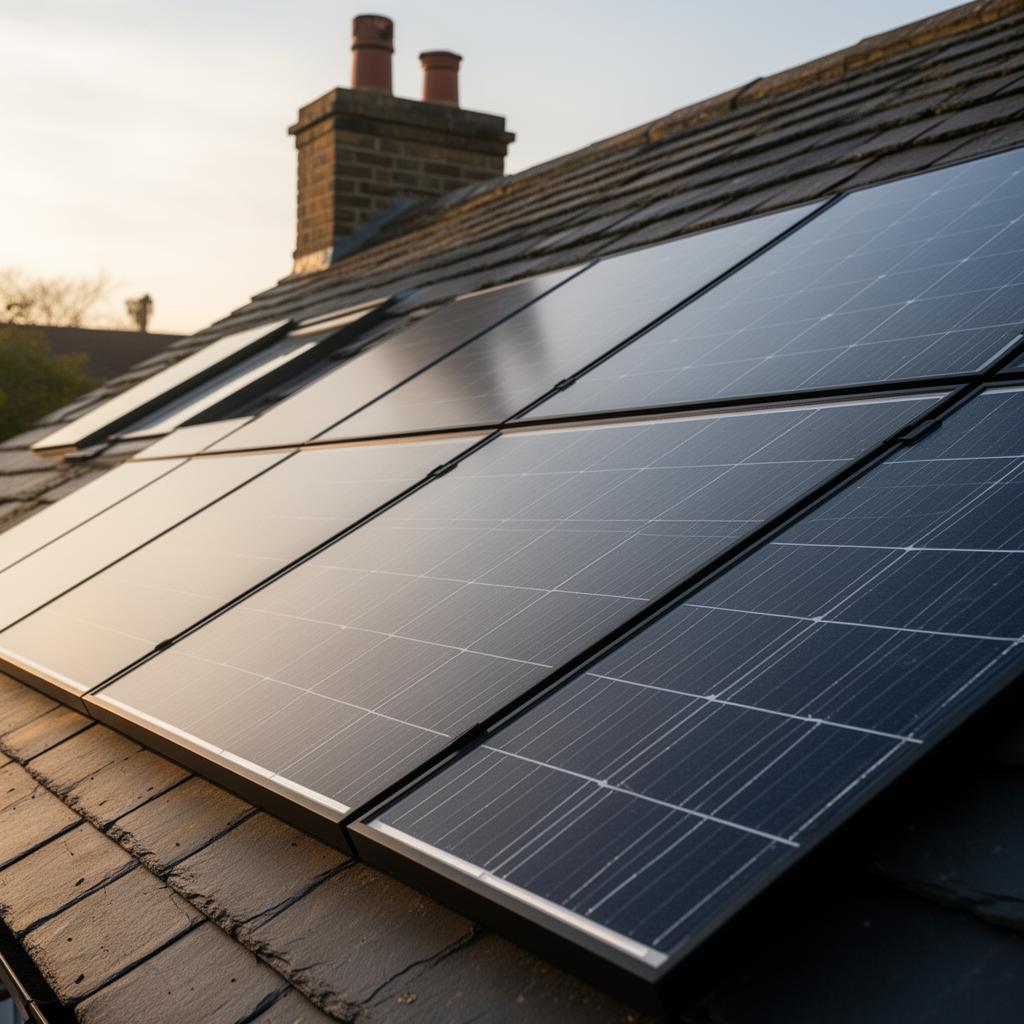
The UK solar industry has reached a significant milestone in 2025, with over 250,000 residential installations completed in the first half of the year alone – a 35% increase on the same period in 2024. Total UK solar capacity now exceeds 20GW, with residential systems accounting for approximately 5.5GW of that total. Lancashire and Greater Manchester have seen installation rates broadly matching the national trend, with an estimated 8,000-10,000 new residential systems installed across the region in H1 2025.
What Are the UK Solar Installation Trends in 2025?
UK residential solar installations reached approximately 180,000 systems in the first half of 2025, a 22 per cent increase on the same period in 2024. Average system costs fell to £5,200 to £6,800 for a 4kW array (0% VAT), driven by lower panel manufacturing costs and increased installer competition. Battery storage attachment rates exceeded 55 per cent nationally for the first time.
The market shift towards larger systems continued in mid-2025, with the average domestic installation growing from 3.8kW to 4.3kW as panel efficiency improvements allowed more capacity on the same roof area. Chinese panel imports dominate the UK market at around 85 per cent of all panels installed, though European and US-manufactured alternatives are gaining share in the premium segment.
Installation Costs: The Downward Trend Continues
Average installation costs for residential solar have fallen by approximately 12% compared to mid-2024. A standard 4kW system in Lancashire now costs £5,000-6,500 fully installed (inclusive of 0% VAT), down from £5,500-7,500 a year ago. The reduction is driven primarily by falling panel prices – with Chinese manufacturers increasing production capacity and global panel prices dropping below £0.10 per watt for wholesale purchases – and growing competition among UK installers.
Battery storage costs have also fallen, though less dramatically. A 5kWh home battery now costs £2,500-3,500 installed, compared to £3,000-4,500 in mid-2024. The 10kWh batteries popular with larger systems run £4,000-6,000. Competition between manufacturers including Tesla, GivEnergy, Huawei, and BYD is keeping prices competitive.
The combined cost of a 4kW solar system with 5kWh battery in Lancashire sits at approximately £7,500-10,000 in mid-2025. At current electricity prices, this delivers payback in 6-8 years and a total lifetime benefit of £25,000-35,000 over 25 years. The financial case has never been stronger.
Panel Technology Trends
The panels being installed in 2025 are substantially better than those from even two years ago. The mainstream residential market has shifted decisively to panels rated 400-440W each, up from 350-380W in 2023. This means fewer panels are needed for the same system capacity, reducing installation time and roof space requirements.
N-type TOPCon solar cells have become the dominant technology in residential panels, replacing the older P-type PERC cells that were standard until recently. N-type panels offer higher efficiency (21-23% versus 19-21%), better performance in low-light conditions (relevant for Lancashire’s frequent overcast days), lower temperature degradation, and slower annual degradation rates (0.3-0.4% versus 0.5-0.6%).
The next technology step – heterojunction (HJT) panels and perovskite tandem cells – is beginning to appear in the UK market, though at premium prices. Within 2-3 years, these technologies are expected to push residential panel efficiencies above 25%, generating more power from the same roof area. For Lancashire homeowners installing in 2025, current N-type panels represent excellent value and performance.
The Battery Storage Boom
Battery attachment rates – the proportion of new solar installations that include battery storage – have risen to approximately 65% nationally in H1 2025, up from 45% in H1 2024. In Lancashire, the rate is slightly higher at an estimated 70%, driven by the region’s active installer market promoting integrated solar-and-battery packages.
The shift towards batteries reflects growing consumer understanding that self-consumption is the key to maximising solar returns. With electricity costing 24p per kWh from the grid but solar exports earning only 4-15p per kWh, every additional kWh consumed on-site rather than exported is worth an extra 9-20p. A battery that shifts 2,000 kWh from export to self-use adds £180-400 per year in value.
Retrofit battery installations – adding a battery to an existing solar system – have also surged, with many Lancashire homeowners who installed panels during the 2010-2015 feed-in tariff era now adding batteries to maximise the value of their generation as FiT payments end.
Regional Variations: Lancashire and Greater Manchester
Within Lancashire and Greater Manchester, installation patterns vary by area. The highest installation rates per capita are in the suburban and rural areas of the Ribble Valley, Fylde, South Ribble, and Trafford, where detached and semi-detached houses with larger, unshaded roofs predominate. These areas also have higher average household incomes, making the upfront investment more accessible.
Urban areas including central Manchester, Salford, Burnley, and Blackburn have lower installation rates, constrained by a higher proportion of terraced houses with smaller or less suitable roofs, a larger rented sector where tenant-landlord dynamics complicate solar investment, and lower average incomes reducing access to upfront capital.
However, grant-funded installations through government energy efficiency schemes and local authority programmes are helping to address this gap. Several Greater Manchester councils have allocated funding specifically for solar panel installation on social housing and low-income private housing, and these programmes have delivered hundreds of systems in areas that would otherwise have low uptake.
The Installer Market
The number of qualified solar installers operating in Lancashire has grown by roughly 25% over the past year, reflecting increased demand and new entrants to the market. Competition is generally healthy, with multiple installers competing for business across all parts of the region. This competition is one factor keeping installation costs below the national average in parts of Lancashire.
Quality remains variable. The relevant certification provides a baseline standard, but the gap between an average installation and an excellent one is significant – particularly in terms of system design, inverter programming, and customer guidance on how to maximise self-consumption. Homeowners are increasingly using review platforms and word-of-mouth recommendations to identify the best installers in their area.
Wait times for installation have shortened compared to the peaks of 2023-2024. Most Lancashire installers now quote 4-8 weeks from order to installation, with some offering faster turnaround during quieter periods. The autumn and winter months (September-February) typically have shorter wait times as demand drops seasonally.
Policy and Regulatory Outlook
The 0% VAT rate on residential solar installations remains in place and has been confirmed through at least March 2027. This policy, combined with the export tariff and the general direction of government energy strategy, provides a stable environment for solar investment. There is speculation about potential new incentives for solar-plus-battery systems, though nothing has been confirmed for 2025-26.
Grid connection rules are evolving as more solar capacity is added. Electricity North West, the DNO for Lancashire and Greater Manchester, has implemented new processes for managing the growing volume of G99 applications for systems above 3.68kW. Approval times have stabilised at 4-8 weeks after a period of delays in 2024, and the DNO has invested in grid reinforcement in areas of high solar uptake.
Looking ahead, the solar industry expects continued growth through 2025 and into 2026, driven by sustained electricity prices, falling equipment costs, and growing consumer awareness. For Lancashire homeowners considering solar, the market conditions are favourable and likely to remain so for the foreseeable future.
Is now a good time to install solar panels in Lancashire?
Yes. Costs are at or near historical lows, panel technology is excellent, installation wait times are reasonable, and the financial returns are strong at current electricity prices. While panel prices may fall slightly further, the savings from generating your own electricity start from day one – delaying installation means missing out on 6-12 months of generation and savings.
Will solar panel prices fall further in 2025?
Panel wholesale prices have limited room for further reduction as they are already near manufacturing cost. Installation costs may edge down slightly as the market matures and labour efficiency improves, but dramatic price drops are unlikely. The biggest risk to the financial case is a fall in electricity prices, which would reduce the value of solar generation – though most analysts expect prices to remain elevated for the medium term.
How does UK solar capacity compare to other European countries?
The UK now has over 20GW of total solar capacity, making it the sixth-largest solar market in Europe. Germany leads with over 85GW, followed by Spain, Italy, France, and the Netherlands. On a per-capita basis, the UK lags behind several comparable countries, suggesting significant room for continued growth. The government’s target of 70GW of solar capacity by 2035 implies annual installation rates need to roughly double from current levels.
See what these numbers mean for your home
Free instant estimate — costs, savings, payback and grants for your region.

Related Articles
What the 2026 Future Homes Standard Means for Existing Homeowners
The Future Homes Standard is the biggest change to building regulations in England in a generation. It is designed to ensure new homes produce dramatically fewer carbon emissions. But if…
3 May 2026
Prepayment Meter Rights: Protections Against Forced Installation and Self-Disconnection
Prepayment meter rights UK explained. Learn protections against forced installation, what to do if you cannot top up, emergency credit options and how to switch away from prepay.
12 April 2026 Fuel Poverty in the UK: Definition, Statistics and What Help Is Available
Fuel poverty UK affects 9 million households. Learn the LILEE definition, who is most at risk, the funding gap, and every support scheme available to help you heat your home.
11 April 2026