Solar PV Output in Lancashire: Monthly Generation Data and What to Expect
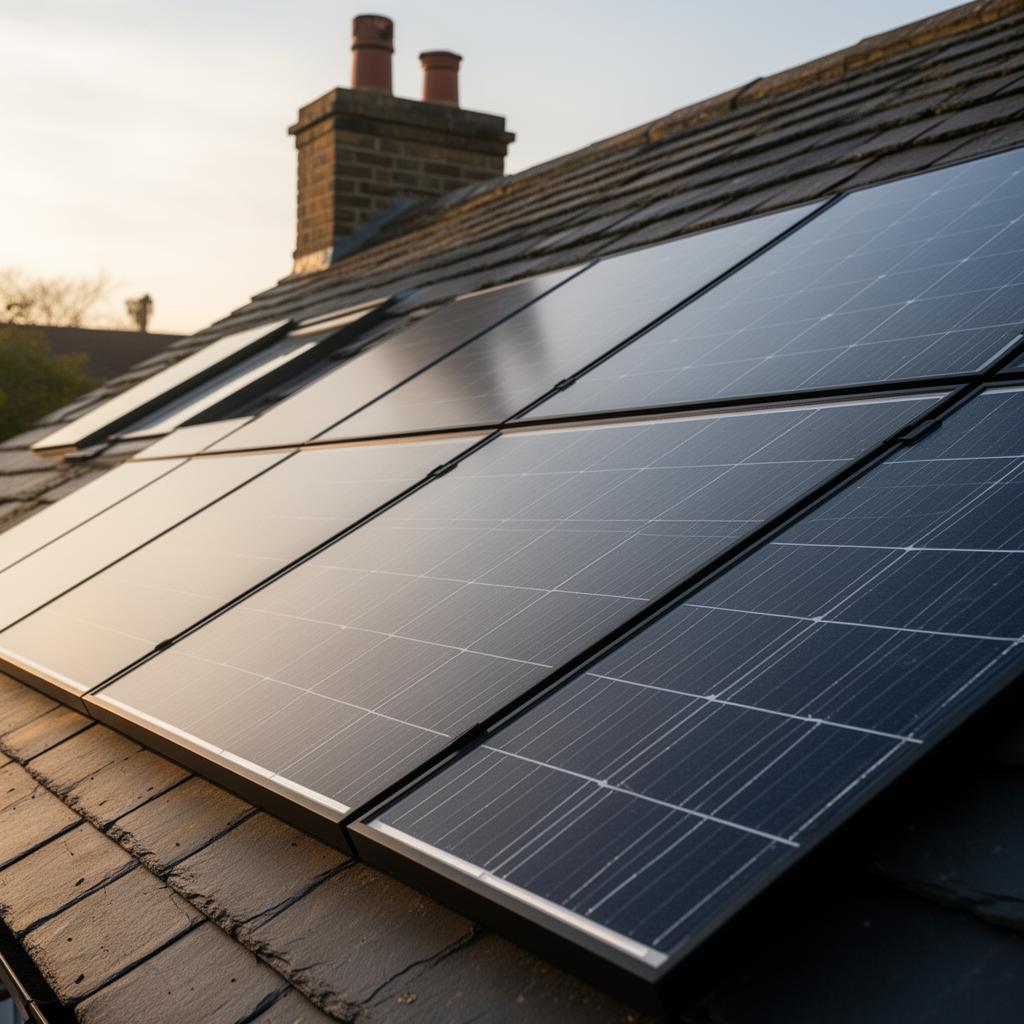
A standard 4kW solar panel system on a south-facing Lancashire roof generates between 3,200 and 3,600 kWh per year, worth £780 to £880 in self-consumed electricity at current rates. Output varies dramatically by month – from as little as 80 to 120 kWh in December to 400 to 500 kWh in June. Understanding this seasonal pattern helps Lancashire homeowners set realistic expectations, plan their energy use, and decide whether battery storage or export tariffs make financial sense for their situation.
How Much Electricity Do Solar Panels Generate in Lancashire?
A typical 4 kWp solar panel system in Lancashire generates between 3,200 and 3,600 kWh per year. Monthly output varies significantly: expect 400 to 500 kWh in June and July at peak, dropping to 60 to 100 kWh in December and January. A south-facing roof at a 30 to 35 degree pitch delivers the best annual yield in this region.
Lancashire receives around 1,100 to 1,200 hours of sunshine annually — lower than southern England but still sufficient for solar to be financially viable. At current electricity rates of 24.5p per kWh, a 4 kWp system saves £450 to £550 per year through self-consumption alone. Adding Smart Export Guarantee payments of 4 to 15p per kWh for surplus electricity increases total annual returns to £550 to £750, giving a typical payback period of 8 to 11 years.
Month-by-Month Generation for a 4kW System in Lancashire
Based on aggregated data from solar monitoring platforms and performance data from installations across Preston, Blackburn, Burnley and the wider Lancashire area, here is what a typical 4kW south-facing system produces each month:
- January: 90 to 130 kWh (short days, low sun angle, frequent cloud cover)
- February: 130 to 180 kWh (days lengthening, slightly better sun angle)
- March: 230 to 300 kWh (significant improvement as equinox approaches)
- April: 330 to 400 kWh (longer days, higher sun, spring sunshine)
- May: 400 to 480 kWh (near peak generation, long daylight hours)
- June: 410 to 500 kWh (longest days, highest sun angle, peak month)
- July: 380 to 470 kWh (slightly less than June despite similar day length, often cloudier)
- August: 330 to 410 kWh (still strong but days shortening)
- September: 240 to 310 kWh (notable decline as autumn begins)
- October: 150 to 210 kWh (shorter days, lower sun, more overcast)
- November: 90 to 130 kWh (approaching winter minimum)
- December: 70 to 110 kWh (shortest days, lowest sun angle)
Total annual: approximately 3,200 to 3,600 kWh. The summer months (April to September) typically produce 65% to 70% of the annual total, while winter (October to March) produces the remaining 30% to 35%. This pattern reflects Lancashire’s latitude (approximately 53.8 degrees north), where summer days are long (up to 17 hours of daylight in June) but winter days are short (under 8 hours in December).
How Lancashire Compares to Other UK Regions
Lancashire receives approximately 1,000 to 1,100 kWh of solar irradiance per square metre per year, which translates to around 850 to 900 kWh per kWp of installed solar capacity. This is about 10% to 15% less than southern England (Kent, Sussex, Hampshire receive 1,100 to 1,200 kWh/m2) but only 5% less than the Midlands and broadly comparable to Yorkshire and the North East.
The difference is smaller than many people assume. Lancashire’s summer generation is actually similar to the south of England because the longer northern daylight hours compensate for the slightly lower sun angle. The gap is mainly in winter, when Lancashire’s shorter days, lower sun and more frequent cloud cover combine to reduce output significantly.
Within Lancashire, there is local variation. The Fylde coast (Blackpool, Lytham, Fleetwood) tends to get slightly more sunshine than inland areas because sea breezes break up cloud cover. The Pennine foothills (Rossendale, Pendle, Burnley) see more cloud and mist, particularly in autumn and winter. Preston and Chorley fall somewhere in between. However, the differences within the county are small – typically 5% to 10% variation in annual output.
Factors That Affect Your Specific Output
Several property-specific factors determine whether your system performs at the top or bottom of the expected range:
Roof orientation has the biggest impact. A south-facing roof produces the maximum output. South-east or south-west facing systems produce about 95% of the south-facing output – barely different. East or west-facing panels produce 80% to 85%, which is still financially worthwhile. North-facing panels produce only 50% to 60% and are rarely recommended.
Roof pitch affects seasonal distribution. A 30 to 35-degree pitch (typical of most Lancashire houses) is close to optimal for annual output. Steeper pitches (40+ degrees, found on some Victorian properties) perform slightly better in winter and slightly worse in summer. Shallower pitches (15 to 20 degrees, common on flat-roof extensions and dormers) generate more in summer but less in winter.
Shading from trees, chimneys, neighbouring buildings or dormer windows reduces output in the affected panels. Even partial shading on one panel can reduce the whole string’s output by 10% to 25% with a standard string inverter. Micro-inverters or optimisers mitigate this effect, losing only the output of the shaded panel itself.
Panel temperature affects efficiency. Solar panels produce slightly less power when they are hot (above 25C). Lancashire’s cool climate means panels rarely overheat, which is a small advantage – your panels operate at higher efficiency during summer than identical panels in southern Spain or Australia.
Self-Consumption vs Export: Where Your kWh Go
For a typical Lancashire household without battery storage, self-consumption of solar generation is usually 30% to 50%. This means 30% to 50% of what your panels generate is used directly in the home, with the remainder exported to the grid. In summer, export is higher (the panels generate more than the house uses during sunny hours). In winter, almost all generation is self-consumed because production is lower and demand is higher.
Self-consumed electricity saves you the full retail rate (currently around 24.5p per kWh). Exported electricity earns the export tariff rate, which varies from 3p to 15p per kWh depending on your supplier and tariff. The large gap between self-consumption value and export value means maximising self-consumption is the key to the best financial return.
Running high-consumption appliances during peak solar hours (dishwasher, washing machine, EV charging) shifts consumption into the sunny period and increases self-consumption to 40% to 60% without any technology upgrades. Adding a battery storage system (5 to 13 kWh) can push self-consumption to 70% to 85%, capturing daytime surplus for evening use.
Is Battery Storage Worth It in Lancashire?
A 5kWh battery costs £2,500 to £4,000 installed and stores enough solar surplus to cover a typical Lancashire household’s evening electricity demand (3 to 5 kWh between 4pm and 10pm). The financial value of storing solar surplus rather than exporting it depends on the difference between your export rate and your import rate.
At current prices, storing 1 kWh of solar surplus and using it in the evening saves approximately 15p to 20p (the difference between the 24.5p import rate and the 5p to 10p export rate). A 5kWh battery cycled daily saves roughly £275 to £365 per year in shifted energy. At that rate, a £3,000 battery takes 8 to 11 years to pay for itself – longer than the 10-year warranty on some models but within the expected 15-year lifespan.
The financial case improves if you can also use the battery for tariff arbitrage – charging from the grid at off-peak rates (7p to 9p per kWh) and using stored energy during peak periods (24.5p). Combined solar storage and tariff arbitrage can reduce the payback period to 5 to 7 years, making the investment more compelling.
Optimising Your Lancashire Solar System
Regular monitoring is the most important ongoing task. Check your generation data weekly and compare to expected levels for the time of year. A sudden drop in output that does not correspond to weather changes could indicate a fault, a new shading source, or dirty panels. Most modern inverters and monitoring platforms send automatic alerts for significant underperformance.
Keep panels reasonably clean. Lancashire’s rainfall does a decent job, but bird droppings, lichen and pollen buildup can reduce output by 5% to 15%. An annual clean in spring costs £80 to £150 and typically pays for itself through improved summer generation.
Check for new shading sources. A tree that was clear of your panels five years ago may now cast shadows as it has grown. Even partial shading on one panel affects the whole string with a standard inverter. Trimming trees or discussing boundary vegetation with neighbours can recover lost generation.
How much electricity will my solar panels generate in Lancashire?
A 4kW system on a south-facing roof generates approximately 3,200 to 3,600 kWh per year. A 6kW system produces 4,800 to 5,400 kWh. Generation peaks in May and June (400 to 500 kWh per month for a 4kW system) and drops to its lowest in December and January (70 to 130 kWh). Your specific output depends on roof orientation, pitch, shading and local conditions.
Do solar panels work in Lancashire’s cloudy weather?
Yes. Solar panels generate electricity from daylight, not just direct sunshine. On a cloudy day, a 4kW system still produces 3 to 10 kWh, compared to 15 to 20 kWh on a clear summer day. Lancashire receives enough solar irradiance for solar panels to be a strong financial investment, with typical payback periods of 8 to 12 years regardless of the cloud cover.
When is the best time to install solar panels in Lancashire?
Spring (March to May) is ideal because you maximise generation from your first summer and installers are less busy than the pre-summer rush. However, solar panels can be installed year-round in Lancashire. Autumn installations mean the system is ready for the following spring, and winter installations often come with shorter waiting times and sometimes better prices from installers filling quiet periods.
See what these numbers mean for your home
Free instant estimate — costs, savings, payback and grants for your region.

Related Articles
Is Solar Battery Storage Worth It in 2026?
Solar panels are now a common sight on UK rooftops, but the real game-changer in 2026 is battery storage. A home battery lets you store the electricity your panels generate…
2 June 2026
Why Spring Is the Perfect Time to Install Solar Panels
If you have been thinking about solar panels for a while but never quite pulled the trigger, spring is the moment to act. The combination of lengthening days, mild installation…
23 April 2026
How the Energy Price Cap Affects Heat Pump and Solar Panel Payback
See how the energy price cap affects heat pump and solar panel payback periods. Real calculations using current UK unit rates show why investing now locks in stronger returns.
15 April 2026