Energy Price Cap July 2025: Impact on Lancashire Energy Bills
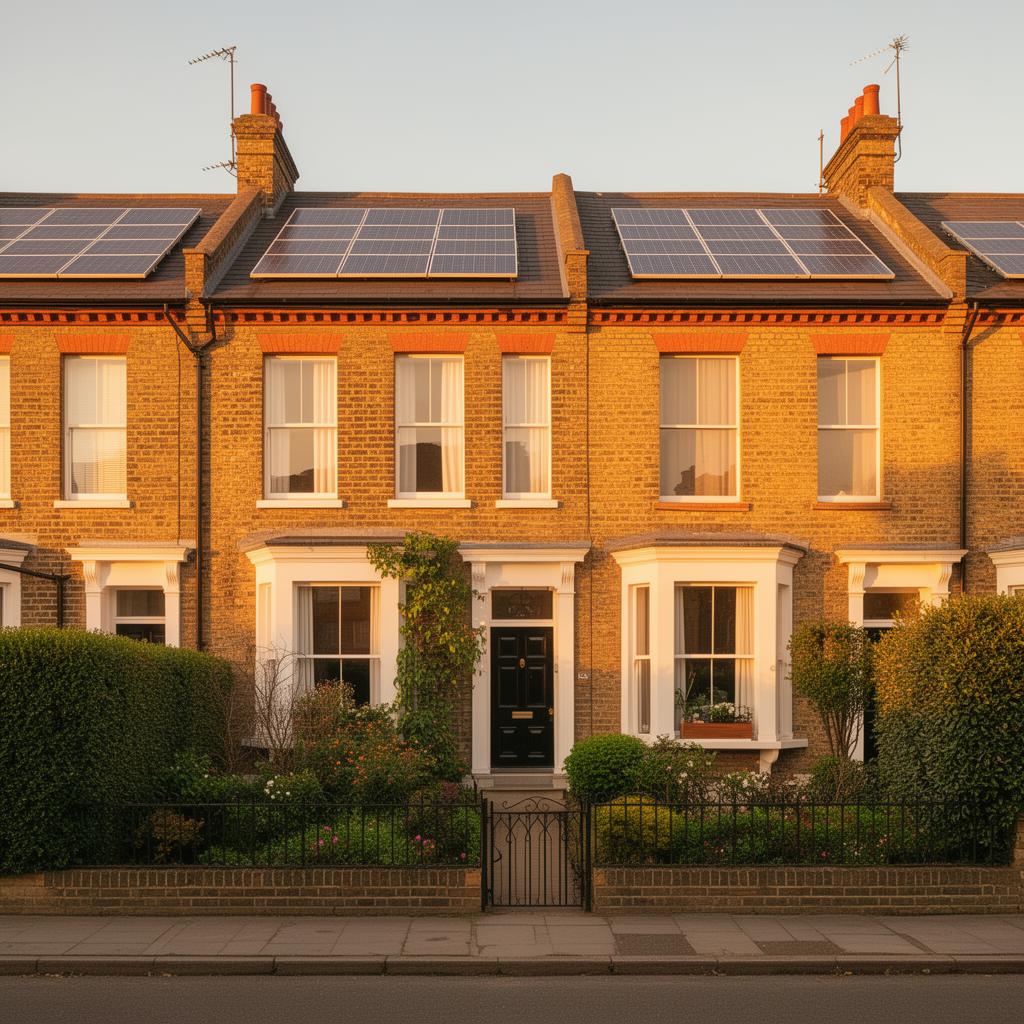
The energy regulator energy price cap for Q3 2025 (July to September) is set at £1,568 per year for a typical dual-fuel household on a standard variable tariff, representing a reduction from the Q2 level. For the average Lancashire home, this means quarterly bills of around £392 for combined gas and electricity. While any reduction is welcome, bills remain substantially higher than the pre-2021 era when typical annual costs sat below £1,200. Here is what the new cap means in practice and what Lancashire homeowners can do to keep costs down.
What Is the Ofgem Energy Price Cap for July 2025?
The Ofgem energy price cap from July 2025 sets the maximum amount suppliers can charge per unit of gas and electricity in England, Wales and Scotland. For Q3 2025, the cap is set at approximately £1,568 per year for a typical dual-fuel household paying by direct debit — a reduction from the April 2025 level of £1,849. Lancashire households can expect quarterly bills of around £392 under the new cap.
The price cap does not limit your total bill — it caps the standing charge and unit rate your supplier can apply. If you use more energy than the typical household benchmark, you will pay more. Lancashire properties, particularly older terraces and stone-built homes with lower EPC ratings, tend to consume above-average energy, so the actual saving will vary depending on your insulation levels and heating system efficiency.
What the Price Cap Actually Means
The the energy price cap does not cap your total bill – it caps the maximum unit rates and standing charges that suppliers can charge on their default tariffs. If you use more energy than the “typical” household, your bill will exceed the cap figure. If you use less, it will be lower. The cap uses a benchmark of 2,700 kWh of electricity and 11,500 kWh of gas per year to calculate the typical bill figure.
Lancashire homes tend to use more gas than the national average, primarily because the region’s older housing stock loses more heat and the climate is cooler than southern England. A Victorian terrace in Burnley or a stone cottage in the Ribble Valley may use 13,000-16,000 kWh of gas per year, pushing annual gas bills 15-40% above the cap’s typical figure. Electricity consumption in Lancashire is closer to the national average, though homes with electric heating, EV charging, or swimming pools may use significantly more.
How Lancashire Bills Compare to the National Average
Analysis of energy consumption data suggests that the average Lancashire household’s actual energy bill sits around 10-15% above the national typical figure used in the price cap calculation. This is driven by three main factors: older, less insulated housing stock, a cooler climate with higher heating degree days, and a higher proportion of larger family homes in suburban and rural areas.
Within the region, there is significant variation. A modern three-bedroom semi in Leyland with cavity wall insulation and double glazing might have annual bills close to or below the cap figure. A large detached Victorian house in Lancaster with solid walls and single glazing could face annual bills 50-80% above the typical figure. Your individual bill depends on your home’s energy efficiency more than anything else.
Fixed Tariffs vs Standard Variable: What Is Best Now?
With the price cap trending downward, the question of whether to fix your tariff has become more nuanced. Fixed tariffs lock in your unit rates for 12-24 months, protecting you from future price increases but potentially preventing you from benefiting from further cap reductions.
As of July 2025, competitive fixed tariffs are available at rates close to or slightly below the new price cap level. If wholesale energy prices rise again – always possible given global market volatility – a fixed tariff could save money. If prices continue to fall, you would be locked in at a higher rate.
For Lancashire homeowners planning energy improvements (insulation, solar panels, heat pump) in the next 12 months, staying on a variable tariff may be more flexible. Your energy consumption pattern will change after improvements are made, and fixed tariffs sometimes include exit fees if you move to a specialist tariff (such as an EV or heat pump tariff) before the fixed term ends.
Immediate Steps to Reduce Your Bill Under the New Cap
Regardless of what the price cap does next, the most effective way to reduce your energy bill is to use less energy. For Lancashire homes, the biggest opportunities are typically in heating efficiency.
- Turn your boiler flow temperature down to 55-60 degrees if you have a condensing boiler – this single adjustment saves 6-8% on gas bills
- Set your thermostat to 19-20 degrees and use TRVs to reduce temperatures in rooms you do not use frequently
- Bleed radiators at the start of the heating season to remove air pockets that prevent even heat distribution
- Use the programmer to match heating hours to your actual occupancy, with 30-minute pre-heat and 30-minute pre-cool buffers
- Draught-proof windows and doors – a £50 investment that may save an estimated £25-60 per year in a typical Lancashire home
- Switch to LED lighting throughout your home – the average household may save an estimated £30-50 per year
Combined, these no-cost and low-cost measures can reduce a typical Lancashire household’s energy bill by £150-350 per year, partially offsetting the impact of energy prices that remain higher than historic levels.
Longer-Term Investments That Beat the Price Cap
For homeowners able to invest in their property, the returns from energy improvements are compelling at current energy prices. Loft insulation (£300-500 or free through grants) may save an estimated £150-250 per year. Cavity wall insulation (£500-1,500 or free through grants) may save an estimated £150-300 per year. Solar panels (£5,000-6,500 with 0% VAT) save an estimated £800-1,100 per year including export income. An air source heat pump (£4,000-7,000 after the government grant) may save an estimated £200-500 per year compared to gas heating.
The key insight is that these savings are proportional to energy prices. If prices remain at current levels or rise further, the returns increase. If prices fall, the returns decrease but remain positive. In every realistic price scenario, investing in home energy efficiency delivers positive returns over the investment’s lifetime.
Support Available for Vulnerable Households
Lancashire households struggling with energy costs should be aware of the support available. The winter energy discount scheme (a discount off electricity bills (currently £150, subject to change) for eligible households) provides some relief. The winter fuel support payment (£100-300 for pension-age households) helps during the coldest months. cold weather support payments (£25 for each qualifying cold period) provide additional support when temperatures drop.
Beyond these national schemes, local support is available through councils across Lancashire and Greater Manchester. Many councils operate fuel poverty programmes, hardship funds, and energy guidance services. your local advisory service and your local advisory service are excellent starting points for anyone struggling to pay their energy bills, offering free, confidential advice on managing energy debt and accessing support.
Energy suppliers are also required to offer payment plans and hardship support for customers in difficulty. If you are falling behind on energy payments, contact your supplier early – they have a legal obligation to work with you to find a manageable payment arrangement before considering disconnection or debt recovery action.
What Happens Next: Price Cap Forecasts
Energy market analysts predict the price cap will remain broadly stable through the remainder of 2025, with a possible slight increase in Q4 (October-December) as winter demand pushes wholesale gas prices higher. The consensus forecast for Q4 2025 sits around £1,600-1,700 per year, though this is subject to change based on global gas markets, renewable energy generation levels, and geopolitical factors.
The medium-term outlook suggests a gradual decline in energy costs as the UK’s renewable energy capacity continues to expand. More wind and solar generation reduces dependence on volatile gas markets, providing greater price stability. For Lancashire homeowners, the expansion of offshore wind capacity in the Irish Sea (visible from the Fylde coast) is directly contributing to this transition.
However, relying on falling prices is a gamble. The most certain way to reduce your energy costs is through efficiency improvements that reduce how much energy your home needs, regardless of what happens to unit prices.
Will the price cap be scrapped?
The government has indicated that the price cap will remain in place for the foreseeable future. It provides a safety net for the roughly 50% of UK households on standard variable tariffs. There have been discussions about reforming how the cap is calculated, but no plans to remove it entirely. Lancashire households on standard tariffs continue to be protected by the cap’s maximum rate limits.
Should I switch energy supplier to save money?
Switching is always worth checking, though the savings from switching have been smaller in recent years as most suppliers price close to the cap. Use comparison sites like Uswitch, Compare the Market, or Energy Helpline to check current deals. Fixed tariffs, specialist EV tariffs, and heat pump tariffs may offer savings depending on your usage pattern. Switching takes about 5 minutes online and there is usually no interruption to your supply.
Does the price cap apply to prepayment meter customers?
Yes. Since January 2024, prepayment meter customers pay no more than direct debit customers for their energy. The price cap applies equally to both payment methods. If you are on a prepayment meter and believe you are being overcharged, contact your supplier or the energy regulator’s consumer helpline. Prepayment meters are particularly common in some of Lancashire’s more deprived areas, and ensuring these customers receive fair treatment is a regulatory priority.
See what these numbers mean for your home
Free instant estimate — costs, savings, payback and grants for your region.

Related Articles
What the 2026 Future Homes Standard Means for Existing Homeowners
The Future Homes Standard is the biggest change to building regulations in England in a generation. It is designed to ensure new homes produce dramatically fewer carbon emissions. But if…
3 May 2026
Prepayment Meter Rights: Protections Against Forced Installation and Self-Disconnection
Prepayment meter rights UK explained. Learn protections against forced installation, what to do if you cannot top up, emergency credit options and how to switch away from prepay.
12 April 2026 Fuel Poverty in the UK: Definition, Statistics and What Help Is Available
Fuel poverty UK affects 9 million households. Learn the LILEE definition, who is most at risk, the funding gap, and every support scheme available to help you heat your home.
11 April 2026