Solar Carports and Canopies: An Alternative for Lancashire Properties
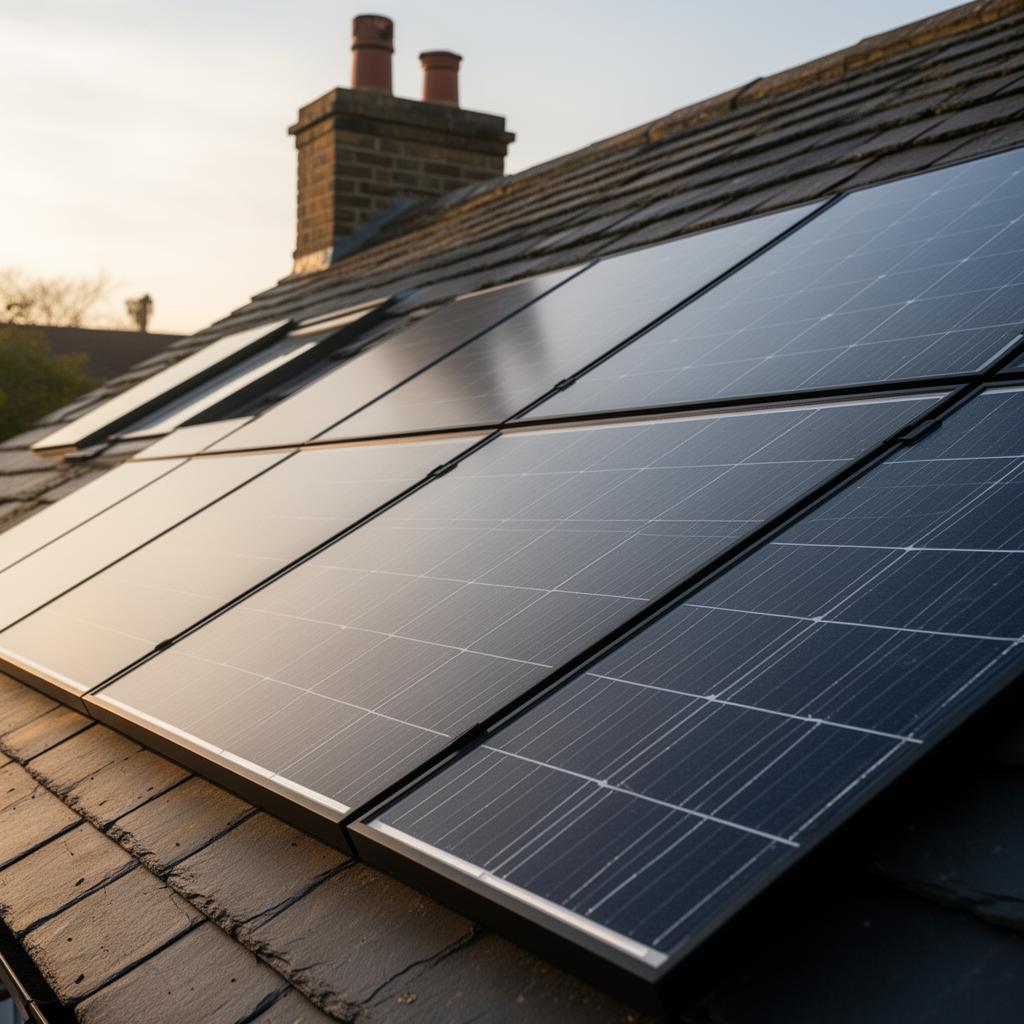
Solar carports and canopies generate electricity while providing covered parking, and they are becoming an increasingly popular option for Lancashire properties where the roof is unsuitable for traditional panel installations. Whether your roof faces north, is shaded by trees, has structural limitations, or is a listed building where panels are not permitted, a solar carport could be the answer. Prices start from around £6,000 for a single-car structure generating 2-3kW, rising to £12,000-18,000 for a double carport with 4-6kW capacity.
What Are Solar Carports and Canopies?
Solar carports and canopies are freestanding or attached structures that support solar panels above a parking area, driveway or patio. They generate electricity while providing shelter for vehicles and outdoor space. In Lancashire, a typical residential solar carport with 3kW to 4kW of panels costs between £6,000 and £12,000 installed and can generate 2,500 to 3,400 kWh per year, saving approximately £500 to £800 annually on electricity bills.
Solar carports are particularly useful for Lancashire properties where roof-mounted panels are not suitable — listed buildings, north-facing roofs, properties with excessive shading, or homes with slate roofs where bracket mounting is problematic. A south-facing carport can match or exceed the output of a roof-mounted system, and the structures are typically classified as permitted development if they are under 2.5 metres in height and sit within the property boundary.
Why Consider a Solar Carport?
The most common reason Lancashire homeowners look at solar carports is a roof that does not suit panels. North-facing roofs, flat roofs with limited structural capacity, roofs heavily shaded by mature trees (common in the Ribble Valley and Fylde areas), and listed or conservation area buildings where roof-mounted panels need planning consent all push homeowners towards ground-level alternatives.
A carport has a key advantage over ground-mounted arrays: it serves a dual purpose. You get solar generation and a covered parking space in a single structure. For Lancashire, where rain falls on approximately 150 days per year, the sheltered parking alone has practical value. Getting into a dry car on a wet November morning in Preston or Manchester is a small but genuine quality of life improvement.
Solar carports also pair exceptionally well with electric vehicle ownership. Generating electricity where your car is parked creates a natural opportunity for direct solar-to-car charging. A 4kW carport in Lancashire generates enough electricity over a year to cover 10,000-12,000 miles of EV driving, effectively providing free fuel for most commuters.
Types of Solar Carport Structures
Solar carports come in several designs, each suited to different property types and budgets.
Cantilever carports use a single row of support posts on one side, with the canopy projecting outward. These are ideal for installations against the side of a house or garage, and their open design makes parking easy. A single-car cantilever carport measuring approximately 3m by 5m can accommodate 6-8 solar panels generating 2.5-3.5kW. Expect to pay £6,000-9,000 including panels and installation.
Free-standing carports with four or more support posts offer greater structural stability and can support heavier panel arrays. A double free-standing carport (6m by 5m) fits 12-16 panels generating 5-7kW, costing £12,000-18,000 installed. These are popular with larger Lancashire properties in rural and suburban areas around Longridge, Garstang, and the West Pennine Moors where driveway space is generous.
Lean-to carports attach to an existing building wall, using the house or garage as one side of the structure. These are the most affordable option at £5,000-8,000 for a single-car size, and work well on properties where the driveway runs alongside the house – a common layout in the semi-detached properties across Leyland, Bamber Bridge, and the southern Greater Manchester suburbs.
Planning Permission for Solar Carports
Unlike roof-mounted solar panels, carports do not automatically fall under permitted development rights. You will generally need planning permission for a solar carport, though the requirements are not onerous. The main planning considerations are height (usually must not exceed 3 metres for a flat roof or 4 metres for a pitched roof), distance from boundaries (typically at least 1 metre), total site coverage (outbuildings should not cover more than 50% of the garden area), and visual impact from the street.
Planning applications for solar carports are typically straightforward and have a high approval rate across Lancashire councils. The application costs £206 for a householder application, and decisions usually take 8-12 weeks. Many Lancashire planning departments view solar carports favourably as they support local climate targets.
In conservation areas, design and materials matter more. Planning officers in areas like Whalley, Ribchester, and Lancaster’s historic centre may require specific finishes or colour schemes to ensure the carport complements the local character. Timber-framed structures with natural finishes tend to receive approval more readily than aluminium structures in these sensitive locations.
Performance and Output in Lancashire
A solar carport in Lancashire can actually outperform a roof-mounted system in certain situations. Because carports are installed at ground level, you have complete control over orientation and tilt angle. A carport angled at 30-35 degrees facing due south will maximise annual output, regardless of what direction your house roof faces.
A 4kW solar carport facing south at 30 degrees in the Lancashire area generates approximately 3,400-3,800 kWh per year. At current electricity prices, that is worth £800-900 in avoided electricity purchases, plus income from the export tariff for any surplus exported to the grid.
Shading from surrounding buildings and trees needs careful assessment. Because carports sit lower than rooftop installations, they are more susceptible to shading from fences, hedges, and neighbouring structures. A reputable installer will conduct a shading analysis to predict actual output based on your specific location. Properties on higher ground or with south-facing open aspects tend to perform best.
Integration with Battery Storage and EV Charging
The combination of a solar carport, battery storage, and EV charger creates a remarkably efficient home energy system. During the day, the carport generates electricity that either charges your EV directly, charges a home battery for evening use, or powers your household appliances. Any surplus goes to the grid for a small income.
A practical setup for a Lancashire household might include a 4kW solar carport (£10,000-14,000), a 5kWh battery (£2,500-4,000), and a 7kW EV charger (£700-1,200). The combined system could save an estimated £1,200-1,800 per year on electricity and fuel costs, providing a payback period of 8-12 years. With the 0% VAT on solar installations and the potential for some elements to qualify for grants, the actual out-of-pocket investment could be significantly lower.
Cost Comparison: Solar Carport vs Roof Panels
Solar carports cost more per kW than roof-mounted panels because of the additional structural steelwork or timber framing required. A 4kW roof-mounted system costs around £5,000-6,500, while a 4kW carport costs £10,000-14,000. However, this comparison is not quite fair because the carport provides a covered parking structure as well as solar generation.
If you would have built a standard carport anyway (typically £3,000-6,000 depending on size and materials), then the additional cost for the solar element is more like £5,000-8,000 for a 4kW system – much closer to roof-mounted pricing. For properties where roof panels are simply not possible, the carport versus no solar comparison makes the investment case clearly positive.
Both carport and roof-mounted solar installations benefit from the 0% VAT rate, reducing costs by 20%. This applies to the entire carport structure, not just the solar panels, provided the primary purpose is solar generation.
Finding an Installer in Lancashire
Solar carport installation requires both structural engineering and solar PV expertise. Look for qualified solar installers who have specific experience with carport structures. Not all solar installers offer carports, so you may need to search specifically for companies advertising this service.
Several Lancashire-based companies offer solar carport installations, and national providers like MyEnergi and SolarEdge work with local installation partners. Get at least three quotes and ensure each includes structural calculations, planning application support, and full relevant certification. A reputable installer will also handle the DNO (Distribution Network Operator) notification required for any solar installation connecting to the grid.
Can I build a solar carport myself?
The structural carport element could be a DIY project for a skilled builder, but the solar panel installation and electrical connection must be carried out by a qualified installer to qualify for the export tariff, maintain your home insurance validity, and ensure safety compliance. Some homeowners build the carport structure themselves and then hire an electrician and solar installer for the panels and wiring, which can reduce costs by £1,000-2,000.
Will a solar carport withstand Lancashire weather?
Properly engineered solar carports are designed to withstand wind speeds well in excess of anything Lancashire typically experiences. The structural calculations account for wind loading, snow loading, and the specific conditions of your location. Galvanised steel or treated timber frames resist corrosion from Lancashire’s wet climate, and the solar panels themselves are rated to withstand hailstones, heavy rain, and snow loads.
Do solar carports qualify for the 0% VAT rate?
Yes. Solar carports installed on residential properties qualify for the 0% VAT rate on energy-saving materials. This covers both the solar panels and the supporting structure, provided the primary purpose of the installation is solar electricity generation. Make sure your installer applies the correct VAT rate on the invoice – the saving of 20% on a £12,000 carport is a substantial £2,400.
See what these numbers mean for your home
Free instant estimate — costs, savings, payback and grants for your region.

Related Articles
Is Solar Battery Storage Worth It in 2026?
Solar panels are now a common sight on UK rooftops, but the real game-changer in 2026 is battery storage. A home battery lets you store the electricity your panels generate…
2 June 2026
Why Spring Is the Perfect Time to Install Solar Panels
If you have been thinking about solar panels for a while but never quite pulled the trigger, spring is the moment to act. The combination of lengthening days, mild installation…
23 April 2026
How the Energy Price Cap Affects Heat Pump and Solar Panel Payback
See how the energy price cap affects heat pump and solar panel payback periods. Real calculations using current UK unit rates show why investing now locks in stronger returns.
15 April 2026