How Manchester Weather Affects Solar Panel Output: Month by Month
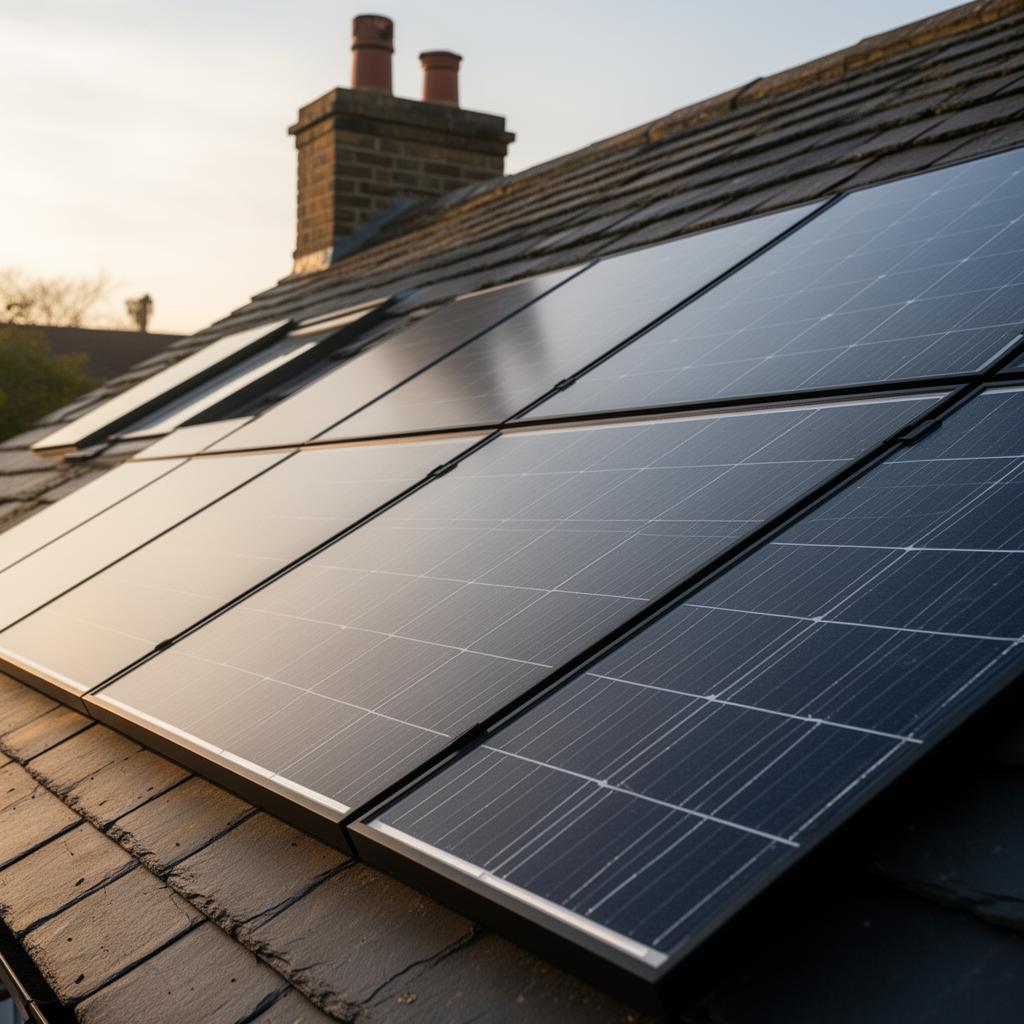
A typical 4kW solar system in the Greater Manchester area generates between 3,200 and 3,600 kWh per year – enough to cover 80-100% of the average household’s annual electricity consumption. Manchester’s reputation for rain and grey skies puts some homeowners off, but the reality is more encouraging than you might expect. Solar panels work on daylight, not direct sunshine, and even cloudy days produce meaningful output. Here is what each month actually delivers.
How Does Manchester Weather Affect Solar Panel Output?
Manchester receives approximately 1,200 to 1,300 hours of sunshine per year, producing an average of 800 to 900 kWh per kWp of installed solar capacity annually. Output peaks in June at around 130–140 kWh per kWp and drops to 15–25 kWh per kWp in December. Despite Manchester’s reputation for rain, a 4kW system still generates enough electricity to save £700 to £950 per year through self-consumption and Smart Export Guarantee payments.
Cloud cover reduces output but does not eliminate it — modern solar panels still generate electricity from diffused light on overcast days, typically producing 10% to 25% of their peak capacity. Manchester’s cooler temperatures actually benefit panel efficiency, as solar cells perform better below 25°C. The key months for generation are April through September, when a well-positioned system covers the majority of a typical household’s daytime electricity demand.
January: The Quiet Month
January is the lowest-producing month for solar panels in Manchester, with just 7-8 hours of daylight and an average of only 1.5 hours of sunshine per day. A 4kW system typically generates 80-120 kWh during January. That covers about 25-35% of a typical home’s monthly electricity use. The sun sits low in the sky, so south-facing panels at a steeper pitch (35-40 degrees) perform relatively better than flatter installations. Snow rarely accumulates enough in the M postcode areas to block panels, but if it does, it usually slides off within a day or two.
February: Signs of Life
Output picks up noticeably in February as days lengthen. Expect 100-150 kWh from a 4kW system. Manchester averages around 2 hours of sunshine daily in February, and the increasing day length means panels are generating for 9-10 hours. Homeowners in Stockport, Trafford, and the southern boroughs often notice the first real impact on their electricity bills around mid-February.
March: The Spring Surge
March brings a significant jump, with 4kW systems producing 200-280 kWh. The spring equinox delivers 12 hours of daylight, and Manchester’s sunshine hours rise to around 3.5 per day. This is when solar starts earning its keep. On clear March days, a well-positioned system in Salford or Bury can generate 15-18 kWh – more than most households use in a day. March generation typically covers 60-80% of household electricity needs.
April: Consistently Strong
April is a strong month, delivering 280-360 kWh from a 4kW system. With around 5 hours of daily sunshine and 13-14 hours of daylight, April often surprises Manchester homeowners with how much electricity they generate. Interestingly, April sometimes outperforms warmer summer months because solar panels are actually more efficient in cooler temperatures – each degree above 25 Celsius reduces output by about 0.4%. Manchester’s moderate April temperatures of 8-14 degrees are near-ideal for panel efficiency.
May: Peak Production Begins
May marks the beginning of the peak solar season, with 350-430 kWh typical for a 4kW system. Manchester enjoys around 6 hours of sunshine daily and 15-16 hours of daylight. Most households with solar panels will be generating more electricity than they use during May, making this an excellent month for exporting to the grid under the export tariff (currently paying 4-15p per kWh depending on your tariff) or charging a home battery for evening use.
June: The Summer Peak
June is typically the highest-producing month, with 370-460 kWh from a 4kW system. The summer solstice provides nearly 17 hours of daylight, and Manchester averages over 6 hours of sunshine. Even on the cloudy days that Manchester is famous for, a 4kW system will produce 5-10 kWh. On the best June days, generation can reach 22-25 kWh – roughly double what most homes consume.
This is the month when battery storage really proves its value. A 5kWh battery can store excess daytime generation to power your home through the evening, potentially eliminating your need to buy grid electricity entirely during June.
July: Sustained High Output
July remains strong at 350-440 kWh, though output can be fractionally lower than June as Manchester tends to experience more afternoon cloud buildup during the warmer weeks. The longer daylight hours compensate for any intermittent cloud cover. July 2024 saw some exceptional days across Greater Manchester, with several 4kW systems reporting single-day outputs above 26 kWh during the heatwave period.
August: Reliable Summer Generation
August produces 300-380 kWh as days start to shorten slightly. Manchester’s weather in August can be variable – some years bring prolonged sunny spells while others are dominated by Atlantic weather systems rolling in from the west. Even in a cloudier August, a 4kW system generates enough to cover 80-100% of household electricity consumption. The gradually falling temperatures compared to July can actually improve panel efficiency slightly.
September: The Autumn Transition
Output drops to 220-300 kWh as day length decreases and the sun angle lowers. September remains a productive month though, roughly matching March. For homeowners across Oldham, Rochdale, and the Pennine fringe areas, September can be surprisingly good as the crisp autumn air and clearer skies sometimes deliver better conditions than the haze of high summer.
October: Heading Into Winter
October brings 120-180 kWh from a 4kW system. With clocks going back at the end of the month, useful generation hours drop significantly. This is the month when most Manchester solar households shift from being net exporters to net importers of electricity. Battery systems start discharging fully each evening rather than carrying surplus overnight.
November: Minimal but Meaningful
November is one of the weaker months, generating 70-110 kWh. Manchester’s notoriously grey November skies limit sunshine to around 2 hours per day. However, even this modest output offsets around 20-30% of household electricity costs. Panels still work through cloud – just at reduced output. A heavy overcast day might yield 2-4 kWh from a 4kW system, while a brighter November day can still produce 8-10 kWh.
December: The Winter Floor
December rivals January as the lowest month, producing 60-100 kWh. Just 7 hours of daylight and frequent overcast conditions limit output. Yet even December is not a write-off. The electricity generated still reduces your grid import and provides a small but steady contribution. For homes on time-of-use tariffs, the midday solar generation coincides with higher grid electricity rates, maximising the value of each kWh produced.
The Full Picture: Annual Totals and Financial Returns
Adding up all twelve months, a 4kW system in Manchester generates roughly 3,200-3,600 kWh per year. At current electricity prices of around 24p per kWh, that is worth £770-860 in avoided electricity purchases if you use all of it yourself. With the export tariff paying for any surplus you send to the grid, total annual financial benefit typically ranges from £800-1,100 depending on your self-consumption rate and export tariff.
Against a typical installed cost of £5,000-6,500 for a 4kW system (inclusive of the 0% VAT), the payback period in Manchester is 6-8 years. That is only slightly longer than the 5-7 years typical in sunnier southern England – Manchester’s lower output is partly offset by the same installation costs and identical financial incentives.
The key takeaway: Manchester weather does affect solar output, but not as badly as most people assume. You get roughly 85-90% of the annual output of an equivalent system in London, while installation costs are often lower due to competitive local markets. Solar panels are a sound investment across Greater Manchester.
Do solar panels work in heavy rain?
Yes, though at reduced output. Heavy rain usually comes with thick cloud cover, which reduces generation to around 5-15% of peak capacity. However, rain also cleans the panels naturally, washing away dust and grime that can reduce efficiency by 2-5%. A rainy day followed by a clear day often produces surprisingly strong output thanks to freshly cleaned panels.
Is Manchester too far north for solar panels to be worthwhile?
Absolutely not. Manchester sits at roughly 53 degrees north latitude, which receives about 85-90% of the solar radiation that London gets. Countries at similar or higher latitudes – including Germany, which was the world’s largest solar market for years – demonstrate that solar works well at these latitudes. The payback period in Manchester is typically only 1-2 years longer than in southern England.
What is the best direction for solar panels in Manchester?
South-facing panels produce the most total energy over the year. However, east-west split installations are increasingly popular in Manchester because they spread generation across more of the day, better matching household consumption patterns. A south-facing 4kW system might generate 3,400 kWh annually, while an east-west 4kW system generates around 3,000 kWh but with higher self-consumption. Both orientations deliver excellent returns.
See what these numbers mean for your home
Free instant estimate — costs, savings, payback and grants for your region.

Related Articles
Is Solar Battery Storage Worth It in 2026?
Solar panels are now a common sight on UK rooftops, but the real game-changer in 2026 is battery storage. A home battery lets you store the electricity your panels generate…
2 June 2026
Why Spring Is the Perfect Time to Install Solar Panels
If you have been thinking about solar panels for a while but never quite pulled the trigger, spring is the moment to act. The combination of lengthening days, mild installation…
23 April 2026
How the Energy Price Cap Affects Heat Pump and Solar Panel Payback
See how the energy price cap affects heat pump and solar panel payback periods. Real calculations using current UK unit rates show why investing now locks in stronger returns.
15 April 2026