Micro-Inverters vs String Inverters: Which Is Better for Manchester Roofs?
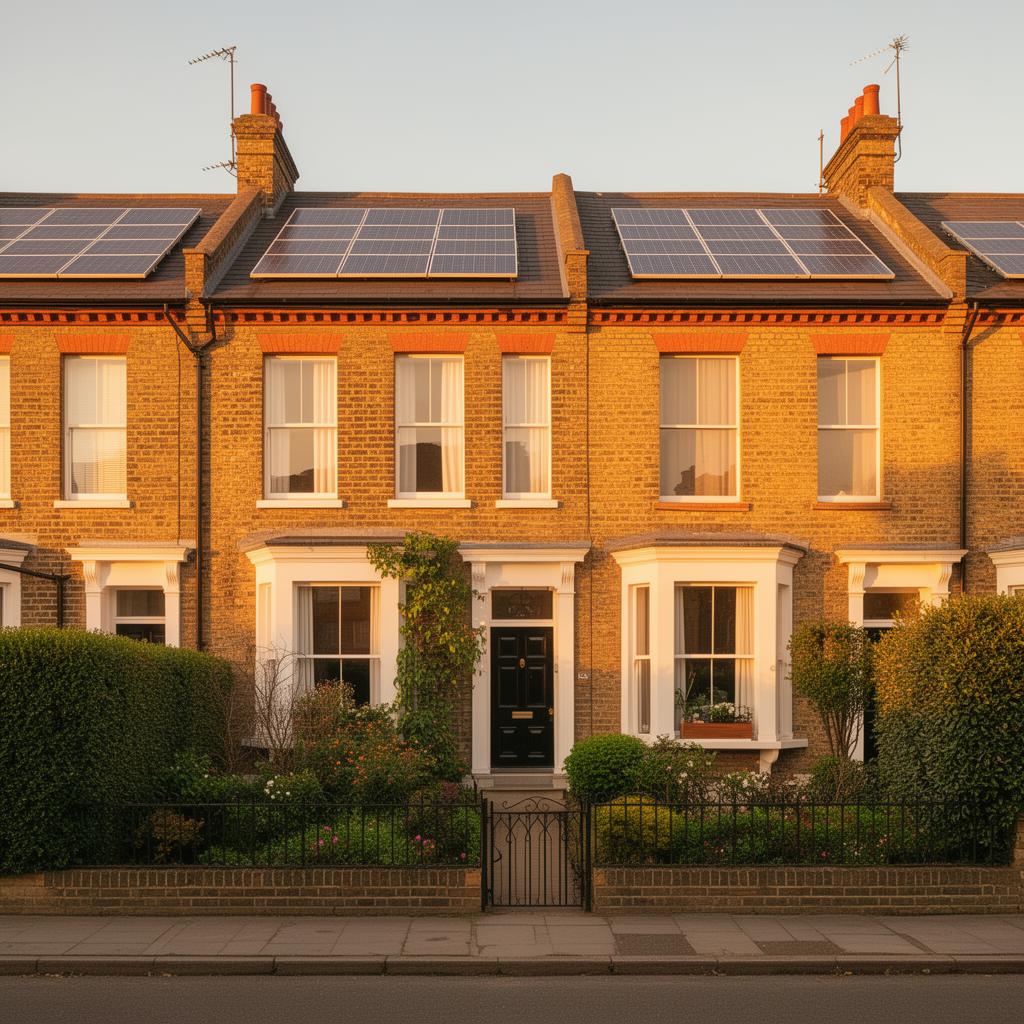
For a straightforward south-facing roof with no shading, a string inverter is the most cost-effective choice. But Manchester roofs are rarely straightforward. Between chimney shadows, dormer windows, trees, neighbouring buildings and the multi-aspect rooflines common across Greater Manchester’s Victorian and Edwardian housing, many installations face partial shading or split orientations that significantly reduce the output of a string inverter system. Micro-inverters and power optimisers can recover 5% to 25% of that lost generation, and for many Manchester homes, the extra investment pays for itself within three to five years.
Micro-Inverters vs String Inverters: Which Is Better?
| Micro-Inverters | String Inverters | |
|---|---|---|
| Cost for 4 kWp system | £1,200–£1,800 | £600–£1,000 |
| Shading performance | Excellent — each panel optimises independently | Poor — one shaded panel reduces the whole string |
| Monitoring | Panel-level monitoring included | System-level only (unless optimisers added) |
| Warranty | 20–25 years | 10–12 years |
| Expansion | Easy to add panels individually | May require inverter upgrade |
| Best for | Shaded, multi-aspect or complex roofs | Unshaded, single-aspect roofs |
For many Manchester roofs, which often feature multiple aspects, dormer windows, and nearby trees, micro-inverters deliver 10 to 25 percent more energy over the system’s lifetime compared to a standard string inverter. The higher upfront cost is offset by longer warranties and better per-panel output. For simple, unshaded south-facing roofs, a string inverter remains the more cost-effective choice.
How String Inverters and Micro-Inverters Differ
A string inverter is a single box (usually wall-mounted in your garage, loft or beside your consumer unit) that converts the DC electricity from all your panels into AC electricity for your home. The panels are wired in series – like fairy lights on a string – and the inverter manages the whole array as one unit. This is the traditional and most common approach, used in roughly 70% of UK installations.
The limitation is that the string is only as strong as its weakest link. If one panel is shaded (by a chimney, tree or bird dropping), its reduced output drags down every other panel on the same string. On a perfectly uniform, shade-free roof, this is not an issue. On a Manchester roof with a chimney casting morning shadows or a nearby tree blocking afternoon sun, it can reduce total system output by 10% to 25%.
Micro-inverters are small inverter units fitted to each individual panel. Each panel operates independently, converting DC to AC at the panel level. If one panel is shaded, only that panel’s output drops – the rest of the system is unaffected. This panel-level independence makes micro-inverters ideal for complex or shaded roofs.
Power optimisers (such as SolarEdge systems) are a middle ground. They are fitted to each panel like micro-inverters but only optimise the DC output before sending it to a central string inverter for the DC-to-AC conversion. They offer most of the shading benefits of micro-inverters at a slightly lower cost.
Manchester Roof Challenges That Favour Micro-Inverters
Greater Manchester’s housing stock creates several scenarios where micro-inverters outperform string inverters:
Chimney shading is the most common issue. Victorian and Edwardian terraces across Chorlton, Didsbury, Heaton Moor and Levenshulme typically have one or two chimney stacks that cast shadows across the roof at certain times of day. The shadow moves with the sun, affecting different panels at different hours. With a string inverter, this moving shadow can reduce output for several hours daily. With micro-inverters, only the shaded panel at any given moment is affected.
Multi-aspect roofs are very common on Manchester properties. Many homes have roof space on two or three different faces – perhaps south-west and south-east, or south and west. With a string inverter, panels on different orientations must be on separate strings, and the inverter must handle the different power profiles from each direction. Micro-inverters treat each panel independently, making mixed orientations simple and efficient.
Dormer windows, bay windows and complex rooflines break up available roof space into smaller sections. Properties across Salford, Eccles, Urmston and Stretford frequently have dormers or front bay windows that create shadows and reduce the number of panels that can be placed in a single unshaded area. Micro-inverters allow you to make the most of every available space.
Neighbouring buildings casting shadows are unavoidable on many Manchester terraces and semis. If the house next door or a building across the street blocks low-angle winter sun from reaching some of your panels, micro-inverters ensure the unaffected panels still produce at full capacity.
Cost Comparison for a Typical Manchester Installation
For a 4kW system (10 x 400W panels) on a Manchester home, here is how the costs typically compare:
String inverter system: £4,500 to £6,000 fully installed. The inverter itself costs £600 to £1,000, with a 10 to 12-year warranty. You will likely need to replace the inverter once during the panel lifetime, adding £800 to £1,200 around year 12 to 15.
Micro-inverter system (e.g., Enphase IQ8): £5,500 to £7,500 fully installed. The micro-inverters cost £100 to £150 each (£1,000 to £1,500 for 10 panels) but come with 25-year warranties matching the panel lifetime. No mid-life inverter replacement is expected.
Power optimiser system (e.g., SolarEdge): £5,000 to £6,800 fully installed. Optimisers cost £40 to £60 each plus a central SolarEdge inverter at £700 to £1,100. The optimisers have 25-year warranties; the inverter has a 12-year warranty (extendable to 20 or 25 years for an additional fee).
The upfront premium for micro-inverters over a string system is typically £1,000 to £1,500 for a standard Manchester installation. However, the avoided inverter replacement (£800 to £1,200 saved) and improved generation from shading mitigation (worth £50 to £150 per year) means the total cost of ownership is often similar or even lower over 25 years.
Performance Monitoring: A Hidden Advantage
Both micro-inverters and power optimisers offer panel-level monitoring, showing the output of each individual panel in real time through a smartphone app. This makes it easy to spot problems – a sudden drop in one panel’s output could indicate a fault, heavy soiling, or new shading from a growing tree.
String inverters only show total system output, making it harder to identify individual panel issues. If one panel fails or develops a fault, you might not notice until your overall generation drops noticeably. With micro-inverter monitoring, you get an alert immediately when a single panel underperforms.
For Manchester homeowners who want to track their investment closely and catch issues early, panel-level monitoring is a genuine practical benefit. The Enphase Enlighten app and SolarEdge monitoring platform both provide detailed performance data, historical comparisons, and fault alerts.
Reliability and Warranty Considerations
String inverters have a single point of failure. If your inverter breaks down, the entire system stops generating. Repairs typically take one to three weeks, during which you lose all solar generation. In contrast, if one micro-inverter fails, only that panel stops contributing – the other nine continue generating normally, and you lose just 10% of output until the replacement is fitted.
Micro-inverter warranty lengths (25 years from Enphase) align with panel lifetimes, meaning you are unlikely to face any inverter-related costs during the system’s productive life. String inverter warranties are shorter (10 to 12 years typically), and replacement is virtually certain during a 25-year panel lifetime.
However, replacing a failed micro-inverter involves accessing the roof (requiring scaffolding at £300 to £600), while a string inverter replacement is a simple wall-mounted box swap at ground level. The access cost partially offsets the convenience of micro-inverter reliability.
Which Should Manchester Homeowners Choose?
Choose a string inverter if your roof is unshaded, faces a single direction, and has a simple layout. This gives you the lowest upfront cost for excellent performance. Budget for an inverter replacement around year 12 to 15.
Choose micro-inverters if your roof has chimneys causing shadows, faces multiple directions, has dormers or complex features, or is partially shaded by trees or buildings. The extra upfront cost is recovered through higher generation and the avoided inverter replacement.
Choose power optimisers (SolarEdge) if you want most of the shading benefits of micro-inverters at a slightly lower cost and are comfortable with a central inverter that may need replacement mid-life. SolarEdge systems are widely available from Manchester installers and offer an excellent middle ground.
Are micro-inverters worth the extra cost?
For shaded or multi-aspect Manchester roofs, yes. The 5% to 25% improvement in generation, combined with 25-year warranties and avoided inverter replacement, means micro-inverters typically cost less over the system’s lifetime than a string inverter on a complex roof. For simple, unshaded roofs, the extra cost is harder to justify.
Can I upgrade from a string inverter to micro-inverters later?
Technically yes, but it is expensive and disruptive because it requires accessing every panel to fit the micro-inverters and rewiring the entire system. It is much more cost-effective to choose the right technology at installation. If your string inverter needs replacing at year 12 to 15, that is a more practical time to consider switching to micro-inverters or optimisers as part of the upgrade.
Do micro-inverters work in Lancashire’s cloudy weather?
Yes. Micro-inverters work at any light level, just like string inverters. On cloudy days, both types produce the same output from the available light. The advantage of micro-inverters appears specifically when partial shading affects some panels but not others, which can happen in any weather condition, including overcast days when shadows from nearby buildings or chimneys are still cast by diffuse light.
See what these numbers mean for your home
Free instant estimate — costs, savings, payback and grants for your region.

Related Articles
Is Solar Battery Storage Worth It in 2026?
Solar panels are now a common sight on UK rooftops, but the real game-changer in 2026 is battery storage. A home battery lets you store the electricity your panels generate…
2 June 2026
Why Spring Is the Perfect Time to Install Solar Panels
If you have been thinking about solar panels for a while but never quite pulled the trigger, spring is the moment to act. The combination of lengthening days, mild installation…
23 April 2026
How the Energy Price Cap Affects Heat Pump and Solar Panel Payback
See how the energy price cap affects heat pump and solar panel payback periods. Real calculations using current UK unit rates show why investing now locks in stronger returns.
15 April 2026