How Long Do Solar Panels Last? Real Lifespan Data for UK Installations
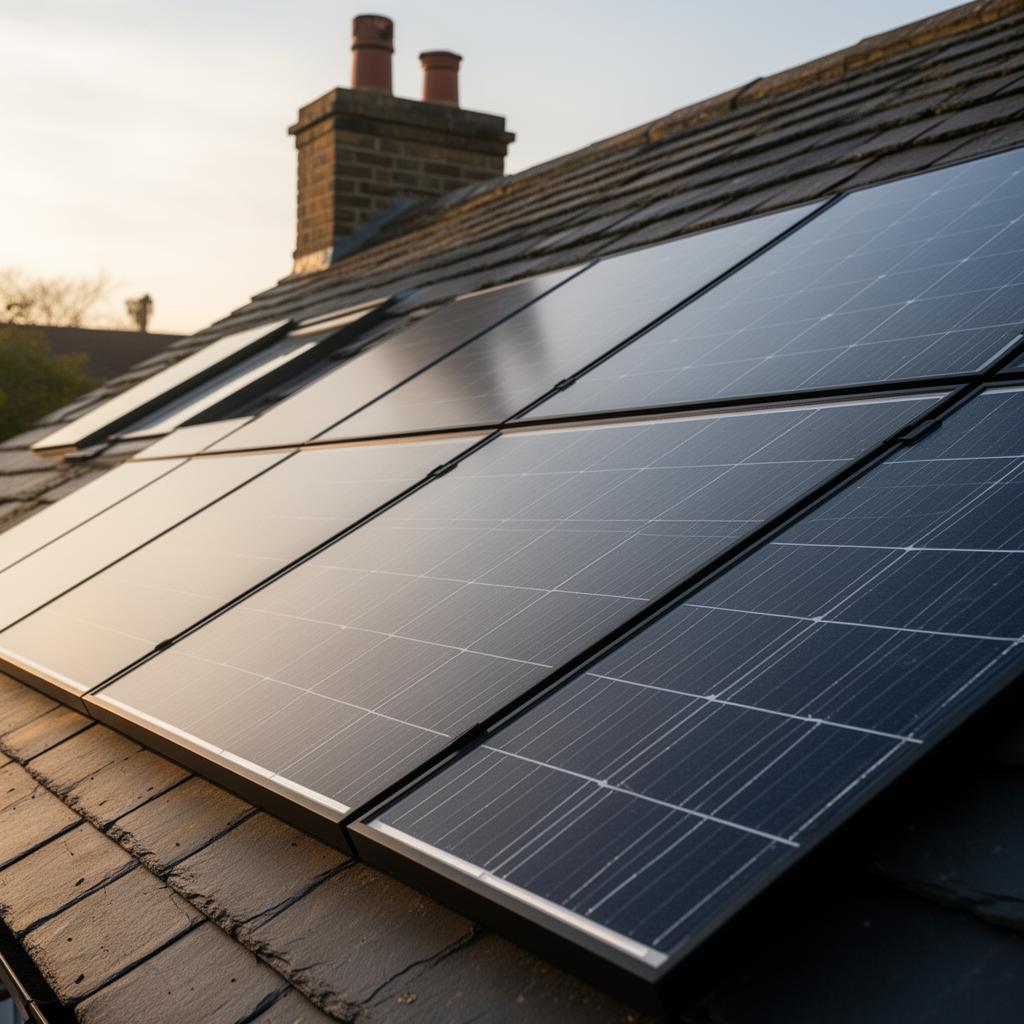
Modern solar panels are warrantied for 25 years and realistically last 30 to 40 years with only gradual performance decline. After 25 years, a typical panel still produces 80% to 87% of its original output. Early UK installations from 2010 to 2012 are now providing over a decade of real performance data, and the results are reassuring – most systems are exceeding their warranty promises. For Lancashire homeowners considering solar, this longevity makes the financial case compelling, with payback periods of 8 to 12 years followed by 15 to 30 years of essentially free electricity.
How Long Do Solar Panels Last?
Solar panels typically last 25 to 30 years and most manufacturers guarantee at least 80 percent of original output at 25 years. Real-world UK data shows panels degrade by approximately 0.5 percent per year, meaning a system producing 4,000 kWh in year one will still generate around 3,500 kWh at year 25. The panels themselves rarely fail — most continue producing electricity well beyond 30 years, though at gradually reducing output.
The inverter is the component most likely to need replacement, with string inverters lasting 10 to 15 years (costing £600 to £1,000 to replace) and micro-inverters lasting 20 to 25 years. Mounting brackets, cabling and isolators should also be inspected every 5 to 10 years. Over a 25-year lifespan, a 4 kWp system in Lancashire will generate approximately 85,000 to 90,000 kWh of electricity, worth £14,000 to £22,000 at current and projected energy prices.
What the Warranties Actually Promise
Solar panel warranties come in two parts, and understanding both is important. The product warranty covers manufacturing defects and hardware failures – things like delamination, broken junction boxes or faulty connectors. This typically lasts 10 to 15 years for standard panels and up to 25 years for premium brands like SunPower, LG and REC.
The performance warranty guarantees a minimum power output over time. The industry standard is 80% of rated output at 25 years, but many current models offer 84% to 87.5% at 25 years. This means a 400W panel warrantied to 84% at 25 years is guaranteed to still produce at least 336W after a quarter of a century. In practice, most panels degrade more slowly than the warranty suggests.
Degradation rates for modern panels are typically 0.3% to 0.5% per year. Older panels from 2010 to 2015 degrade slightly faster at 0.5% to 0.7% per year. At 0.4% annual degradation, a panel retains 90% of its original output after 25 years – significantly better than the warranty promise.
Real Performance Data from UK Solar Installations
The UK now has over a million solar installations, with many exceeding their tenth anniversary. Data collected from monitoring platforms like Solar Edge, GivEnergy and Enphase shows that the vast majority of systems installed between 2012 and 2015 are performing within 5% to 10% of their original rated output. That is well ahead of most warranty curves.
A study of 2,000 UK residential installations by a major monitoring platform found that after 10 years, the average system was producing 94% of its year-one output. Only 2% of systems had experienced panel failure requiring replacement, and most of those failures occurred in the first three years (covered by product warranty), suggesting manufacturing defects rather than wear-related issues.
In Lancashire specifically, the slightly cooler climate may actually help panel longevity. Solar panels degrade faster in extreme heat (a factor in southern European and Middle Eastern installations), so Lancashire’s moderate summer temperatures of 15 to 25 degrees Celsius are gentler on panel materials than the 35 to 40 degree peaks experienced in southern Spain or Australia.
What Actually Causes Solar Panels to Degrade?
Several factors contribute to the gradual decline in panel output. Understanding these helps explain why some installations age better than others.
Light-induced degradation (LID) causes a small drop of 1% to 3% in the first few days of operation and then stabilises. This is a normal electrochemical reaction and is already factored into performance projections. Some premium panels use N-type cells instead of P-type, which are virtually immune to LID.
Potential-induced degradation (PID) can occur in humid conditions when voltage leaks through the panel’s insulation. Lancashire’s damp climate means this is a relevant concern, but modern panels include anti-PID measures and quality inverters can help prevent it. Keeping panels clean and ensuring good earthing minimises the risk.
Thermal cycling – the daily expansion and contraction as panels heat up and cool down – gradually stresses solder joints and connections. Lancashire’s relatively mild temperature swings (compared to continental climates with hot summers and freezing winters) put less stress on these joints, which is another point in favour of North West longevity.
UV exposure causes slow degradation of the encapsulant material that protects the cells. Ironically, while Lancashire’s lower sunshine hours mean less energy generation, they also mean less UV exposure and slower material degradation. Panels in sunnier regions generate more electricity but may also degrade slightly faster.
Inverter Lifespan: The Component That Needs Replacing
While the panels themselves last 25 to 40 years, the inverter – the box that converts DC electricity from the panels into AC electricity for your home – has a shorter lifespan. Standard string inverters typically last 10 to 15 years and cost £800 to £1,500 to replace. Budget for at least one inverter replacement during the life of your solar system.
Micro-inverters and power optimisers, which are fitted to individual panels, tend to last longer at 15 to 25 years and come with warranties to match. They cost more initially but may avoid a mid-life replacement. Brands like Enphase offer 25-year warranties on their micro-inverters, essentially matching the panel warranty.
For Lancashire homeowners with systems installed between 2012 and 2015, inverter replacement is becoming a near-term consideration. The good news is that replacement inverters are significantly more efficient and cheaper (in real terms) than the originals. Upgrading an old inverter can actually improve your system’s overall output by 3% to 5% thanks to improved conversion efficiency.
Other Component Lifespans
Mounting systems and roof fixings are typically rated for 25 to 30 years. Stainless steel and anodised aluminium components resist Lancashire’s damp climate well. The most common issue is rubber seals around roof penetrations degrading after 15 to 20 years, potentially causing minor leaks. A periodic roof check (every five years) can catch these issues early.
DC cables and connectors are rated for 25 years but can degrade faster if exposed to UV light or if water gets into the MC4 connectors. Quality installations in Lancashire route cables under panels and use weatherproof junction boxes to protect connections. Poorly installed cable runs, especially on exposed sections of roof, may need attention after 15 to 20 years.
Battery storage systems, which many Lancashire homeowners are adding to existing solar setups, typically last 10 to 15 years or 6,000 to 10,000 charge cycles. A GivEnergy or Tesla Powerwall installed today should last until the mid-2030s, by which time battery technology and costs will have improved dramatically.
Maximising Your Solar Panel Lifespan in Lancashire
While solar panels are low-maintenance, a few simple steps can help them last as long as possible and maintain their output.
Annual visual inspections are worthwhile. Check for physical damage (cracked glass, discolouration, bird damage), ensure mounting bolts are secure, and look for any water pooling around the base of panels. You can do this from the ground with binoculars if the panels are on a pitched roof.
Monitor your system’s output through the inverter app or monitoring platform. If output drops suddenly, it indicates a fault that needs attention. If output declines gradually beyond expected degradation, cleaning may be needed. Lancashire systems typically benefit from one or two cleans per year to remove bird droppings, pollen and traffic film.
Keep trees trimmed to prevent shading as they grow. A tree that was clear of your panels when installed in 2015 may be casting shadows a decade later. Even partial shading on one panel can significantly reduce the output of the entire string in a traditional string inverter system.
What Happens at End of Life?
When solar panels eventually reach the end of their useful life after 30 to 40 years, they can be recycled. The panels are primarily glass, aluminium and silicon, all of which are recoverable. Under the WEEE (Waste Electrical and Electronic Equipment) Directive, manufacturers and importers are responsible for the recycling costs. Several recycling facilities in the UK, including plants in the North West, now process end-of-life panels.
Realistically, most Lancashire homeowners who install solar panels today will not need to think about disposal for decades. A system installed in 2024 will likely still be generating useful electricity in the 2050s, though at reduced output. By then, the technology, recycling infrastructure and replacement options will be very different from what exists today.
Do solar panels lose efficiency over time?
Yes, but slowly. Modern panels degrade at 0.3% to 0.5% per year, meaning after 25 years they still produce 85% to 90% of their original output. This gradual decline is already factored into financial projections and warranties. Real UK data shows most systems are degrading more slowly than warranty promises suggest.
When will I need to replace my solar panels?
The panels themselves should last 30 to 40 years. The inverter is the component most likely to need replacement, typically lasting 10 to 15 years. Budget £800 to £1,500 for an inverter replacement around the 12 to 15 year mark. Most other components, including mounting systems and cables, should last the full panel lifetime with minimal maintenance.
Are older solar panels worth keeping or should I upgrade?
If your panels are still generating well (check via your monitoring system), keep them. Even if they have degraded to 85% of original output, they are still producing free electricity. Consider upgrading only if panels have failed, if you want to increase capacity, or if you are replacing the roof anyway. Adding battery storage to an existing system is often a better investment than replacing working panels.
See what these numbers mean for your home
Free instant estimate — costs, savings, payback and grants for your region.

Related Articles
Is Solar Battery Storage Worth It in 2026?
Solar panels are now a common sight on UK rooftops, but the real game-changer in 2026 is battery storage. A home battery lets you store the electricity your panels generate…
2 June 2026
Why Spring Is the Perfect Time to Install Solar Panels
If you have been thinking about solar panels for a while but never quite pulled the trigger, spring is the moment to act. The combination of lengthening days, mild installation…
23 April 2026
How the Energy Price Cap Affects Heat Pump and Solar Panel Payback
See how the energy price cap affects heat pump and solar panel payback periods. Real calculations using current UK unit rates show why investing now locks in stronger returns.
15 April 2026