Great British Insulation Scheme: Lancashire Eligibility and How to Apply
The government insulation scheme (government insulation scheme) provides free or heavily subsidised insulation to eligible households across England, Scotland and Wales. In Lancashire, where thousands of homes still have inadequate loft and cavity wall insulation, this scheme could save qualifying households £300 to £600 per year on energy bills. Around 40% of Lancashire homes in Council Tax bands A to D are estimated to be eligible under the general eligibility group, while those receiving qualifying benefits may be eligible regardless of their property’s energy rating.
How to Apply for the Great British Insulation Scheme
- Check your eligibility — you qualify if your property is in council tax bands A to D (in England) or you receive a means-tested benefit such as Universal Credit, Pension Credit or Child Tax Credit
- Confirm your property is suitable — the scheme covers cavity wall insulation, loft insulation, flat roof insulation, solid wall insulation, and room-in-roof insulation
- Contact an approved installer or your energy supplier — ECO-obligated suppliers including British Gas, OVO and Octopus can assess your eligibility and arrange a survey
- Book a property survey — an assessor visits your home to confirm insulation type, measure areas, and check the existing condition
- Receive and accept the offer — the installer provides a written offer detailing the measures, timescales and any contribution required
- Installation is carried out — work typically takes 1 to 3 days depending on the measures, and is fully funded for eligible households
The Great British Insulation Scheme aims to insulate 300,000 UK homes by March 2026. In Lancashire, cavity wall insulation and loft insulation are the most commonly delivered measures, saving households £150 to £400 per year on heating bills. There is no waiting list — applications are processed on a first-come, first-served basis through approved installers, so contacting a provider promptly gives you the best chance of securing funding.
Who Qualifies for the government insulation scheme in Lancashire?
There are two routes to eligibility, and understanding which one applies to you will determine what you can receive and how quickly things move.
The general eligibility group covers homeowners and private tenants living in properties with an EPC rating of D, E, F or G that are in Council Tax bands A to D in England. This is where Lancashire has a significant advantage – a large proportion of the county’s housing stock falls into these bands. Terraced houses across Burnley, Pendle and Hyndburn, semi-detached homes in Blackburn and Darwen, and older properties throughout the Ribble Valley and Lancaster districts are very likely to qualify.
The low-income group covers anyone receiving qualifying benefits such as Universal Credit, pension top-up benefits, income support benefits, income-based Jobseeker’s Allowance, Child Tax Credit (with income under £16,480), or Housing Benefit. If you receive any of these, you are eligible regardless of your Council Tax band or EPC rating. This is particularly relevant for households in areas like central Blackburn (BB1, BB2), parts of Preston (PR1) and Burnley (BB10, BB11) where benefit claim rates are above the national average.
What Insulation Measures Are Available?
The scheme covers several types of insulation, and what you receive depends on your property type and its current insulation status. Available measures include:
- Cavity wall insulation – suitable for most homes built between 1920 and 1990 with unfilled cavities, common across Lancashire’s inter-war and post-war housing estates
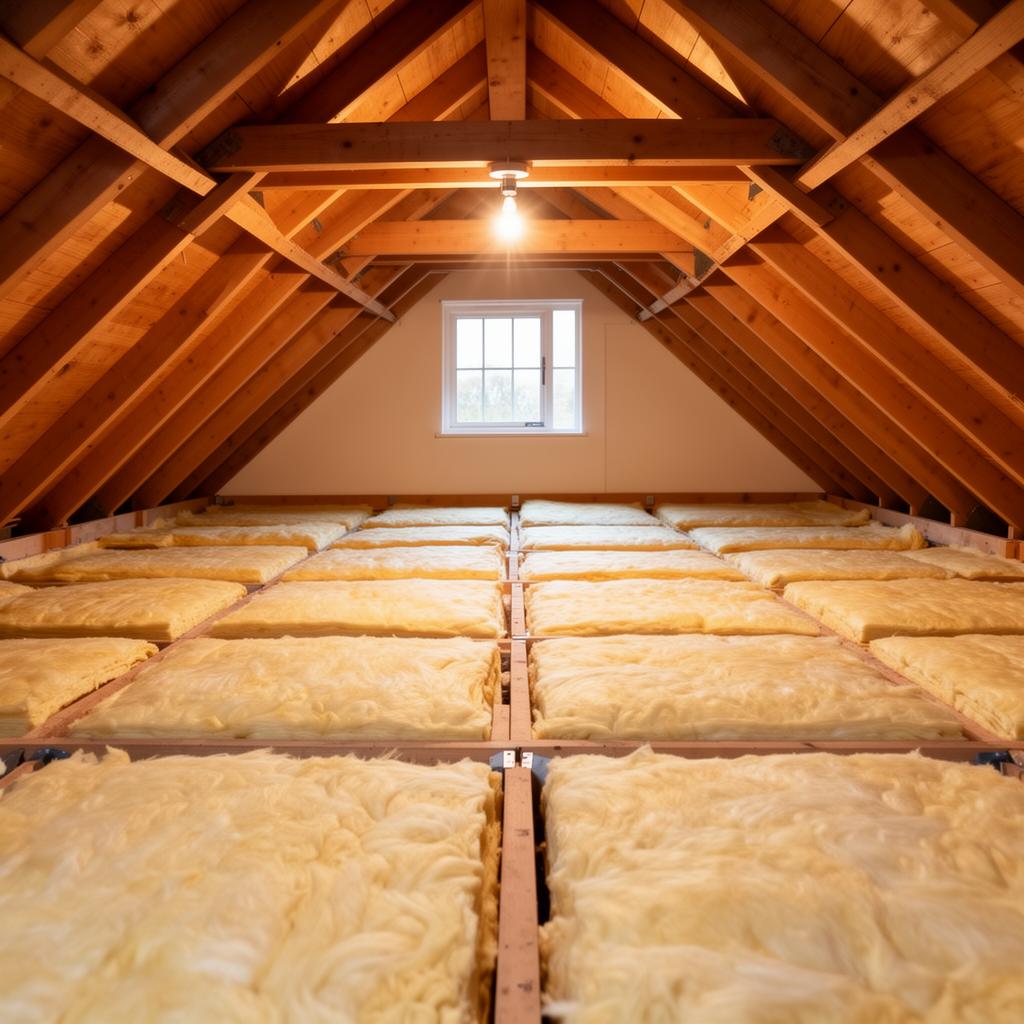
- Loft insulation – topping up existing insulation to the recommended 270mm depth or installing from scratch in uninsulated lofts
- Solid wall insulation (internal or external) – for pre-1920 homes without cavities, including stone terraces across East Lancashire
- Flat roof insulation – for properties with flat roof extensions, common on terraced homes across Bolton, Wigan and Leigh
- Underfloor insulation – for homes with suspended timber floors, often found in Victorian and Edwardian properties
- Room-in-roof insulation – for converted loft spaces and dormer rooms
The most commonly installed measures in Lancashire are cavity wall insulation and loft top-ups, as these are the quickest and most cost-effective improvements. A cavity wall fill typically may save an estimated £200 to £400 per year, while loft insulation may save an estimated £100 to £250 depending on the property size and current insulation levels.
How to Apply in Lancashire: Step by Step
The application process is straightforward, but knowing the right route will speed things up and help you avoid scams.
Start by contacting your energy supplier directly. Under government insulation scheme, energy suppliers with more than 150,000 customers have legal obligations to deliver insulation measures. The major suppliers operating in Lancashire – British Gas, EDF, OVO Energy, Octopus Energy and E.ON – all participate. Call their dedicated government insulation scheme helpline or check their website for an eligibility checker.
Alternatively, contact a qualified installer in the Lancashire area who is approved to deliver government insulation scheme measures. They can assess your property’s eligibility, survey the work needed, and manage the application on your behalf. Ensure any installer you use displays the quality assurance scheme logo and can provide their registration number.
Lancashire County Council and several borough councils including Blackburn with Darwen, Burnley and Preston also signpost residents to the scheme through their energy efficiency programmes. The local energy support programmes partnership can help residents navigate available support.
Once you have made contact, the process typically follows these steps: eligibility check, property survey (usually within two to four weeks), measure recommendation, installation date booking, and installation itself. From initial contact to completed installation, most Lancashire households wait six to twelve weeks, though this varies by demand and the complexity of the work.
What Lancashire Homeowners Actually Receive
For those in the low-income group, government insulation scheme measures may be fully funded for eligible households (means-, EPC- and postcode-tested; not all applicants will qualify). The energy supplier typically covers the full cost of the survey, materials and installation for those who are approved.
For those in the general eligibility group, the scheme covers the majority of the cost, but there may be a small homeowner contribution depending on the measure. In practice, many Lancashire installations under the general group are fully funded, particularly for cavity wall and loft insulation where the total cost is relatively low. For more expensive measures like solid wall insulation (which can cost £8,000 to £14,000 if paid for privately), a contribution of £500 to £2,000 may be required, though this varies by installer and supplier.
All work must meet installation standards and comes with a 25-year guarantee backed through quality assurance frameworks. This means if anything goes wrong with the insulation within 25 years, you are covered for remedial work.
Common Lancashire Properties That Qualify
Lancashire’s housing stock is diverse, and different property types qualify for different measures. Here is how the scheme typically applies to common Lancashire homes:
Victorian and Edwardian terraces (pre-1919) in towns like Burnley, Nelson, Colne, Darwen and Accrington usually have solid walls without cavities. These qualify for solid wall insulation (internal or external) and loft insulation. The stone-built terraces are particularly energy-inefficient and stand to benefit the most from improvement.
Inter-war semis and terraces (1920-1945) across Preston, Blackburn, Chorley and Leyland often have unfilled cavity walls. These are ideal candidates for cavity wall insulation, which can be completed in a single day with minimal disruption. Many also have thin or absent loft insulation that can be topped up.
Post-war council homes (1945-1975) in areas like Ribbleton, Shadsworth, Plungington and Brookhouse are frequently suitable for both cavity wall and loft insulation. Some of these estates were built with non-standard construction methods, which may require specialist assessment.
1970s to 1990s homes across newer estates in Bamber Bridge, Clayton-le-Woods and Buckshaw Village may already have partial cavity insulation that has settled or degraded over time. These can often have the cavities topped up or refilled under the scheme.
Avoiding government insulation scheme Scams in Lancashire
Unfortunately, the availability of free insulation has attracted some unscrupulous operators. Lancashire Trading Standards has reported an increase in cold calls and doorstep visits from companies claiming to offer “government-funded” insulation. While the scheme is genuine, the approach should raise red flags.
Never agree to work from a cold caller or doorstep visitor. Legitimate installers will not pressure you into signing up on the spot. Always verify that the company is quality assurance scheme registered by checking the quality assurance scheme website directly. Ask for their quality assurance scheme registration number and the name of the energy company funding the work.
Be wary of companies that want to install spray foam insulation under the government insulation scheme umbrella. While spray foam is technically an eligible measure, it can cause problems with mortgage lenders and future property sales. Request mineral wool, blown fibre or rigid board alternatives instead.
Combining government insulation scheme with Other Lancashire Energy Schemes
government insulation scheme can be combined with other support programmes to create a comprehensive package of home improvements. government energy efficiency schemes, which runs alongside government insulation scheme but targets different measures, can fund heating system upgrades alongside government insulation scheme-funded insulation. The government heat pump grant can provide up to £7,500 towards a heat pump, which works brilliantly in combination with improved insulation.
Several Lancashire borough councils also run their own top-up programmes. Blackburn with Darwen Borough Council, for example, has additional funding for energy efficiency measures in certain postcodes. Preston City Council runs a warm homes scheme that can complement government insulation scheme measures with further improvements. Check with your local authority for area-specific support.
Do I need to own my home to qualify for government insulation scheme?
No. Private tenants can qualify, but you will need your landlord’s written permission before any work can proceed. Social housing tenants may be eligible through their housing association’s own energy programmes, which often use government energy efficiency schemes rather than government insulation scheme funding. Contact your housing provider to check what is available.
How long does government insulation scheme installation take?
Cavity wall insulation takes one day for a standard semi-detached house. Loft insulation top-ups take half a day to a full day depending on the size and accessibility of your loft. Solid wall insulation is a bigger job, typically taking one to two weeks for internal insulation or two to four weeks for external cladding.
Is the government insulation scheme still running?
Yes, government insulation scheme is scheduled to run until March 2026. However, funding is allocated on a first-come, first-served basis, and demand in Lancashire is high. Apply as soon as possible to avoid disappointment, particularly if you need solid wall insulation, which is the most expensive measure and may have limited availability.
See what these numbers mean for your home
Free instant estimate — costs, savings, payback and grants for your region.

Related Articles
Heat Pump Grant Rises to £9,000 for Oil and LPG Homes From 21 July 2026
The standard Boiler Upgrade Scheme grant stays at £7,500. From 21 July 2026 to 31 March 2027, homes currently heated by oil or LPG get an increased £9,000 grant. Corrected…
10 June 2026
The Warm Homes Plan 2026: What Every UK Homeowner Needs to Know
The UK government’s Warm Homes Plan is the biggest energy efficiency programme in British history. Launched in January 2026 with up to £15 billion in funding, it aims to upgrade…
5 June 2026
ECO4 Scheme 2026: Who Qualifies, What’s Covered and How to Apply
The ECO4 scheme runs until December 2026, offering fully funded insulation and heating upgrades for eligible UK households. Find out if you qualify through benefits or the ECO4 Flex route,…
11 May 2026