Solar Panels and Listed Buildings in Lancashire: What You Need to Know
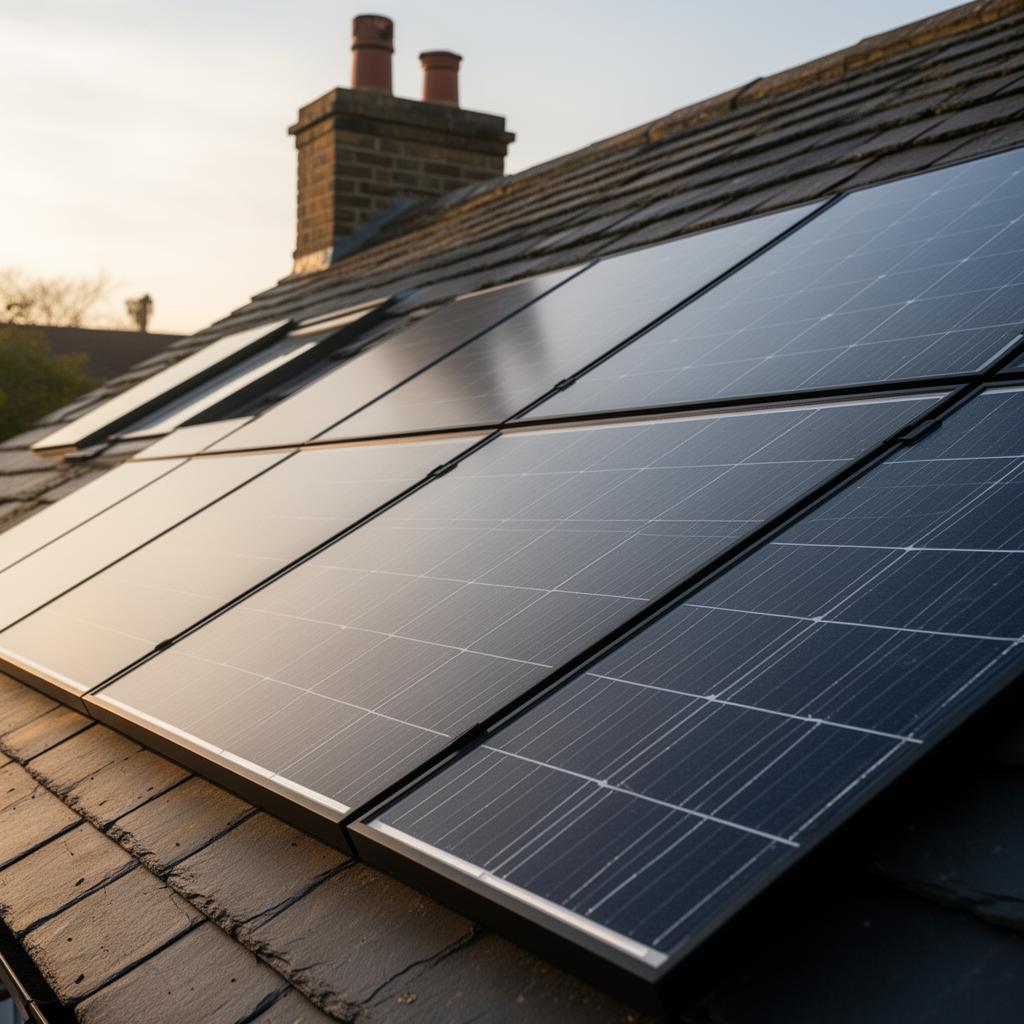
You can install solar panels on a listed building in Lancashire, but you will need listed building consent from your local planning authority before any work begins. Standard permitted development rights for solar panels do not apply to listed buildings, so every installation requires a formal application. The good news is that approvals are increasingly common – planning officers and conservation teams across Lancashire are becoming more sympathetic to well-designed solar proposals, particularly where the panels are positioned to minimise visual impact on the building’s historic character.
Can You Put Solar Panels on a Listed Building?
Yes, you can install solar panels on a listed building in Lancashire, but you need Listed Building Consent from your local planning authority before work begins. Consent is more likely to be granted for panels on non-principal elevations (rear or side roof slopes), ground-mounted arrays in gardens and building-integrated photovoltaic (BIPV) tiles that mimic traditional slate or tile. The application process typically takes 8 to 12 weeks.
Lancashire has a high number of listed properties across districts such as Lancaster, Ribble Valley and Pendle. Historic England’s guidance encourages sensitive installations that minimise visual impact on the building’s character. Working with an installer experienced in heritage properties increases your chances of approval. Solar panels on listed buildings qualify for the same 0% VAT and Smart Export Guarantee payments as any other domestic installation.
Lancashire has thousands of listed buildings, from grand country houses in the Ribble Valley to modest stone cottages in Pendle, Victorian terraces in Lancaster and Georgian townhouses in Preston. If you own one and want solar panels, here is what you need to know about the planning process, suitable panel options and how to maximise your chances of approval.
Why Listed Buildings Need Consent
Listed building consent exists to protect the special architectural and historic interest of the building. Solar panels mounted on a roof change the appearance of the building, which is considered an alteration to a listed structure. The planning authority needs to assess whether the proposed installation would harm the significance of the building.
Grade I and Grade II* buildings face the strictest scrutiny. Grade II buildings (the most common grade, covering around 92% of all listed buildings) generally have a better chance of approval, particularly for sensitively designed installations on less prominent roof slopes.
Importantly, the consent process is not a blanket refusal. Historic England’s own guidance states that renewable energy installations on listed buildings can be acceptable where they are designed sympathetically and do not cause irreversible harm. The emphasis is on the quality of the proposal, not a default “no.”
What the Planning Authority Considers
When assessing a solar panel application on a listed building in Lancashire, planning officers typically consider:
- Visual impact: Can the panels be seen from public viewpoints? Panels on rear-facing roofs or hidden slopes are much more likely to be approved than those on a prominent front elevation.
- Reversibility: Can the panels be removed in the future without permanent damage to the historic fabric? Mounting systems that bolt through historic roof coverings are less favourable than non-penetrative systems or those that use existing fixings.
- Proportionality: How much of the roof will be covered? Covering an entire roof is less likely to be approved than a modest installation on one slope.
- Panel appearance: All-black panels are generally considered more sympathetic to historic buildings than blue or silver-framed panels. Some in-roof systems sit flush with the roof surface, which is less visually intrusive than raised, rack-mounted panels.
- Historic significance of the roof: If the roof itself is a significant feature (historic slate, handmade tiles, ornate ridge tiles), any drilling or modification may be resisted. If the roof covering has been replaced with modern materials, there is less historic significance to protect.
How to Apply for Listed Building Consent
The application process follows these steps:
Pre-application advice: Before submitting a formal application, contact your local planning authority’s conservation team for informal pre-application advice. For homes in Lancashire, this means contacting the relevant district council (Burnley, Pendle, Ribble Valley, Lancaster, etc.) or Lancashire County Council for county-level listed buildings. Pre-application advice typically costs £50-£150 and gives you an early indication of whether your proposal is likely to be supported.
Design your proposal: Work with your solar installer to design an installation that addresses the factors listed above. Choose all-black panels, position them on the least visible roof slope, and select a mounting system that minimises penetration of the roof structure. Your installer should have experience with listed buildings or be willing to adapt their approach.
Submit the application: Listed building consent is applied for through the Planning Portal (the same system used for planning permission). You need to submit drawings showing the proposed panel layout, specifications of the panels and mounting system, photographs of the existing roof, and a heritage impact statement explaining why the installation is acceptable.
Heritage impact statement: This is the most important part of your application. It should explain the significance of the building, describe the proposed installation, assess the impact on the building’s character, and justify why the benefits (reducing carbon emissions, lower energy bills) outweigh any harm. For straightforward proposals, this can be a few pages long. Your installer or a heritage consultant can help prepare this.
Determination: The planning authority has 8 weeks to decide (the same as a standard planning application). They may consult Historic England for Grade I and Grade II* buildings, or for Grade II buildings in particularly sensitive settings.
Panel Options for Listed Buildings
Several solar panel products are designed to be more sympathetic to historic buildings:
All-black panels: Most major manufacturers now offer all-black versions (black cells, black backsheet, black frame) that are less visually prominent than traditional blue/silver panels. They cost 5-10% more but significantly improve the visual appearance on a dark roof.
In-roof systems: These replace a section of roof covering with solar panels that sit flush with the surrounding roof surface. They are more expensive to install but create a much neater appearance. Products like GSE Integration, Viridian Solar and Marley SolarTile are designed for this purpose.
Solar slates and tiles: Some products mimic the appearance of traditional roof slates or tiles while generating electricity. Products like the Marley SolarTile integrate with standard roof tiles and are barely distinguishable from conventional roofing. They are the most expensive option (roughly double the cost of standard panels per watt) but offer the best aesthetic result.
Ground-mounted systems: If roof-mounted panels are not feasible, consider a ground-mounted array in the garden. This avoids altering the building entirely, though it may still need planning permission if visible from outside the property boundary. It also requires sufficient garden space and the right orientation.
Real Examples from Lancashire
Several listed buildings across Lancashire have successfully obtained consent for solar installations in recent years. Common factors in successful applications include: panels positioned on rear or less visible roof slopes, all-black or integrated panel types, heritage impact statements prepared by qualified consultants, and designs that cover a limited proportion of the total roof area.
Applications that have been refused have typically involved panels on prominent front elevations, large arrays covering the majority of a historically significant roof, or proposals that required significant alteration to the roof structure.
Costs and Financial Considerations
Installing solar on a listed building typically costs 15-30% more than a standard installation due to the planning application fees, heritage impact statement costs, the use of more sympathetic panel types, and potentially more careful installation methods. Budget for:
- Listed building consent application fee: £0 (there is no fee for LBC applications)
- Heritage impact statement preparation: £200-£800
- Pre-application advice: £50-£150
- Premium panel types (all-black or integrated): 5-30% extra on panel cost
- Total additional cost over standard installation: £500-£3,000
The 0% VAT on residential solar installations applies to listed buildings just as it does to any other home. This offsets some of the additional costs.
How long does listed building consent take?
The statutory determination period is 8 weeks from the date of submission. In practice, it can take longer if Historic England is consulted or if the planning officer requests additional information. Allow 8-16 weeks from submission to decision. Pre-application advice can help avoid delays by identifying issues before you submit.
What happens if I install without consent?
Installing solar panels on a listed building without listed building consent is a criminal offence. The local authority can require you to remove the panels and restore the building to its previous condition at your expense. They can also prosecute, with fines up to £20,000 in a magistrates’ court or unlimited in a Crown Court. Always obtain consent before starting work.
Can I install solar panels in a conservation area?
If your building is not listed but is in a conservation area, you need planning permission (not listed building consent) for solar panels on a wall or roof slope facing a highway. Panels on a rear roof slope that is not visible from the road usually fall under permitted development. Check with your local planning authority – the rules are more flexible than for listed buildings.
See what these numbers mean for your home
Free instant estimate — costs, savings, payback and grants for your region.

Related Articles
Is Solar Battery Storage Worth It in 2026?
Solar panels are now a common sight on UK rooftops, but the real game-changer in 2026 is battery storage. A home battery lets you store the electricity your panels generate…
2 June 2026
Why Spring Is the Perfect Time to Install Solar Panels
If you have been thinking about solar panels for a while but never quite pulled the trigger, spring is the moment to act. The combination of lengthening days, mild installation…
23 April 2026
How the Energy Price Cap Affects Heat Pump and Solar Panel Payback
See how the energy price cap affects heat pump and solar panel payback periods. Real calculations using current UK unit rates show why investing now locks in stronger returns.
15 April 2026